

Trump Tariffs Increase Gas Prices: What It Means for Your Budget and Borrowing

Trump tariffs increase gas prices when higher import costs ripple through fuel supply chains, transportation, and the broader economy. Even if tariffs are aimed at specific countries or products, the effects can show up at the pump through higher costs for refining, shipping, parts, and the goods moved by trucks.
Contents
30 sections
-
How tariffs can raise gas prices (and when they might not)
-
1) Higher costs for refinery and energy equipment
-
2) Higher transportation and logistics costs
-
3) Trade shifts that change supply routes
-
4) Retaliation and broader market uncertainty
-
When tariffs might not raise pump prices
-
Trump tariffs increase gas prices: what to watch in your monthly budget
-
Budget signals that matter
-
Quick math: what a price increase can do
-
How higher gas prices can affect credit, debt, and loan decisions
-
Common ways gas price increases show up in your finances
-
Decision rule: protect payment history first
-
What this looks like with real numbers: three sample budgets
-
Scenario A: Tight budget, small cushion
-
Scenario B: Moderate budget, building an emergency fund
-
Scenario C: Higher income, considering a car loan
-
Smart ways to reduce fuel spending without creating new debt
-
At-the-pump tactics
-
Driving and maintenance checklist
-
Cash flow rule: build a "fuel buffer"
-
Borrowing options if higher gas prices strain your budget
-
Common options to compare
-
Decision rules before you borrow
-
Timeline playbook: under 1 year, 1 to 3 years, 3 to 7 years, 7+ years
-
Under 1 year
-
1 to 3 years
-
3 to 7 years
-
7+ years
-
A practical checklist for staying financially stable when fuel costs rise
-
Where to find reliable information and protect your credit
Gas prices are influenced by many forces at once: crude oil prices, refinery capacity, seasonal blends, taxes, local competition, and global events. Tariffs are not the only driver, but they can add pressure by increasing costs for inputs and equipment and by changing trade flows. For households already managing tight cash flow, a sustained jump in fuel costs can affect everything from grocery bills to credit card balances.
How tariffs can raise gas prices (and when they might not)
Tariffs are taxes on imported goods. The company importing the product pays the tariff at the border, and those costs can be absorbed, negotiated, or passed along through higher prices. With energy and transportation, the pass-through can happen in several indirect ways.
1) Higher costs for refinery and energy equipment
Refineries and fuel distributors rely on specialized equipment, replacement parts, steel, aluminum, and industrial components. If tariffs raise the cost of those inputs, maintenance and expansion can become more expensive. Over time, higher operating costs can contribute to higher fuel prices, especially in regions with limited refinery capacity.
2) Higher transportation and logistics costs
Tariffs on trucks, auto parts, tires, or industrial materials can raise the cost of moving goods. When freight costs rise, companies often try to recover those costs in the prices of delivered products. That can increase demand for transportation fuel or tighten margins in ways that keep pump prices elevated.
3) Trade shifts that change supply routes
Tariffs can change where companies buy crude, refined products, or blending components. If supply routes become longer or less efficient, shipping and storage costs can rise. In tight markets, small disruptions can have outsized effects at the pump.
4) Retaliation and broader market uncertainty
When trading partners respond with their own tariffs, markets can become more volatile. Energy prices are sensitive to uncertainty. Volatility does not always mean higher prices, but it can increase the risk of sudden spikes that strain household budgets.
When tariffs might not raise pump prices
- Crude oil prices fall enough to offset higher costs elsewhere.
- Domestic supply expands or refinery output increases.
- Competition limits pass-through in certain regions.
- Tariffs target goods with minimal connection to fuel production and distribution.
Trump tariffs increase gas prices: what to watch in your monthly budget
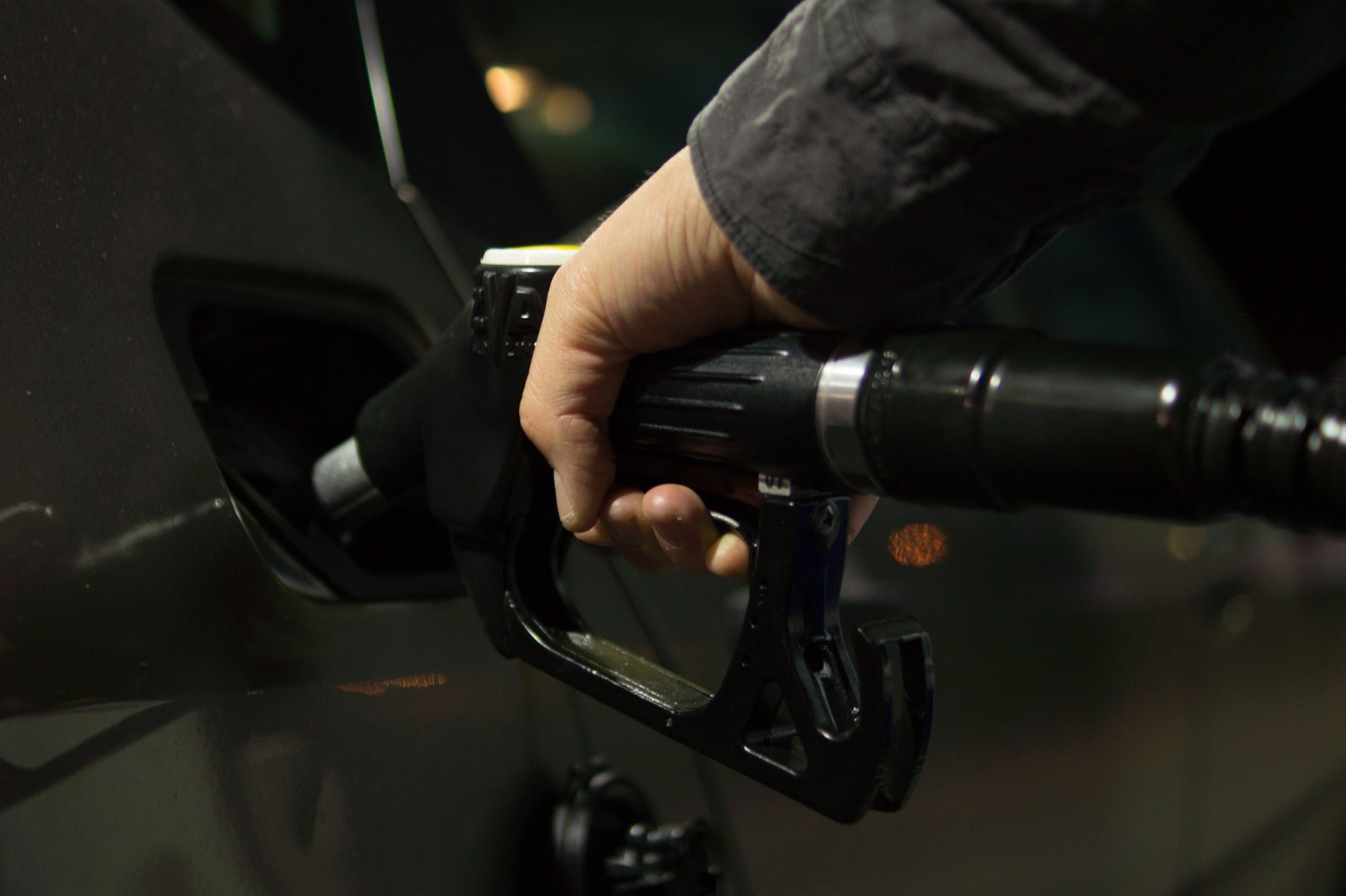
If you are trying to understand whether higher gas prices are becoming a lasting issue, focus on signals that affect your personal cash flow, not just headlines.
Budget signals that matter
- Your weekly gallons: how much you actually buy, not the price sign alone.
- Your commute flexibility: ability to carpool, combine trips, or work remotely.
- Vehicle efficiency: MPG and maintenance issues like tires and filters.
- Local price spread: differences between stations and neighborhoods.
- Knock-on costs: delivery fees, groceries, and services that may rise with freight costs.
Quick math: what a price increase can do
Use this simple rule: Monthly impact = (monthly gallons) x (price increase per gallon).
Example: If you buy 60 gallons per month and prices rise by $0.50 per gallon, that is about $30 more per month. If you are already carrying a credit card balance, that extra $30 can quietly increase interest costs if it pushes more spending onto revolving credit.
| Monthly gallons | $0.25/gal increase | $0.50/gal increase | $1.00/gal increase |
|---|---|---|---|
| 40 | $10/month | $20/month | $40/month |
| 60 | $15/month | $30/month | $60/month |
| 90 | $22.50/month | $45/month | $90/month |
| 120 | $30/month | $60/month | $120/month |
How higher gas prices can affect credit, debt, and loan decisions
Fuel is a frequent purchase, so it can change your month-to-month cash flow quickly. That matters because lenders and creditors often look at your debt-to-income ratio, payment history, and available cash after bills.
Common ways gas price increases show up in your finances
- More credit card use for essentials, which can raise utilization and interest costs.
- Less room for savings, making emergencies more likely to become debt.
- Tighter budgets that increase the risk of late payments.
- Higher costs for driving-based income such as delivery or rideshare work.
Decision rule: protect payment history first
If fuel costs rise and your budget gets tight, prioritize on-time payments for housing, utilities, and any loan with serious consequences for late payments. If you need help, contact creditors early to ask about hardship options or payment plans. The CFPB has practical resources on dealing with debt and communicating with lenders at consumerfinance.gov.
What this looks like with real numbers: three sample budgets
Below are simplified examples showing how a household might adjust when gas costs rise. These are not one-size-fits-all plans, but they show the tradeoffs clearly.
Scenario A: Tight budget, small cushion
Monthly take-home pay: $3,200
Problem: Gas rises by $60 per month and the budget was already close to zero.
| Category | Before | After | Change |
|---|---|---|---|
| Rent and utilities | $1,450 | $1,450 | $0 |
| Groceries | $450 | $430 | -$20 |
| Gas and transit | $220 | $280 | +$60 |
| Insurance | $180 | $180 | $0 |
| Minimum debt payments | $350 | $350 | $0 |
| Phone and internet | $140 | $130 | -$10 |
| Other essentials | $260 | $250 | -$10 |
| Savings | $150 | $130 | -$20 |
Total before: $3,200. Total after: $3,200.
Takeaway: The goal is to keep bills current and avoid turning a $60 fuel increase into revolving credit card debt.
Scenario B: Moderate budget, building an emergency fund
Monthly take-home pay: $5,000
Problem: Gas rises by $75 per month, and groceries rise by $40 due to higher delivery costs.
Adjustment: Reduce discretionary spending and keep savings on track.
- Cut dining out by $60
- Cut subscriptions by $15
- Reduce impulse spending by $40
Net: $115 freed up to cover $75 gas + $40 groceries.
Scenario C: Higher income, considering a car loan
Monthly take-home pay: $7,500
Problem: Gas rises by $100 per month and you are considering financing a vehicle.
Decision rule: If higher fuel costs are pushing you toward a new car payment, compare the total monthly cost, not just MPG. A newer car can reduce fuel use, but a loan adds interest and insurance costs.
Example comparison:
- Current car: $250 gas + $120 maintenance average = $370/month
- Newer car: $160 gas + $450 loan payment + $40 higher insurance = $650/month
Even with better fuel economy, the financed option costs more monthly. It might still make sense for reliability or safety, but the math should be explicit.
Smart ways to reduce fuel spending without creating new debt
Small changes can add up, especially when prices are volatile.
At-the-pump tactics
- Use price comparison apps to find cheaper stations on your route.
- Pay attention to membership programs you already have, but compare the net savings after any fees.
- Avoid premium fuel unless your owner’s manual requires it.
Driving and maintenance checklist
- Check tire pressure monthly.
- Remove excess weight from the car.
- Combine errands into one trip.
- Drive smoothly and reduce idling.
- Keep up with oil changes and air filters.
Cash flow rule: build a “fuel buffer”
If your fuel costs swing a lot, consider setting aside a small buffer in your checking account. For example, if your typical monthly gas spend is $220, you might keep an extra $50 to $150 as a cushion during spike months, then refill it when prices ease.
Borrowing options if higher gas prices strain your budget
If fuel costs create a short-term gap, the safest move is often to reduce spending, increase income, or negotiate bills. If you still need financing, compare total cost and repayment risk carefully. Avoid taking on a payment that only works if gas prices quickly fall.
Common options to compare
| Option | Best fit | What to compare | Main drawback |
|---|---|---|---|
| Credit card (existing) | Very short gaps you can repay quickly | APR, grace period, utilization impact | High interest if balance carries |
| 0% intro APR balance transfer card | Paying down existing high-interest debt | Transfer fee, promo length, post-promo APR | Approval depends on credit; fees apply |
| Personal loan from a bank or credit union | Fixed payment payoff plan for larger balances | APR, origination fee, term length, total interest | Payment is mandatory each month |
| Credit union payday alternative loan (PAL) | Small-dollar needs with clearer terms | Membership rules, fees, repayment schedule | Availability varies by credit union |
| Home equity loan or HELOC | Homeowners with strong repayment plan | APR type, closing costs, draw rules | Your home is collateral |
Decision rules before you borrow
- Match the term to the problem. A one-month cash crunch should not become a five-year loan.
- Stress test your payment. Assume gas stays high for 6 to 12 months. Can you still pay?
- Compare total cost. Look at APR, fees, and the dollar total repaid.
- Avoid stacking risks. If income is unstable, fixed payments can backfire.
Timeline playbook: under 1 year, 1 to 3 years, 3 to 7 years, 7+ years
Under 1 year
- Track gallons and cost per week.
- Create a fuel buffer of $50 to $300 depending on driving needs.
- Cut variable spending first, then negotiate bills.
- If using credit, aim for a payoff plan measured in weeks, not years.
1 to 3 years
- Re-evaluate vehicle costs: insurance, maintenance, and fuel together.
- Consider whether a different commute pattern is possible.
- Build an emergency fund toward 3 to 6 months of essential expenses.
3 to 7 years
- Plan for vehicle replacement on your timeline, not during a crisis.
- If financing a car, compare total ownership cost and keep the loan term as short as your budget reasonably allows.
- Reduce high-interest debt to improve flexibility during price spikes.
7+ years
- Choose housing and transportation with resilience in mind: commute distance, access to transit, and job flexibility.
- Keep credit strong by maintaining on-time payments and manageable utilization.
A practical checklist for staying financially stable when fuel costs rise
| Step | What to do | Why it helps |
|---|---|---|
| Measure | Track monthly gallons and average price paid | Turns a headline into a real budget number |
| Cap | Set a weekly fuel limit and plan trips | Prevents slow overspending |
| Protect | Prioritize on-time payments for essentials | Reduces late fees and credit damage risk |
| Compare | Shop around for insurance and phone plans annually | Finds savings that can offset fuel increases |
| Plan | Build a small fuel buffer and emergency fund | Reduces reliance on high-cost credit |
Where to find reliable information and protect your credit
If higher costs push you toward using more credit, it helps to monitor your credit reports and understand your options with creditors.
- Get your credit reports at AnnualCreditReport.com.
- Learn about dealing with debt and credit issues at the CFPB.
- Review consumer protection guidance and scams to avoid at consumer.ftc.gov.
- Understand deposit insurance basics if you are building cash reserves at FDIC.gov.
Gas prices can move for many reasons, and tariffs are only one possible factor. The most useful response is a plan that works even if prices stay higher longer than expected: measure your real fuel spend, protect payment history, and choose any borrowing option based on total cost and a realistic payoff timeline.


