

2025 Buyers Market for Housing: How to Shop, Finance, and Negotiate

The 2025 buyers market for housing can give shoppers more leverage than they have had in years, but it does not automatically make a home affordable. The real advantage comes from knowing what to ask for, how to structure your offer, and how to choose financing that fits your budget even if rates move.
Contents
25 sections
-
What a buyers market means in 2025 (and how to confirm it locally)
-
How the 2025 buyers market for housing changes your negotiation playbook
-
Negotiation levers that can matter more than a lower price
-
Offer checklist for a buyers market
-
Affordability in 2025: the payment is the deal, not the price
-
Payment decision rules you can use quickly
-
Mortgage options to compare in a buyers market
-
How to compare lenders without getting lost
-
Real-number examples: what a buyers market could look like in 2025
-
Example 1: Using seller credits vs a lower price
-
Example 2: Down payment choices with a safety buffer
-
Example 3: Timeline-based decision rules (under 1 year to 7+ years)
-
Inspection, appraisal, and insurance: where buyers can reduce risk
-
Inspection priorities
-
Appraisal gaps and low appraisals
-
Insurance and climate risk
-
Documents and prep: move faster without overpaying
-
Common mistakes buyers make in a buyers market
-
Where to get reliable information and protect yourself
-
Putting it together: a simple decision framework
-
Step 1: Confirm leverage
-
Step 2: Set your payment ceiling
-
Step 3: Choose your top two negotiation goals
-
Step 4: Compare at least three Loan Estimates
-
Step 5: Stress test the first year
This guide breaks down what a buyers market usually looks like, how to confirm it in your local area, and how to use it to reduce risk. You will also see concrete budget examples, negotiation checklists, and a comparison of common mortgage paths and where each one tends to fit.
What a buyers market means in 2025 (and how to confirm it locally)
A “buyers market” generally means supply is high relative to demand. That often shows up as:
- More active listings and more price reductions
- Homes sitting longer before going under contract
- Sellers offering concessions like closing cost credits or rate buydowns
- Fewer competing offers and more room for inspection and appraisal protections
Because housing is local, confirm conditions at the neighborhood level. Ask your agent or research recent comparable sales and track:
- Days on market for similar homes
- Sale-to-list ratio (are homes closing below asking?)
- Share of listings with price cuts
- Inventory trend (rising or falling month to month)
Decision rule: if comparable homes are taking longer to sell and multiple listings have recent price cuts, you likely have negotiating leverage. If the best homes still sell quickly and above asking, you may be in a mixed market even if the broader metro looks “buyer friendly.”
How the 2025 buyers market for housing changes your negotiation playbook
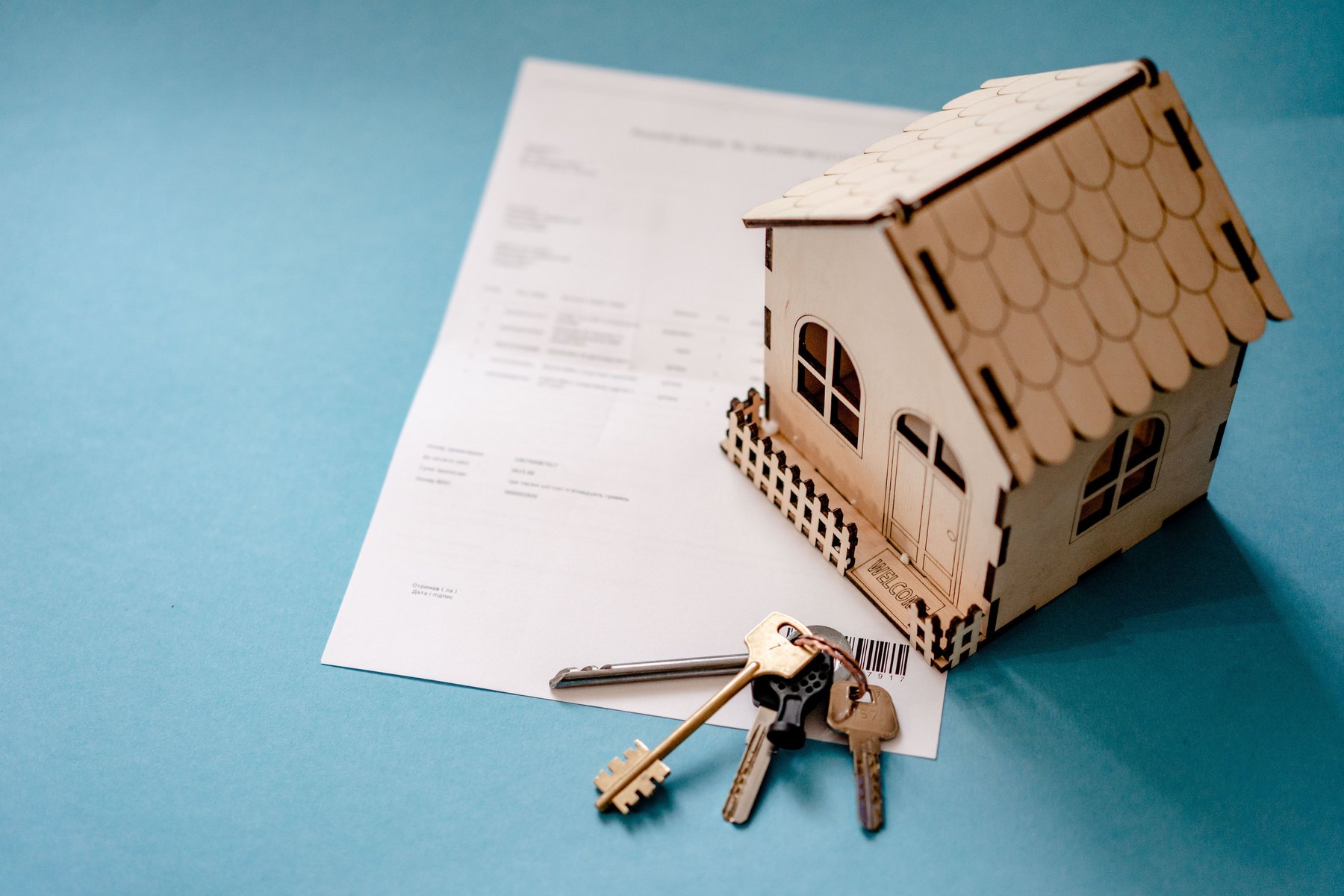
In a buyers market, you can often negotiate on more than just price. Many sellers care about certainty and timing. Your goal is to trade what is easy for you for what is valuable to you.
Negotiation levers that can matter more than a lower price
- Seller credits toward closing costs, prepaid taxes and insurance, or a temporary rate buydown (for example, 2-1 buydown). Ask your lender what structures are allowed for your loan type.
- Repair credits instead of repairs. This can be faster and lets you control contractors, but confirm the property is safe and insurable.
- Inspection terms such as longer inspection windows or the right to renegotiate after major findings.
- Appraisal protections such as an appraisal contingency or a cap on how much you will cover if the appraisal comes in low.
- Closing timeline that fits the seller’s move, such as a rent-back (if your lender allows it and it is documented properly).
Offer checklist for a buyers market
- Ask for the seller disclosure package early and read it line by line.
- Run a “payment stress test” at a higher rate and with higher taxes and insurance than today.
- Include an inspection contingency unless you have the cash and risk tolerance to handle surprises.
- Ask your lender for a Loan Estimate scenario with and without points and with a seller credit.
- Prioritize homes that have been listed longer with multiple price cuts, but verify condition and neighborhood comps.
Affordability in 2025: the payment is the deal, not the price
Even in a buyers market, the monthly payment can be the limiting factor. Your payment typically includes principal and interest, property taxes, homeowners insurance, and possibly HOA dues and mortgage insurance.
Two homes with the same price can have very different payments because of taxes, insurance, HOA fees, and down payment size. In many areas, insurance costs and property taxes have become a bigger swing factor than buyers expect.
Payment decision rules you can use quickly
- Front-end ratio: many households feel more comfortable when the total housing payment stays around 25% to 33% of gross monthly income. Lenders may allow higher depending on the loan and your profile, but comfort matters.
- Emergency buffer: aim for 3 to 12 months of essential expenses after closing, depending on job stability and other debts.
- Maintenance reserve: plan on 1% to 2% of the home value per year for maintenance, more for older homes.
| Cost item | What to estimate | Why it matters in 2025 | What to do |
|---|---|---|---|
| Mortgage rate and APR | Rate, APR, points, lender fees | Small rate changes can shift payment and buying power | Compare Loan Estimates from at least 3 lenders on the same day |
| Property taxes | Current bill and reassessment rules | Taxes may reset higher after purchase | Ask the county how reassessments work and model a higher tax bill |
| Homeowners insurance | Annual premium and deductible | Premiums can jump by region and risk zone | Get quotes before you make an offer, not after |
| HOA dues | Monthly dues and special assessment history | Special assessments can be large and sudden | Review HOA budget, reserves, and meeting notes |
| Mortgage insurance | Monthly MI and cancellation rules | Low down payments can raise total payment | Ask how MI changes with credit score and down payment |
Mortgage options to compare in a buyers market
A buyers market can make financing strategy more flexible because sellers may be willing to pay concessions that reduce your upfront costs or your rate. Still, the “best” loan depends on your down payment, credit profile, timeline, and risk tolerance.
| Option | Best fit | What to compare | Main drawback |
|---|---|---|---|
| 30-year fixed conventional | Stable payment, long-term ownership | APR, points, lender fees, MI cost if under 20% down | Higher interest cost over time than shorter terms |
| 15-year fixed conventional | High income stability, faster payoff | APR, total interest, ability to keep savings buffer | Higher monthly payment reduces flexibility |
| FHA loan | Lower down payment, more flexible credit | Upfront and monthly mortgage insurance, APR, seller concession limits | Mortgage insurance can last longer depending on down payment |
| VA loan | Eligible service members and veterans | Funding fee, APR, closing costs, appraisal and property rules | Eligibility required and some property standards apply |
| USDA loan | Eligible rural and some suburban areas, income limits | Guarantee fee, income eligibility, property location rules | Geography and income limits reduce availability |
| Adjustable-rate mortgage (ARM) | Shorter ownership horizon, strong budget buffer | Initial rate, adjustment caps, index and margin, worst-case payment | Payment can rise after the fixed period |
How to compare lenders without getting lost
- Compare APR and itemized fees, not just the headline rate.
- Ask each lender to quote the same scenario: purchase price, down payment, credit score range, property type, and lock period.
- Evaluate whether paying points makes sense based on your break-even timeline.
- Confirm whether the lender can close on your timeline and how they handle appraisal and underwriting delays.
Real-number examples: what a buyers market could look like in 2025
These examples show how negotiation and financing choices can change cash needed at closing and monthly payment. Numbers are simplified and will vary by rate, taxes, insurance, and lender fees. Use them as a template for your own estimates.
Example 1: Using seller credits vs a lower price
Scenario: You are buying a $400,000 home. You can negotiate either (A) $10,000 off the price or (B) a $10,000 seller credit toward closing costs and a temporary rate buydown if allowed.
- Option A (price cut): Lower loan amount slightly, which lowers payment a bit, but you still need cash for closing costs.
- Option B (seller credit): Higher price stays, but you may bring less cash to closing and potentially reduce the early years payment with a buydown.
Decision rule: if cash is tight, credits can be more helpful than a small price cut. If you plan to stay long-term and have cash, a lower price can help your loan-to-value and future refinance flexibility.
Example 2: Down payment choices with a safety buffer
Scenario: You have $80,000 available for a purchase (savings you are willing to use). You are targeting a $350,000 home. You want to avoid draining your emergency fund.
Here are three sample allocations that add up correctly:
- Allocation A (bigger down payment): $70,000 down payment + $10,000 closing costs = $80,000. Risk: little to no cash buffer for repairs or job disruption.
- Allocation B (balanced): $52,500 down payment (15%) + $10,000 closing costs + $17,500 emergency and move-in buffer = $80,000.
- Allocation C (cash-first): $35,000 down payment (10%) + $10,000 closing costs + $35,000 emergency and repair buffer = $80,000. Tradeoff: potentially higher monthly payment and mortgage insurance.
Decision rule: if buying an older home or you have variable income, prioritize Allocation B or C. If the home is newer and your job is stable, you may be comfortable with a higher down payment, but still keep a buffer for the first year.
Example 3: Timeline-based decision rules (under 1 year to 7+ years)
Your expected time in the home can guide how much you should pay for rate reductions and how much payment risk you can take.
- Under 1 year: Focus on flexibility. Avoid paying points that take years to break even. Consider whether renting longer is cheaper than buying and selling quickly after transaction costs.
- 1 to 3 years: Keep upfront costs low. Seller credits can be valuable. If considering an ARM, stress test the worst-case payment and confirm you can handle it if plans change.
- 3 to 7 years: This is often where points or a permanent rate buydown might break even, depending on pricing. Compare the break-even month using lender quotes.
- 7+ years: Payment stability matters. A fixed rate can reduce long-term uncertainty. Consider total cost of ownership including maintenance and taxes, not just the mortgage.
Inspection, appraisal, and insurance: where buyers can reduce risk
In a buyers market, you may have more room to keep protective contingencies. Use that leverage to avoid expensive surprises.
Inspection priorities
- Roof age and visible leaks
- Foundation and drainage issues
- Electrical panel type and wiring concerns
- Plumbing supply lines and signs of past water damage
- HVAC age and service history
Appraisal gaps and low appraisals
If the appraisal comes in below the contract price, you may need to renegotiate, bring extra cash, or walk away if your contract allows. In a buyers market, sellers may be more willing to adjust price to meet the appraised value.
Insurance and climate risk
Before you commit, get homeowners insurance quotes and ask about deductibles, exclusions, and whether separate coverage is needed for flood or earthquake risk. If insurance is hard to obtain or unusually expensive, that can affect both affordability and resale.
Documents and prep: move faster without overpaying
Even in a buyers market, the best homes can still move quickly. Preparation helps you act without skipping important steps.
| Item to prepare | Examples | Why it helps |
|---|---|---|
| Income proof | Recent pay stubs, W-2s, or 1099s | Speeds up underwriting and reduces last-minute conditions |
| Asset statements | Bank statements, retirement accounts, gift letter if applicable | Shows funds for down payment, reserves, and closing costs |
| Debt list | Auto loans, student loans, credit cards | Helps you estimate debt-to-income and avoid surprises |
| Credit review | Check your reports for errors | Errors can raise borrowing costs or delay approval |
| Budget worksheet | Housing payment, utilities, maintenance, HOA | Keeps the decision tied to monthly reality |
Common mistakes buyers make in a buyers market
- Chasing the lowest rate without comparing APR and fees. A low rate with high points can cost more if you move sooner than expected.
- Ignoring taxes and insurance. These can rise and may be reassessed after purchase.
- Overusing concessions. Seller credits can help, but there are limits by loan type and the home still needs to appraise.
- Skipping due diligence because the price looks good. Condition problems can erase the discount quickly.
- Draining cash reserves to hit a round down payment number. A smaller down payment with a stronger buffer can be safer for many households.
Where to get reliable information and protect yourself
- Review mortgage shopping resources and closing cost explanations from the Consumer Financial Protection Bureau.
- Check your credit reports for accuracy at AnnualCreditReport.com before you apply with multiple lenders.
- Learn how to spot and report real estate and lending scams through the Federal Trade Commission.
- Confirm whether a bank is FDIC insured and understand deposit coverage at the FDIC if you are parking down payment funds.
Putting it together: a simple decision framework
Step 1: Confirm leverage
Track days on market, price cuts, and sale-to-list ratios for the exact neighborhoods you want.
Step 2: Set your payment ceiling
Pick a maximum monthly housing payment that still allows savings, debt payoff, and a maintenance reserve.
Step 3: Choose your top two negotiation goals
Examples: (1) seller credit to preserve cash, (2) inspection protections, (3) price reduction, (4) appraisal contingency.
Step 4: Compare at least three Loan Estimates
Use the same scenario for each lender and compare APR, points, and itemized fees. Ask what changes if you accept a seller credit or adjust the down payment.
Step 5: Stress test the first year
Model higher taxes and insurance, plus one repair. If the budget breaks, adjust the price range or down payment plan before you commit.
A buyers market can be a real opportunity, especially if you use it to buy with stronger protections and a healthier cash buffer. The win is not just getting a discount. It is ending up with a payment and a risk level you can live with for years.


