

Best Large SUVs to Compare Before You Choose

The best large SUVs are the ones that match your passenger needs, cargo habits, towing plans, and budget without creating payment stress.
Contents
27 sections
-
What makes a "large SUV" and why it matters for your budget
-
Best large SUVs: a shortlist to compare
-
Start with your use case: a quick decision checklist
-
Passenger and cargo reality check
-
Towing and hauling checklist
-
Budget and payment guardrails
-
Compare total cost of ownership, not just the sticker price
-
Financing choices that affect your SUV decision
-
Loan term: the simplest decision rule
-
Down payment: protect your cash buffer
-
APR and fees: what to compare across lenders
-
Preapproval and shopping window
-
What this looks like with real numbers: 3 sample budgets
-
Scenario 1: Payment focused family, moderate down payment
-
Scenario 2: Higher down payment to reduce interest and risk
-
Scenario 3: Used large SUV with repair buffer
-
Timeline decision rules: when to buy, lease, or wait
-
Under 1 year
-
1 to 3 years
-
3 to 7 years
-
7+ years
-
How to test drive a large SUV like a pro
-
Negotiation and paperwork: what to watch for
-
Credit and rate prep steps that can lower borrowing costs
-
Quick pick framework: match the SUV to your priorities
-
Helpful resources for smart borrowing and avoiding scams
-
Bottom line: build your shortlist, then price the full monthly cost
Large SUVs can be great for big families, road trips, and towing. They can also be expensive to buy, fuel, insure, and maintain. Before you pick a model, it helps to compare the full ownership picture: purchase price, financing cost, fuel, insurance, tires, repairs, and resale value. This guide walks you through what to compare, which models to put on your shortlist, and how to run the numbers with real examples.
What makes a “large SUV” and why it matters for your budget
Most shoppers mean a three row SUV with adult usable third row seating and meaningful cargo space. Some are body on frame (often better for towing and rugged use) and others are unibody (often smoother ride and better fuel economy). The difference matters because it affects:
- Fuel costs: Larger engines and heavier frames usually use more fuel.
- Maintenance: Bigger tires, brakes, and suspension parts can cost more.
- Insurance: Higher vehicle value and repair costs can raise premiums.
- Financing: A higher purchase price can push you into longer terms, increasing total interest paid.
Best large SUVs: a shortlist to compare
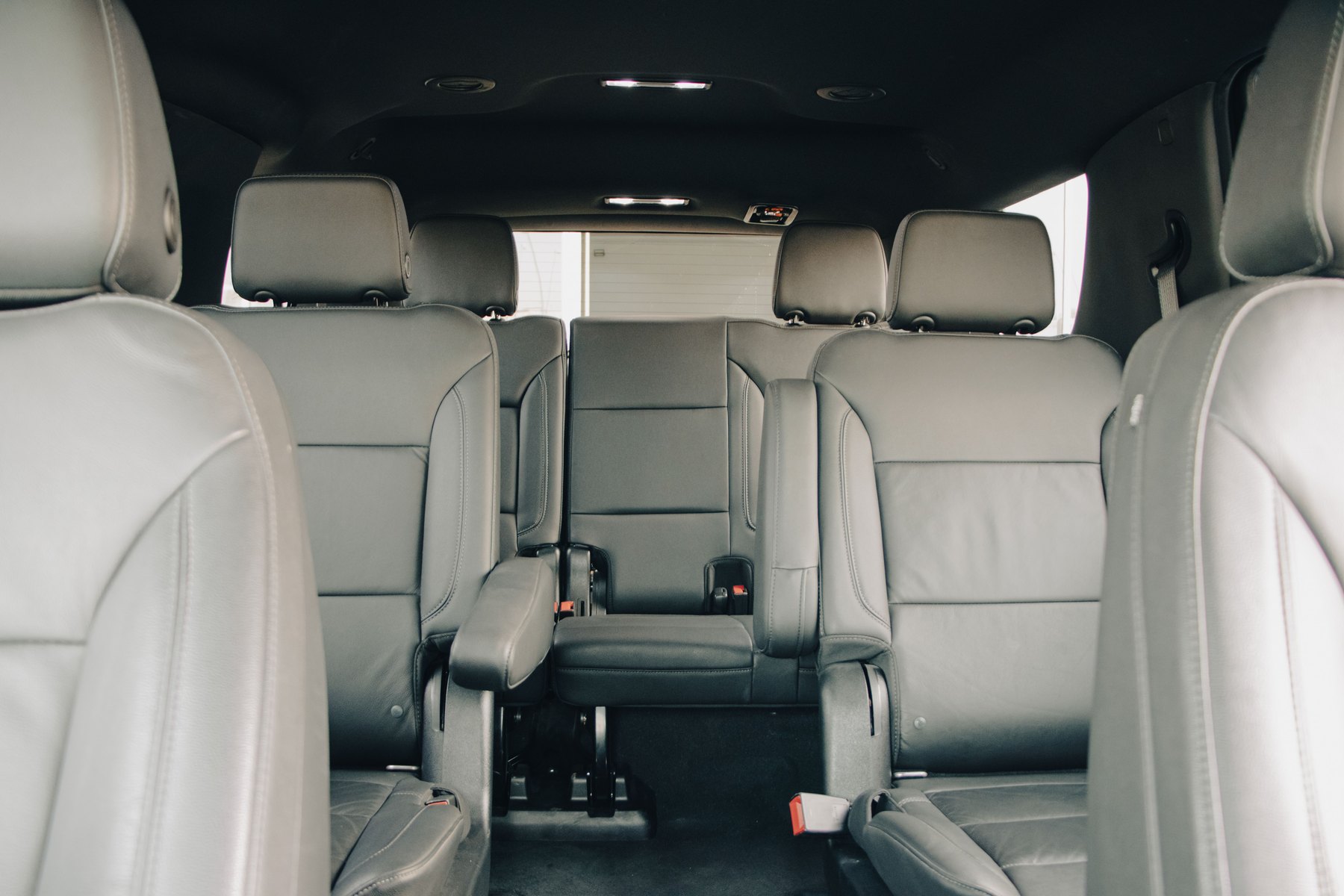
Below are recognizable, widely available models that many shoppers cross shop. Treat them as examples to compare, not one size fits all picks. Trim levels and options change the price and features a lot, so compare the specific trims you would actually buy.
| Option | Best fit | What to compare | Main drawback |
|---|---|---|---|
| Chevrolet Tahoe | Big family space, towing, road trips | Third row comfort, cargo behind 3rd row, towing package, fuel costs | Can get expensive quickly with trims and options |
| GMC Yukon | Similar to Tahoe with more upscale trims | Trim pricing, tech packages, ride quality, insurance quotes | Higher purchase price can mean higher payment and insurance |
| Ford Expedition | Towing and highway comfort, large cargo | Wheelbase choice, towing ratings by configuration, driver assist features | Fuel and tire costs can be significant |
| Toyota Sequoia | Long term ownership focus, strong resale | Hybrid system behavior, cargo layout, availability and markups | Third row and cargo packaging may not fit every family |
| Nissan Armada | Value shoppers who want a big V8 feel | Incentives, warranty terms, fuel economy, infotainment usability | Lower fuel economy can raise monthly operating costs |
| Jeep Wagoneer | Big interior, modern features, family comfort | Reliability history, dealer service costs, depreciation, insurance | Depreciation risk can matter if you finance long term |
| Honda Pilot | Three row practicality in a slightly smaller footprint | Third row access, cargo space, AWD system, real world mpg | Less towing and overall size than body on frame options |
| Kia Telluride | Family features and value in a three row | Trim differences, dealer fees, warranty details, insurance quotes | Availability and pricing can vary by market |
Start with your use case: a quick decision checklist
Before test drives, write down your non negotiables. This prevents paying for size or features you will not use.
Passenger and cargo reality check
- How many people ride weekly? How many on your busiest day?
- Do you need adult usable third row seating, or is it mostly for kids?
- Do you need cargo space behind the third row for strollers, sports gear, or luggage?
- Do you use roof boxes or hitch racks? Those can change what “enough cargo” means.
Towing and hauling checklist
- Trailer type and loaded weight (not dry weight).
- How often you tow: a few weekends a year vs weekly.
- Need for a factory tow package, brake controller, and transmission cooling.
- Payload needs: passengers plus cargo plus trailer tongue weight.
Budget and payment guardrails
- Target monthly payment range that still leaves room for savings and other goals.
- Down payment amount you can make without draining your emergency fund.
- Maximum loan term you are comfortable with.
- Insurance quote range you can afford.
Compare total cost of ownership, not just the sticker price
Two SUVs with similar prices can have very different monthly costs. Use this table as a practical checklist when you compare models and trims.
| Cost category | What to gather | Why it matters | Quick way to estimate |
|---|---|---|---|
| Loan interest | APR, term, down payment, fees | Longer terms can raise total interest paid | Compare total of payments across 48, 60, 72 months |
| Fuel | Your annual miles, real world mpg | Fuel can be a large recurring cost | (Miles per year ÷ mpg) × average gas price |
| Insurance | Quotes for the exact trim and VIN if possible | Premiums vary widely by model and driver profile | Get 2 to 3 quotes and use the middle number |
| Tires and brakes | Tire size, replacement cost, expected life | Large tires can be costly and wear faster | Price a full set installed and divide by expected miles |
| Maintenance and repairs | Service intervals, common repairs, warranty coverage | Out of warranty repairs can change affordability | Budget a monthly maintenance sinking fund |
| Depreciation | Resale value trends, lease residuals as a clue | Matters if you sell or trade before payoff | Assume you may owe more than value early in the loan |
Financing choices that affect your SUV decision
Large SUVs often push buyers into bigger loans. The financing structure can matter as much as the model choice.
Loan term: the simplest decision rule
- 48 to 60 months: Often a good balance if the payment fits and you want to reduce total interest.
- 72 months: Can lower the payment, but you may pay more interest and stay upside down longer.
- 84 months: Consider carefully. It can increase the chance you owe more than the vehicle is worth for a long time, especially if you put little down.
Down payment: protect your cash buffer
A bigger down payment can reduce the loan amount and interest cost. But avoid using money you may need for emergencies. Many households aim to keep an emergency fund of about 3 to 6 months of essential expenses, then decide what is left for a down payment.
APR and fees: what to compare across lenders
- APR (not just the interest rate).
- Loan term and whether there is a prepayment penalty.
- Origination or documentation fees if any.
- Whether the lender requires full coverage insurance and deductible limits.
Preapproval and shopping window
Getting a preapproval can help you compare offers and keep the dealer financing conversation focused on the total price and APR, not just the monthly payment. When you shop for auto credit, try to do your rate shopping in a short window so credit scoring models may treat multiple inquiries as one for scoring purposes, depending on the model used.
What this looks like with real numbers: 3 sample budgets
These examples show how the same household income can support very different SUV choices depending on down payment, term, and operating costs. Numbers are illustrative. Check current APRs, insurance quotes, and local taxes and fees.
Scenario 1: Payment focused family, moderate down payment
- Vehicle price: $55,000
- Down payment: $10,000
- Amount financed (before taxes and fees): $45,000
- Term: 60 months
- APR assumption: 7% (check current offers)
Monthly allocation example (adds up to $1,250):
- Loan payment: $900
- Insurance: $200
- Fuel: $120
- Maintenance sinking fund: $30
Decision rule: If the payment only works by cutting retirement contributions or emergency savings, consider a lower trim, a used model, or a shorter list of must have features.
Scenario 2: Higher down payment to reduce interest and risk
- Vehicle price: $65,000
- Down payment: $25,000
- Amount financed (before taxes and fees): $40,000
- Term: 48 months
- APR assumption: 6.5% (check current offers)
Monthly allocation example (adds up to $1,450):
- Loan payment: $950
- Insurance: $230
- Fuel: $170
- Maintenance sinking fund: $100
Decision rule: A larger down payment can make a more expensive SUV workable, but only if you still keep a cash buffer for repairs, medical costs, or job changes.
Scenario 3: Used large SUV with repair buffer
- Vehicle price: $38,000
- Down payment: $8,000
- Amount financed (before taxes and fees): $30,000
- Term: 60 months
- APR assumption: 8% (used rates can be higher)
Monthly allocation example (adds up to $1,050):
- Loan payment: $610
- Insurance: $190
- Fuel: $170
- Maintenance and repairs sinking fund: $80
Decision rule: If you buy used to save money, plan a realistic repair fund. A lower payment is helpful, but surprise repairs can erase the savings if you have no buffer.
Timeline decision rules: when to buy, lease, or wait
Your timeline affects which tradeoffs matter most.
Under 1 year
- If you might move, change jobs, or add a driver soon, consider delaying a purchase or buying a less expensive vehicle that is easier to sell.
- Avoid stretching to a long term loan if your situation is uncertain.
1 to 3 years
- If you expect to trade in within a few years, focus on depreciation risk and how quickly you build equity.
- Compare the total cost of a shorter loan term versus a longer term where you might still owe a lot at trade in time.
3 to 7 years
- This is a common ownership window. Prioritize reliability, maintenance costs, and a loan term that ends before the vehicle feels “old” to you.
- Plan for tires and brakes at least once in this period for many large SUVs.
7+ years
- Long term owners can benefit from models with strong durability reputations and widely available parts and service.
- Budget for larger maintenance items as the vehicle ages and warranty coverage ends.
How to test drive a large SUV like a pro
Large SUVs can feel similar on a short loop. Use a repeatable test drive routine.
- Third row test: Put an adult in the third row for 10 minutes. Check headroom, knee room, and air vents.
- Car seat test: Bring your car seat and install it. Check second row slide and third row access.
- Cargo test: Measure your stroller, cooler, or sports bag. Check cargo behind the third row, not just with seats folded.
- Visibility and parking: Try a tight parking lot. Compare camera quality and sensor behavior.
- Highway noise: Drive at 65 mph and listen for wind and tire noise.
Negotiation and paperwork: what to watch for
When you are comparing offers, focus on the out the door price and the loan terms. Common items to review closely:
- Out the door price: Vehicle price plus taxes, registration, and dealer fees.
- Add ons: Paint protection, etching, and service plans can be optional. Ask for line item pricing.
- Trade in: Separate the trade in value discussion from the new vehicle price to keep comparisons clear.
- GAP coverage: If you put little down or choose a long term loan, ask how GAP works and compare costs. It may be available through auto insurers too.
Credit and rate prep steps that can lower borrowing costs
Better credit and cleaner paperwork can expand your options and reduce the APR you qualify for, depending on the lender.
- Check your credit reports for errors before you apply. You can get free weekly reports at AnnualCreditReport.com.
- Pay down revolving balances if you can do so without missing other bills. Credit utilization can affect scores.
- Gather proof of income and residence if a lender requests it.
- Learn common auto lending terms and pitfalls from the Consumer Financial Protection Bureau.
Quick pick framework: match the SUV to your priorities
If you are stuck between a few models, use this simple scoring approach. Give each category a 1 to 5 score and total it.
- Space: Third row comfort and cargo behind third row.
- Operating cost: Fuel, insurance quote, tire cost.
- Financing fit: Payment at 60 months with your planned down payment.
- Use case: Towing, winter driving, road trip comfort.
- Ownership confidence: Warranty, service network, reliability track record.
Then apply one final rule: if two SUVs are close, choose the one that keeps your monthly budget more flexible. Flexibility matters when gas prices rise, insurance renews higher, or you need repairs.
Helpful resources for smart borrowing and avoiding scams
- Auto buying and financing guidance from the FTC: https://consumer.ftc.gov/
- Understanding loans, credit, and complaints at the CFPB: https://www.consumerfinance.gov/
- Free credit report access: https://www.annualcreditreport.com/
Bottom line: build your shortlist, then price the full monthly cost
Start by picking 5 to 8 models that fit your space and towing needs, such as the Chevrolet Tahoe, GMC Yukon, Ford Expedition, Toyota Sequoia, Nissan Armada, Jeep Wagoneer, Honda Pilot, and Kia Telluride. Then compare trims using out the door pricing, insurance quotes, and a realistic fuel estimate. When you run the numbers this way, the “best” choice is usually the SUV that fits your life and keeps your budget stable.


