

Fed Rate Cut November Predictions: What It Could Mean for Borrowers

Fed rate cut November predictions are on many borrowers’ minds because even small changes in Federal Reserve policy can ripple into everyday borrowing costs and savings yields.
Contents
25 sections
-
What a Fed rate cut is (and what it is not)
-
Fed rate cut November predictions: what markets typically watch
-
Decision rule: treat predictions as scenarios, not a plan
-
How a November Fed decision could affect common loan types
-
Credit cards (variable APR)
-
HELOCs and some personal lines of credit
-
Mortgages (fixed rate)
-
Auto loans
-
Student loans
-
Comparison table: where to look for rates and how to compare
-
What this could mean for your monthly payment: real number examples
-
Example 1: Credit card balance
-
Example 2: HELOC balance
-
Example 3: Mortgage refinance break even
-
Borrower checklist: what to do before November (regardless of the Fed)
-
Where to check credit reports
-
Savings and CDs: how a cut could affect your cash
-
Decision rules by timeline (cash planning)
-
Three sample cash allocations (adds up correctly)
-
If you are considering refinancing or consolidating debt
-
Refinancing a mortgage: quick screen
-
Debt consolidation: when it helps and when it backfires
-
Common mistakes people make when watching Fed predictions
-
How to follow the Fed without getting lost
-
Bottom line: build a plan that works with or without a cut
Before diving in, it helps to separate what the Fed controls from what lenders set. The Fed sets a target range for the federal funds rate, which influences short term interest rates across the economy. Many consumer rates move with market expectations, not just the Fed’s final decision. That is why your mortgage quote can change weeks before a meeting, and why credit card APRs can adjust after.
What a Fed rate cut is (and what it is not)
A Fed rate cut means the Federal Reserve lowers its target range for the federal funds rate. This is an overnight rate banks charge each other, but it affects other rates through:
- Prime rate – often moves in step with the Fed and influences many variable rate consumer products.
- Short term Treasury yields – markets price in expectations about future Fed moves.
- Investor demand for bonds – impacts longer term yields that matter for mortgages.
What it is not: a direct order that mortgage rates must fall, or a guarantee that every borrower will qualify for a lower rate. Lenders still price for credit risk, term length, collateral, and competition.
Fed rate cut November predictions: what markets typically watch
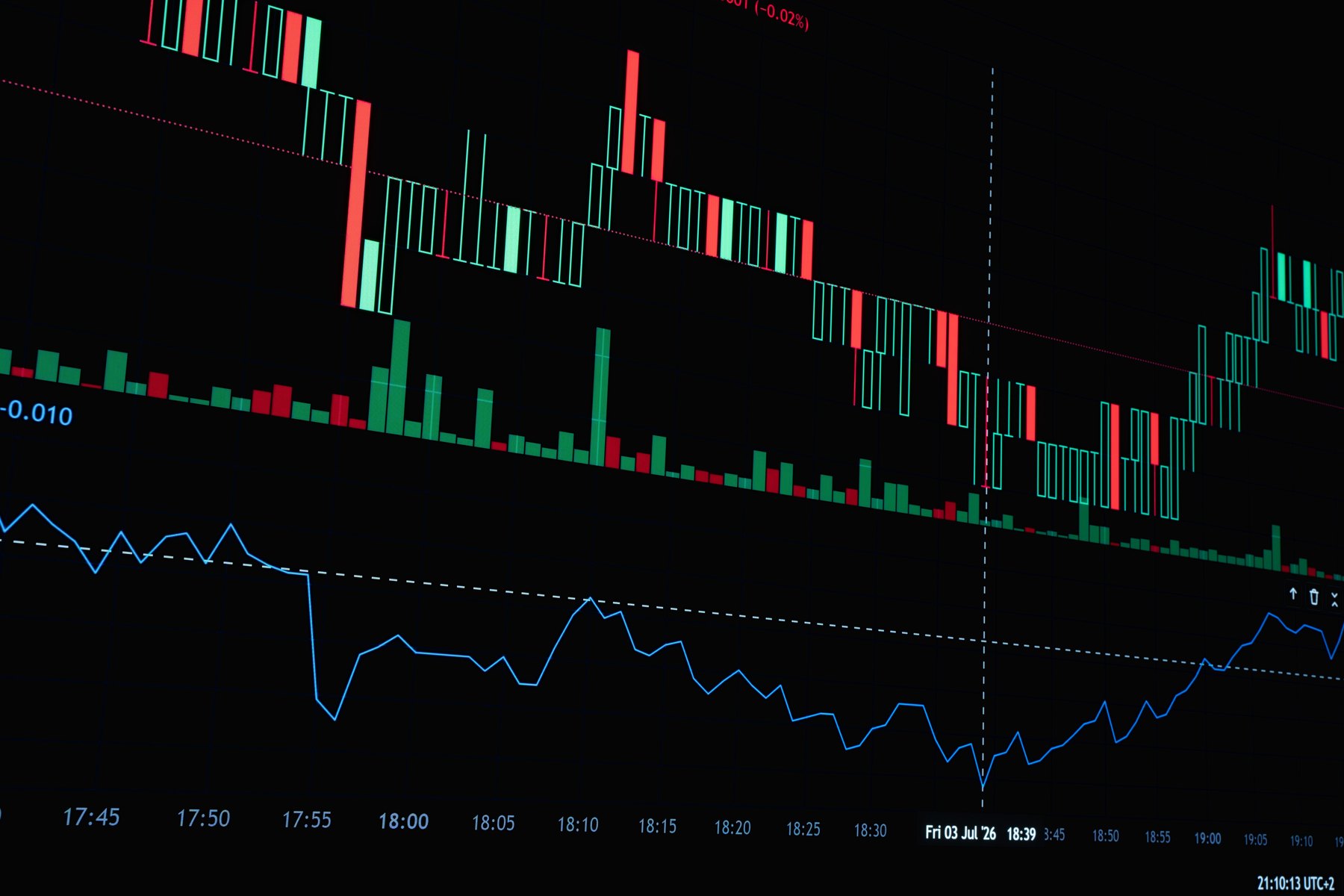
When people talk about Fed rate cut November predictions, they are usually reacting to a few recurring signals. You do not need to be an economist to track the basics. Here are the indicators that commonly shape expectations:
- Inflation trends (CPI and PCE) – cooling inflation can increase the case for cuts; sticky inflation can delay them.
- Jobs data (unemployment rate, payroll growth, wage growth) – a weakening labor market can push the Fed toward easing.
- Fed communications – speeches, meeting minutes, and the Summary of Economic Projections can shift expectations.
- Financial conditions – credit spreads, market volatility, and bank lending standards can influence how restrictive policy feels.
- Market based probabilities – tools like CME FedWatch summarize futures pricing, but they can change quickly.
Decision rule: treat predictions as scenarios, not a plan
If you are making a borrowing decision, build a plan that works under at least two scenarios:
- Scenario A: rates stay about the same through year end.
- Scenario B: rates drift lower over several months.
If your budget only works in Scenario B, the loan may be too tight.
How a November Fed decision could affect common loan types
Different products react differently. Some are closely tied to the prime rate, while others depend more on longer term bond yields and lender competition.
Credit cards (variable APR)
Most credit cards have variable APRs tied to the prime rate. If the Fed cuts and prime falls, card APRs often adjust within one to two billing cycles. But your actual APR still depends on your credit profile and the card’s margin.
Practical move: If you carry a balance, focus first on payoff strategy and lower APR options (like a 0% intro APR balance transfer if you qualify) rather than waiting for a cut.
HELOCs and some personal lines of credit
HELOC rates are commonly variable and tied to prime. A cut can reduce the interest portion of your payment, but your payment may still rise if you are in a draw period ending or if your balance grows.
Practical move: Ask the lender how the rate is calculated (index + margin), whether there is a floor rate, and how often it adjusts.
Mortgages (fixed rate)
Fixed mortgage rates tend to follow longer term Treasury yields and mortgage backed securities pricing. They can fall before a Fed cut if markets expect easing, or rise even after a cut if inflation expectations jump.
Practical move: Shop multiple lenders and compare APR and total closing costs. If you are refinancing, calculate a break even point based on total costs and monthly savings.
Auto loans
Auto loan rates are influenced by lender funding costs, competition, and your credit tier. A Fed cut can help at the margin, but promotions, dealer incentives, and your credit score often matter more.
Practical move: Get preapproved before visiting a dealer so you can compare the dealer’s financing offer to your baseline.
Student loans
Federal student loan rates are set annually based on Treasury auctions and do not change for existing fixed rate loans. Private student loans may be fixed or variable and can be more sensitive to market rates.
Practical move: If you have federal loans, focus on repayment plan fit and servicer accuracy rather than timing the Fed.
Comparison table: where to look for rates and how to compare
If you are shopping for a loan or refinancing, you can compare offers from several types of providers. These are recognizable examples, not a one size fits all list.
| Option (examples) | Best fit | What to compare | Main drawback |
|---|---|---|---|
| Large banks (Chase, Bank of America, Wells Fargo) | Borrowers who want in branch support or relationship discounts | APR, fees, autopay discounts, rate lock terms | May be stricter on credit and documentation |
| Credit unions (Navy Federal, PenFed, local credit unions) | Members seeking competitive rates and lower fees | Membership rules, APR, origination fees, payment flexibility | Eligibility requirements and sometimes slower processing |
| Online lenders (SoFi, LightStream, Upgrade) | Borrowers who prefer fast online applications | APR range, origination fees, term options, funding time | Rates can vary widely by credit tier; fees may apply |
| Mortgage lenders and brokers (Rocket Mortgage, loan brokers) | Homebuyers who want to compare multiple programs | APR, points, lender credits, total closing costs | Broker fees or higher costs in some cases |
| Balance transfer credit cards (Citi, Discover, Capital One) | High interest card debt payoff with a clear timeline | Intro APR length, transfer fee, post intro APR, credit limit | Requires strong credit; missed payments can end promo |
What this could mean for your monthly payment: real number examples
Rate changes matter most when balances are large or when the rate is variable. The examples below use simplified math to show direction, not a quote.
Example 1: Credit card balance
You have a $6,000 balance and your variable APR is 24%. If the APR dropped by 0.50%, the interest savings might be noticeable but not life changing unless you also pay down principal. A stronger lever is increasing your payment.
- If you pay $200 per month, you may spend a long time in payoff mode.
- If you can raise it to $300 per month, you typically reduce total interest far more than a small APR change.
Example 2: HELOC balance
You have a $40,000 HELOC at prime + 1%. If prime falls by 0.25% to 0.50%, your interest cost can drop, but only if your lender passes through the change and you are not at a rate floor.
Decision rule: If you need predictable payments, ask about converting part of the balance to a fixed rate option (if offered) and compare the fee and rate.
Example 3: Mortgage refinance break even
You owe $280,000 on a 30 year fixed mortgage. You are offered a refinance that lowers the rate, but closing costs are $4,500. If the refinance saves you $150 per month, your simple break even is about 30 months ($4,500 / $150). If you might move before then, the refinance may not pencil out.
Borrower checklist: what to do before November (regardless of the Fed)
Instead of trying to time a single meeting, focus on steps that improve your options.
| Action | Why it matters | How to do it | Timing |
|---|---|---|---|
| Check your credit reports | Errors can raise your APR or reduce approvals | Pull reports and dispute inaccuracies | 4 to 8 weeks before applying |
| Stabilize your debt to income ratio | Lower DTI can improve pricing and eligibility | Pay down revolving balances, avoid new debt | 1 to 3 months |
| Shop multiple offers | Pricing varies by lender and product | Compare APR, fees, term, prepayment rules | Within a short window |
| Build a rate buffer in your budget | Protects you if rates do not fall | Afford payment at a higher rate than quoted | Before signing |
| Understand variable rate terms | Caps and floors change risk | Ask about index, margin, caps, reset schedule | Before applying |
Where to check credit reports
You can get free weekly credit reports at AnnualCreditReport.com. Review personal info, accounts, and payment history for errors before you shop for a major loan.
Savings and CDs: how a cut could affect your cash
Rate cuts can reduce yields on high yield savings accounts and money market accounts over time. CD rates may also drift down, but locking a CD can preserve a rate for the term.
Decision rules by timeline (cash planning)
- Under 1 year: prioritize liquidity. Consider high yield savings or a short term Treasury or CD ladder if you can tolerate limited access.
- 1 to 3 years: consider a CD ladder (for example 6, 12, 18, 24 months) to reduce reinvestment risk.
- 3 to 7 years: balance safety and growth. Some people mix CDs and bonds, but price swings can happen if you sell before maturity.
- 7+ years: longer horizons can support more growth oriented investing, but that depends on risk tolerance and goals.
Three sample cash allocations (adds up correctly)
Assume you have $20,000 in cash beyond what you need for monthly bills. Here are three ways to allocate it depending on goals and timing:
- Conservative (near term purchase in 6 to 12 months): $16,000 in high yield savings (check current APY) + $4,000 in a 6 to 12 month CD.
- Balanced (goal in 1 to 3 years): $10,000 in high yield savings + $10,000 split across a CD ladder (for example $5,000 in 12 month CD and $5,000 in 24 month CD).
- Opportunity focused (no planned use for 3+ years, still wants cash buffer): $8,000 in high yield savings + $12,000 in a longer CD ladder (for example $4,000 each in 12, 24, and 36 month CDs), assuming you can leave it untouched.
To understand deposit insurance basics, review FDIC coverage rules at FDIC.gov.
If you are considering refinancing or consolidating debt
A potential rate cut can tempt people to wait. But the better approach is to compare the cost of waiting versus acting now.
Refinancing a mortgage: quick screen
- Run a break even: total closing costs divided by monthly savings.
- Check your time horizon: if you may move or refinance again soon, high upfront costs can be hard to recover.
- Compare APR, not just rate: APR includes many fees and helps apples to apples comparisons.
- Ask about points: paying points can lower the rate but increases upfront cost.
Debt consolidation: when it helps and when it backfires
Consolidation can help if it lowers the effective interest cost and you stop adding new debt. It can backfire if fees are high, the term is extended so long that total interest rises, or you run up credit cards again.
Decision rule: Consolidate only if you can commit to a payoff plan and the math works after fees.
Common mistakes people make when watching Fed predictions
- Assuming all rates move equally: mortgages, auto loans, and credit cards respond differently.
- Ignoring fees: a lower rate with higher fees can cost more overall.
- Overstretching the budget: buying a home or car based on hoped for future cuts can create payment stress.
- Not reading variable rate terms: caps, floors, and reset schedules change risk.
How to follow the Fed without getting lost
If you want to track the Fed directly, use primary sources and focus on what changes your decision.
- Federal Reserve meeting statements and calendars (search for FOMC schedule).
- Consumer protection guidance on credit products and borrowing at consumerfinance.gov.
- Scam and fraud prevention tips if you are shopping for loans or debt relief at consumer.ftc.gov.
Bottom line: build a plan that works with or without a cut
Fed rate cut November predictions can be useful for setting expectations, but your best leverage usually comes from controllable steps: improving credit, lowering balances, shopping multiple offers, and choosing terms you can afford even if rates do not drop soon. If rates do fall, you can revisit refinancing or repricing opportunities with stronger numbers and more flexibility.


