

Simple Precious Metals Habit Beginners

A precious metals habit can help beginners build a steady, repeatable way to buy and manage gold and silver without turning every purchase into a stressful decision.
Contents
29 sections
-
What a "simple habit" means for precious metals
-
Decision rule: start with one metal and one product type
-
Precious metals habit: Set your goal, timeline, and target percentage
-
Timeline rules (use these to choose how aggressive to be)
-
Target allocation ranges many beginners use
-
Build the habit around your cash flow, not the headlines
-
Concrete budget examples (allocations that add up)
-
Choose beginner-friendly products: coins and bars that are easy to resell
-
Common beginner picks
-
Decision rules for picking sizes
-
Compare sellers and platforms (named options) before you buy
-
Buying checklist: what to compare every time
-
Know the real costs: premiums, spreads, taxes, and storage
-
Fraud and scam red flags
-
Storage: pick one method and write down your process
-
Home storage
-
Bank safe deposit box
-
Third-party vaulting
-
Tracking: a simple spreadsheet beats guesswork
-
Decision rule: track "all-in cost per ounce"
-
How precious metals fit with debt and borrowing decisions
-
Simple priority order many households use
-
A 30-day starter plan for beginners
-
Week 1: Set rules
-
Week 2: Compare sellers
-
Week 3: Make one small purchase
-
Week 4: Lock in storage and tracking
-
Common beginner mistakes and how to avoid them
-
Quick checklist: your ongoing precious metals habit
Precious metals are not a bank account and they do not pay interest. They can be a store of value for some people, but prices can swing and costs like premiums, shipping, and storage matter. The goal of a simple habit is to control what you can control: how much you buy, what you buy, where you buy, how you store it, and how you track it.
What a “simple habit” means for precious metals
A habit is a repeatable routine with rules. For precious metals, a good beginner routine usually includes:
- A clear purpose (hedge, diversification, gifting, collecting, emergency barter, long term holding).
- A fixed budget and schedule (monthly, quarterly, or “when bonus hits”).
- A short buy list (a few common coins or bars you understand).
- A buying checklist (verify authenticity, compare premiums, confirm delivery and return policies).
- A storage plan (home safe, bank safe deposit box, or insured vaulting).
- Simple tracking (what you bought, total ounces, total cost, where stored).
Decision rule: start with one metal and one product type
If you are brand new, pick either gold or silver first and stick to one or two widely recognized items for the first 3 to 6 purchases. This reduces mistakes and makes it easier to compare prices across sellers.
Precious metals habit: Set your goal, timeline, and target percentage
Before you buy anything, decide how precious metals fit into your overall finances. A practical way is to set a target range as a percentage of your net worth or investable assets, then build toward it slowly.
Timeline rules (use these to choose how aggressive to be)
- Under 1 year: Keep priorities on cash reserves and high liquidity. If you buy metals, keep it small and focus on easy to sell items.
- 1 to 3 years: Consider a modest allocation if you already have emergency savings and manageable high interest debt.
- 3 to 7 years: A steady, small allocation can make sense for diversification if you can tolerate price swings.
- 7+ years: You have more time to ride volatility, but you still want low ongoing costs and a clear storage plan.
Target allocation ranges many beginners use
There is no universal “right” number, but many people who choose to hold metals keep it in a modest range like 0% to 10% of investable assets. If you are unsure, start at the low end and reassess after you have a routine.
Build the habit around your cash flow, not the headlines
Beginners often buy after a big news cycle and then stop for months. A habit works better when it is tied to your budget. Choose one schedule:
- Monthly: Good for smoothing out price swings and building consistency.
- Quarterly: Fewer shipping fees and fewer decisions.
- Milestone based: For example, “I buy after I hit my emergency fund goal” or “I buy after my IRA contribution.”
Concrete budget examples (allocations that add up)
Below are three sample monthly allocations to show what this looks like with real numbers. These are examples, not a recommendation for your situation.
| Scenario | Monthly take-home | Emergency fund | High-interest debt | Monthly metals budget | Notes |
|---|---|---|---|---|---|
| Starter | $3,200 | Building toward 3 months | Credit card balance | $25 | Keep metals small until debt and cash reserves improve. |
| Balanced | $5,000 | 3 to 6 months saved | No revolving balance | $100 | Consider one simple purchase per month or one larger quarterly buy. |
| Aggressive saver | $8,500 | 6+ months saved | Low-rate mortgage only | $300 | Still compare premiums carefully and avoid overconcentration. |
Check your foundation first. If you are still building emergency savings, the FDIC explains what deposit insurance covers for bank accounts, which can help you decide how much cash to keep liquid: https://www.fdic.gov/.
Choose beginner-friendly products: coins and bars that are easy to resell
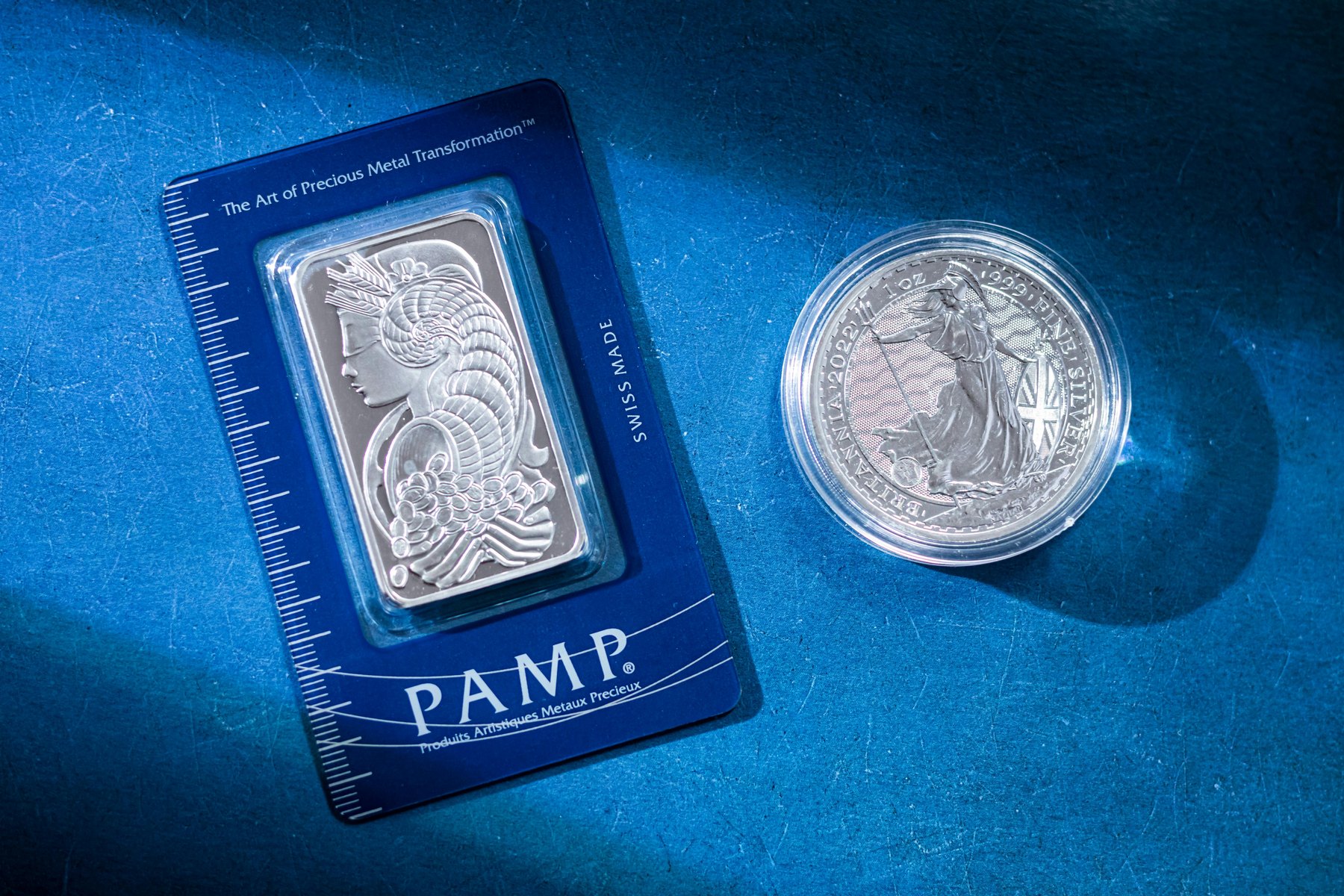
For most beginners, the simplest approach is to buy widely recognized bullion products. These tend to have clearer pricing and broader resale demand than niche collectibles.
Common beginner picks
- Silver: 1 oz rounds, 1 oz government-minted coins (often higher premiums), 10 oz bars.
- Gold: 1 oz coins, fractional coins (like 1/10 oz or 1/4 oz), small bars from well-known refiners.
Decision rules for picking sizes
- If your budget is small, silver can be easier to buy regularly, but it takes more space to store.
- If you want compact value, gold is easier to store, but fractional gold can carry higher premiums.
- If you may need to sell in smaller chunks, mix sizes (for example, some 1 oz items plus a few smaller pieces).
Compare sellers and platforms (named options) before you buy
Pricing and policies vary by seller. Compare the total cost to your door (or vault), not just the spot price. Below are recognizable options many buyers use as starting points for comparison. Availability, inventory, and fees change, so verify current terms.
| Option | Best fit | What to compare | Main drawback |
|---|---|---|---|
| APMEX | Wide selection and frequent inventory | Premiums, shipping, payment methods, buyback process | Premiums can be higher on some items |
| JM Bullion | Online buyers who want clear listings | Deal pricing, shipping thresholds, payment processing times | Inventory and deals change quickly |
| SD Bullion | Value-focused bullion shoppers | Total delivered cost, deal limits, backorder terms | Some items may be on preorder or backorder |
| Kitco | Buyers who also follow market news | Premiums, shipping, buyback quotes, product availability | Selection can differ from large bullion-only dealers |
| Costco (when available) | Members who find periodic bullion offers | Per-unit price, limits, return rules, membership value | Availability is inconsistent and selection is limited |
| Local coin shop | People who want in-person inspection and immediate possession | Out-the-door premium, testing, buyback spread, selection | Pricing varies widely and selection may be limited |
Buying checklist: what to compare every time
- Premium over spot: Compare the same item across sellers.
- Shipping and insurance: Is it included? Is there a free-shipping threshold?
- Payment method costs: Card, bank transfer, check, and crypto can have different pricing and processing times.
- Delivery timeline: Especially for high-demand periods or backorders.
- Return policy: Some bullion sales are final or have strict conditions.
- Buyback process: Not just whether they buy back, but how pricing is determined and how quickly you get paid.
Know the real costs: premiums, spreads, taxes, and storage
Metals have friction costs. Your habit should aim to reduce them.
| Cost or risk | What it is | Why it matters | How to manage it |
|---|---|---|---|
| Premium | Amount paid above spot price | Higher premium means you need a higher resale price to break even | Buy common items, compare multiple sellers, consider larger bars for lower premium per ounce |
| Bid-ask spread | Difference between dealer sell and buyback prices | Wide spreads can reduce resale value | Favor liquid products and understand buyback quotes before buying |
| Sales tax | State or local tax rules on bullion | Can materially change total cost | Check your state rules and keep receipts |
| Storage and insurance | Home safe, safe deposit box, or vault fees | Ongoing costs reduce net benefit | Match storage to value, consider insurance options, avoid advertising your holdings |
| Counterfeit risk | Fake bars or coins, especially in peer-to-peer deals | Hard to recover losses | Buy from reputable sources, verify packaging, use testing at a coin shop when needed |
Fraud and scam red flags
- Pressure to buy immediately because “prices will double tomorrow.”
- Promises of guaranteed returns or risk-free profits.
- Unclear fees, vague storage arrangements, or reluctance to provide written terms.
- Requests to pay via unusual methods with no buyer protections.
The FTC has practical guidance on spotting and reporting scams: https://consumer.ftc.gov/.
Storage: pick one method and write down your process
Your storage choice should match your goals, the value you hold, and your comfort level.
Home storage
- Best for: Small to moderate holdings and quick access.
- Habit rule: If you store at home, consider a quality safe that is anchored, and keep purchase records separate from the metals.
Bank safe deposit box
- Best for: People who want off-site storage and do not need frequent access.
- Habit rule: Confirm access hours and what documentation you need to access the box.
Third-party vaulting
- Best for: Larger holdings or people who want insured storage and easier shipping logistics.
- Habit rule: Understand whether your metals are allocated (specific items held for you) or unallocated (a claim on a pool), and compare fees.
Tracking: a simple spreadsheet beats guesswork
A beginner-friendly tracking system can be as simple as a spreadsheet or notes app, as long as it is consistent. Track:
- Date purchased
- Item (brand, type, weight)
- Quantity and total ounces
- Total cost (including shipping and tax)
- Seller
- Storage location
- Receipt or order number
Decision rule: track “all-in cost per ounce”
Spot price is not your cost. Your habit should focus on your all-in cost per ounce so you can compare purchases fairly over time.
How precious metals fit with debt and borrowing decisions
Many people discover metals while also managing credit cards, auto loans, or personal loans. A practical rule is to avoid building a metals habit on top of high-interest revolving debt. If you are paying high APR on credit cards, the interest cost can outpace the potential benefits of holding metals.
Simple priority order many households use
- Cover essentials and avoid late payments.
- Build a starter emergency fund (often 1 month of expenses).
- Pay down high-interest debt.
- Build a fuller emergency fund (often 3 to 12 months depending on job stability).
- Then fund longer-term goals, including a modest metals allocation if desired.
If you are working on credit health, you can review your credit reports for free at https://www.annualcreditreport.com/. If you are dealing with debt collection or credit disputes, the CFPB has consumer resources at https://www.consumerfinance.gov/.
A 30-day starter plan for beginners
Use this as a simple on-ramp to build your routine.
Week 1: Set rules
- Pick your purpose and timeline.
- Set a monthly or quarterly budget you can sustain.
- Choose your first two products (example: 1 oz silver rounds and a 10 oz silver bar, or a 1 oz gold coin and one fractional coin).
Week 2: Compare sellers
- Price the same item across at least three sources (two online dealers plus a local shop, for example).
- Write down all-in cost, shipping, and estimated delivery time.
- Confirm payment method pricing differences.
Week 3: Make one small purchase
- Buy one item within your budget.
- Save the receipt and record the details.
- Inspect packaging and condition on arrival.
Week 4: Lock in storage and tracking
- Decide where it will live long-term and document your process.
- Update your spreadsheet with all-in cost per ounce.
- Schedule your next buy date on your calendar.
Common beginner mistakes and how to avoid them
- Buying too many different items: Start with a short buy list so you can compare pricing and resale demand.
- Ignoring premiums and spreads: Two products with the same spot exposure can have very different total costs.
- Overbuying during hype: A fixed schedule can reduce emotional decisions.
- Storing without a plan: Storage is part of the cost and risk profile.
- Using debt to buy metals: Interest costs can add pressure and reduce flexibility.
Quick checklist: your ongoing precious metals habit
- Buy on a schedule (monthly or quarterly).
- Stick to 1 to 3 core products.
- Compare at least 3 sources before each purchase.
- Track all-in cost per ounce and storage location.
- Review your target allocation once or twice per year.
- Keep your cash reserves and debt plan on track alongside metals.
A simple habit is not about predicting prices. It is about making fewer, better decisions repeatedly and keeping costs, risks, and storage under control as you learn.


