

Trump Accounts Returns: What to Know Before You Chase Performance

Trump Accounts Returns can mean different things depending on what “Trump accounts” refers to in the news, on social media, or in marketing materials. Some people use the phrase to describe brokerage accounts holding Trump Media and Technology Group (DJT) stock, political themed ETFs, or portfolios built around “Trump trade” themes. Others use it loosely to describe any account strategy they believe will benefit from certain policy expectations. This guide shows how to evaluate returns in a way that is measurable, comparable, and tied to your time horizon and risk tolerance.
Contents
29 sections
-
What people mean by "Trump accounts"
-
Trump Accounts Returns: what actually drives performance
-
1) Market risk and concentration
-
2) Fees and trading costs
-
3) Taxes
-
4) Cash drag and timing
-
5) Benchmark selection
-
How to measure returns correctly (with a simple template)
-
Named account and platform examples (what to compare)
-
Risk and cost checklist (use this before buying a "theme")
-
Real number scenarios: what "returns" look like in practice
-
Scenario A: $5,000 "curious but cautious"
-
Scenario B: $25,000 "balanced with a theme tilt"
-
Scenario C: $100,000 "goal based buckets"
-
Timeline decision rules: under 1 year, 1 to 3, 3 to 7, 7+ years
-
Under 1 year
-
1 to 3 years
-
3 to 7 years
-
7+ years
-
If your "Trump account" is really a cash account: how to compare safe returns
-
How to avoid common mistakes when chasing headline driven returns
-
Do not confuse a good trade with a good plan
-
Set position sizing rules before you buy
-
Watch for margin and options risk
-
Check your credit and cash flow before taking on debt to invest
-
Practical comparison: single stock vs theme ETF vs broad index
-
Recordkeeping: what to track so you can judge results later
-
Where to get reliable help if something goes wrong
-
Bottom line: evaluate the account, not the slogan
Rather than trying to predict headlines, you can make better decisions by focusing on what you can control: fees, taxes, diversification, liquidity, and how much risk you are taking to get a given return. You will also see concrete examples with real numbers and checklists you can use to compare accounts and investments.
What people mean by “Trump accounts”
Because the phrase is informal, start by identifying what you actually own or are considering:
- A brokerage account holding DJT stock (Trump Media and Technology Group) or options on DJT.
- Political or “theme” ETFs marketed around policy narratives, defense, energy, infrastructure, or “America first” themes.
- A portfolio tilt toward industries some investors expect to benefit from certain policies (for example, energy, financials, industrials) using broad sector ETFs.
- Cash management or savings accounts someone labels as “Trump accounts” even though they are just high yield savings, money market funds, or CDs.
Each category has different drivers of returns and different risks. A single stock can swing wildly. A broad index fund is usually less volatile. A savings account return is mainly the APY and how often it changes.
Trump Accounts Returns: what actually drives performance
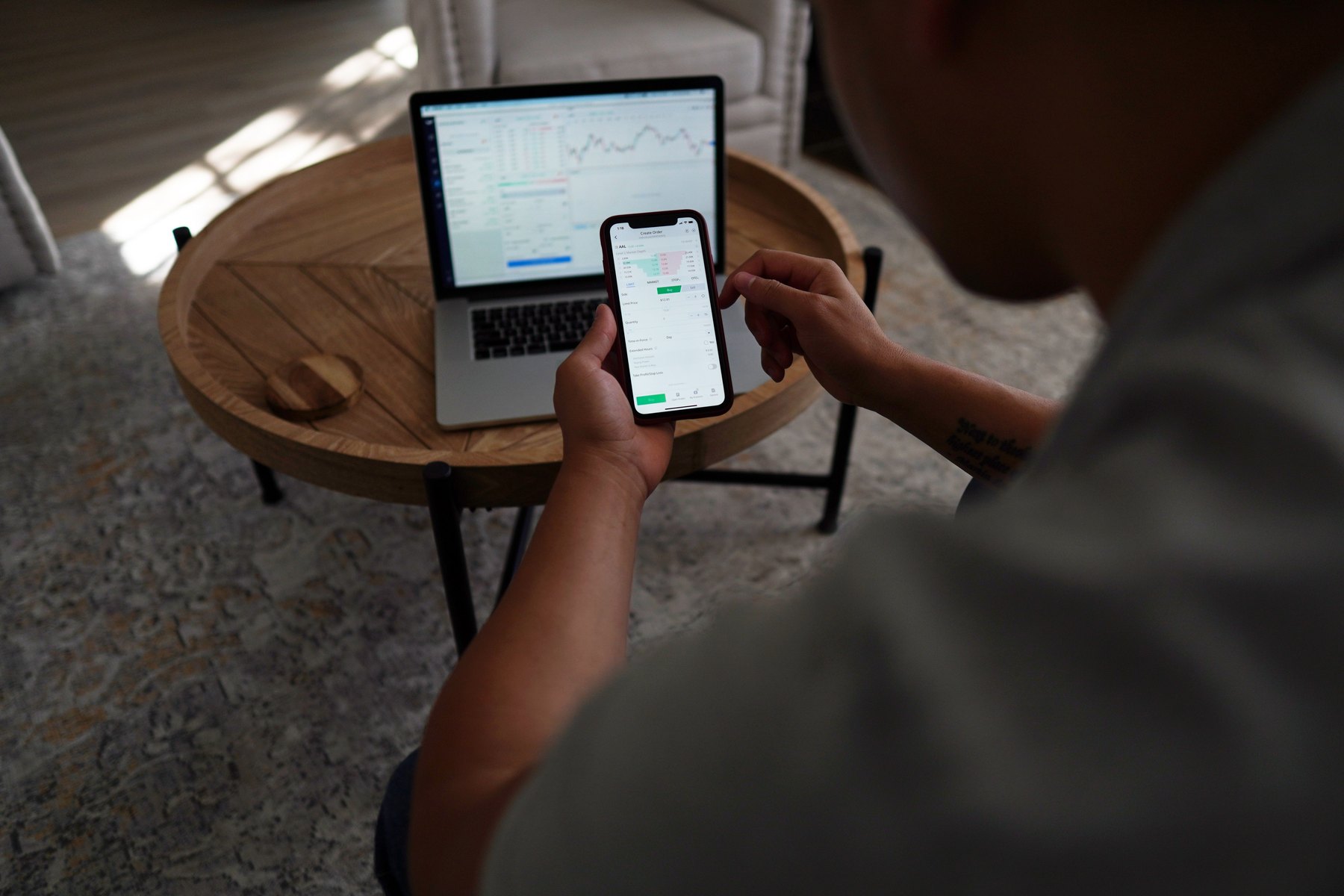
To evaluate Trump Accounts Returns, separate the story from the math. Returns come from a few measurable sources:
1) Market risk and concentration
If the account is concentrated in one stock or a narrow theme, your return is dominated by price swings. Concentration can create big gains or big losses, sometimes quickly. Ask: what percent of the account is tied to one company, one sector, or one narrative?
2) Fees and trading costs
Even when commissions are $0, costs still exist: bid ask spreads, ETF expense ratios, advisory fees, and margin interest. Over time, recurring fees can meaningfully reduce net returns.
3) Taxes
Taxes can be the difference between a good pre tax return and a disappointing after tax result. Short term capital gains (assets held 1 year or less) are typically taxed at ordinary income rates. Long term capital gains may be taxed at lower rates depending on your income. Frequent trading can increase tax drag.
4) Cash drag and timing
Holding a lot of cash in a brokerage account that pays little interest can reduce returns. Trying to time entries and exits can also produce uneven results. A simple rule is to compare your results to a relevant benchmark over the same period.
5) Benchmark selection
Pick a benchmark that matches what you own. If you hold a single stock, compare to that stock’s total return. If you hold broad U.S. stocks, compare to a broad index like the S&P 500. If you hold cash, compare to current savings APYs or Treasury yields.
How to measure returns correctly (with a simple template)
Two people can hold the same investment and report different “returns” because they calculate differently. Use these steps for a clearer picture:
- Use total return: include price change plus dividends or distributions.
- Use time weighted return if you add money over time and want to judge the investment manager or strategy.
- Use money weighted return (IRR) if you want to judge your personal experience including contributions and withdrawals.
- Calculate after fees: subtract expense ratios, advisory fees, and margin interest.
- Estimate after tax: note whether gains are short term or long term and whether distributions are taxable.
Quick template: Start with beginning value. Add contributions. Subtract withdrawals. Compare ending value. Then separate market gains from cash flows so you do not confuse “I added money” with “the strategy performed.”
Named account and platform examples (what to compare)
If you are evaluating where to hold a portfolio that includes DJT, sector ETFs, or broad index funds, the account provider matters for costs, tools, and cash yield. Below are recognizable options to compare. Availability, features, and pricing can change, so verify current terms.
| Option | Best fit | What to compare | Main drawback |
|---|---|---|---|
| Fidelity Brokerage | Long term investors who want strong research and cash tools | Core position yield, mutual fund access, options approvals, margin rates | Interface can feel complex for beginners |
| Charles Schwab | Investors who want broad service and banking integration | ETF lineup, cash sweep details, advisory pricing, options tools | Cash sweep yield may differ by account type |
| Vanguard Brokerage | Buy and hold index fund investors focused on low fund costs | Fund expense ratios, trading tools, settlement and cash features | Trading tools may be less robust for active strategies |
| E*TRADE (Morgan Stanley) | Active traders who want screeners and options features | Options pricing, platform tools, margin rates, education | Tools can encourage overtrading if you are not disciplined |
| Interactive Brokers | Advanced traders who care about execution and global markets | Margin rates, order types, market access, data fees | Steeper learning curve |
| Robinhood | Simple mobile first investing and smaller accounts | Cash yield terms, options features, spreads, account protections | Less depth for research and planning than full service brokers |
Decision rule: If your strategy involves frequent trading, options, or margin, compare execution quality, spreads, margin rates, and risk controls. If your strategy is long term investing, prioritize low ongoing fund costs, good cash yield, and easy automation.
Risk and cost checklist (use this before buying a “theme”)
Use this checklist to pressure test any account strategy built around a political or headline theme.
| Item to check | Why it matters | What to look for |
|---|---|---|
| Concentration | Single stock risk can dominate results | Keep any one stock to a small slice of your total portfolio unless you can tolerate large swings |
| Liquidity | Thin trading can widen spreads and increase losses | Average daily volume, bid ask spread, ability to exit in stress |
| Expense ratio | Ongoing costs reduce net returns | ETF expense ratio and any platform or advisory fees |
| Tax impact | Short term gains and distributions can raise your tax bill | Holding period, distribution history, tax bracket considerations |
| Use of margin or options | Leverage can magnify losses and trigger margin calls | Margin rate, maintenance requirements, worst case loss scenario |
| Benchmark | Helps you judge whether risk was worth it | Compare to a relevant index fund over the same time period |
Real number scenarios: what “returns” look like in practice
Below are three sample allocations that add up correctly. They are not recommendations. They show how different mixes change risk and how you might limit damage if a theme trade goes against you.
Scenario A: $5,000 “curious but cautious”
- $3,500 in a broad U.S. stock index fund or ETF
- $1,000 in a high yield savings account or money market fund for flexibility
- $500 in a single stock or theme ETF “satellite” position
Why this structure: If the $500 position drops 50%, the portfolio impact is about $250, which many people can tolerate better than a large concentrated bet.
Scenario B: $25,000 “balanced with a theme tilt”
- $15,000 in broad stock exposure (total U.S. market or S&P 500)
- $7,000 in high quality bonds or a bond fund (match duration to your timeline)
- $2,000 in cash for near term needs
- $1,000 in a theme ETF or single stock
Decision rule: Keep the theme sleeve at 0% to 10% of the portfolio if you want it to be an expression of a view, not the driver of your financial plan.
Scenario C: $100,000 “goal based buckets”
- $20,000 emergency fund in a high yield savings account or money market fund
- $50,000 long term diversified stocks (index funds)
- $25,000 diversified bonds or Treasuries laddered to goals
- $5,000 theme sleeve (single stock or theme ETF)
How to judge returns: Evaluate each bucket against its job. Cash should be stable and liquid. Bonds should reduce volatility and match time horizon. Stocks should drive long term growth. The theme sleeve is optional and should not jeopardize essentials.
Timeline decision rules: under 1 year, 1 to 3, 3 to 7, 7+ years
Under 1 year
- Prioritize principal stability and liquidity.
- Common tools: high yield savings, money market funds, short term Treasuries, short term CDs.
- Avoid relying on a single stock or volatile theme for money you need soon.
1 to 3 years
- Consider a mix of cash and high quality short duration bonds or Treasuries.
- If you invest in stocks, keep the allocation modest and accept that the value could be down when you need it.
3 to 7 years
- You can usually take more market risk, but diversification matters.
- A theme sleeve can exist, but it should be sized so a large drawdown does not derail the goal.
7+ years
- Long horizons can better absorb volatility, but concentration risk is still real.
- Broad, low cost diversification often matters more than getting one big call right.
If your “Trump account” is really a cash account: how to compare safe returns
Some people use “Trump accounts” to mean a place to park cash while waiting for opportunities. If that is your situation, compare:
- APY or yield and how often it changes.
- FDIC insurance for bank deposits or SIPC coverage for brokerage accounts (note: SIPC does not protect against market losses).
- Fees such as monthly maintenance, wire fees, and ATM fees.
- Access to your money: transfer times, withdrawal limits, and check writing.
You can confirm how FDIC coverage works at FDIC.gov.
How to avoid common mistakes when chasing headline driven returns
Do not confuse a good trade with a good plan
A single winning position can feel like proof, but it may be luck, timing, or a temporary narrative. A plan is repeatable: it defines position size, exit rules, and what happens if you are wrong.
Set position sizing rules before you buy
- Pick a maximum percent for any single stock (for many people, 1% to 5% is a reasonable ceiling for speculative positions).
- Decide whether you will add more if it drops, and how much.
- Decide what would make you sell: a time limit, a price level, or a change in fundamentals.
Watch for margin and options risk
Options and margin can magnify gains, but they can also magnify losses quickly. If you use them, understand maximum loss, assignment risk, and the possibility of margin calls. Compare margin rates across brokers and read the platform’s risk disclosures.
Check your credit and cash flow before taking on debt to invest
Borrowing to invest can increase risk because you owe payments regardless of market performance. If you are considering using a personal loan, credit card balance transfer, or margin to fund investments, review your credit reports and budget first. You can get free credit reports at AnnualCreditReport.com.
Practical comparison: single stock vs theme ETF vs broad index
Use this decision matrix to match the tool to your goal.
| Choice | Potential upside | Key risks | Best use case |
|---|---|---|---|
| Single stock (example: DJT) | High if the company outperforms expectations | Company specific risk, volatility, headline risk, concentration | Small satellite position you can afford to be volatile |
| Theme ETF | Moderate if the theme plays out across multiple companies | Higher fees than broad funds, theme may be poorly defined, overlap risk | Targeted tilt with diversification inside the theme |
| Broad index fund (S&P 500 or total market) | Market level returns over time | Market downturns, but less company specific risk | Core long term holdings for many investors |
Recordkeeping: what to track so you can judge results later
- Starting balance and ending balance by month or quarter
- Contributions and withdrawals (dates and amounts)
- Holdings list with position sizes
- Dividends and distributions
- Fees paid (expense ratios are embedded, but advisory and margin interest are explicit)
- Taxes: short term vs long term gains, and whether you harvested losses
Where to get reliable help if something goes wrong
If you run into issues with a financial product or believe you were misled, you can learn how to submit a complaint and find consumer resources at the Consumer Financial Protection Bureau and the Federal Trade Commission.
Bottom line: evaluate the account, not the slogan
Trump Accounts Returns are only meaningful when you define what the account holds, how returns are calculated, and what risks you took to get them. Start with your timeline, keep speculative positions small enough to survive volatility, compare providers on costs and tools, and measure performance against a relevant benchmark after fees and taxes.


