

What to Do with Pennies

What to do with pennies depends on how many you have, how much time you want to spend, and whether your goal is convenience, saving, or giving.
Contents
33 sections
-
Quick reality check: how much are your pennies worth?
-
What to do with pennies: the best options by goal
-
Start with a simple sorting and counting system
-
Fast checklist
-
Before you cash in: check for collectible or unusual pennies
-
Option 1: Deposit pennies at a bank or credit union
-
What to ask your bank
-
Option 2: Use a coin-counting kiosk (and avoid unnecessary fees)
-
Decision rules for kiosks
-
Option 3: Roll pennies yourself (low cost, more time)
-
How many pennies per roll?
-
Rolling checklist
-
Option 4: Spend pennies strategically (without slowing everyone down)
-
Option 5: Donate pennies (simple and often meaningful)
-
Turn pennies into real savings: where to put the money after you cash in
-
Timeline decision rules
-
Where pennies fit in common money buckets
-
Three real-number scenarios: what this looks like in practice
-
Scenario A: Small jar, quick win (total $18)
-
Scenario B: Medium stash from a few years (total $126)
-
Scenario C: Big coin cleanout (total $520)
-
How pennies can support borrowing and credit goals
-
Use pennies to reinforce these credit-friendly moves
-
Common pitfalls to avoid
-
A simple "pennies plan" you can repeat every month
-
Monthly routine (10 to 20 minutes)
-
FAQ
-
Is it legal to melt pennies or sell them for metal value?
-
Should I keep pennies at all?
-
What is the fastest way to get rid of a lot of pennies?
-
Bottom line
-
What this could look like with $100,000
-
Timeline rules for deciding where the money goes
Pennies can feel pointless, but they still add up. A jar that looks small can easily hold $10 to $50 in mixed change, and a larger container can reach hundreds of dollars over time. The key is to choose a method that fits your timeline and avoids unnecessary fees.
Quick reality check: how much are your pennies worth?
Before you sort, estimate the value so you can decide whether it is worth rolling, depositing, or using a machine.
- 100 pennies = $1
- 1,000 pennies = $10
- 5,000 pennies = $50
- 10,000 pennies = $100
If you have a mixed jar, a fast approach is to weigh it on a kitchen scale after removing the container weight, then use online coin weight charts. If you want a simpler rule, assume a typical household change jar often lands in the $20 to $200 range depending on size and how long it has been filling.
What to do with pennies: the best options by goal
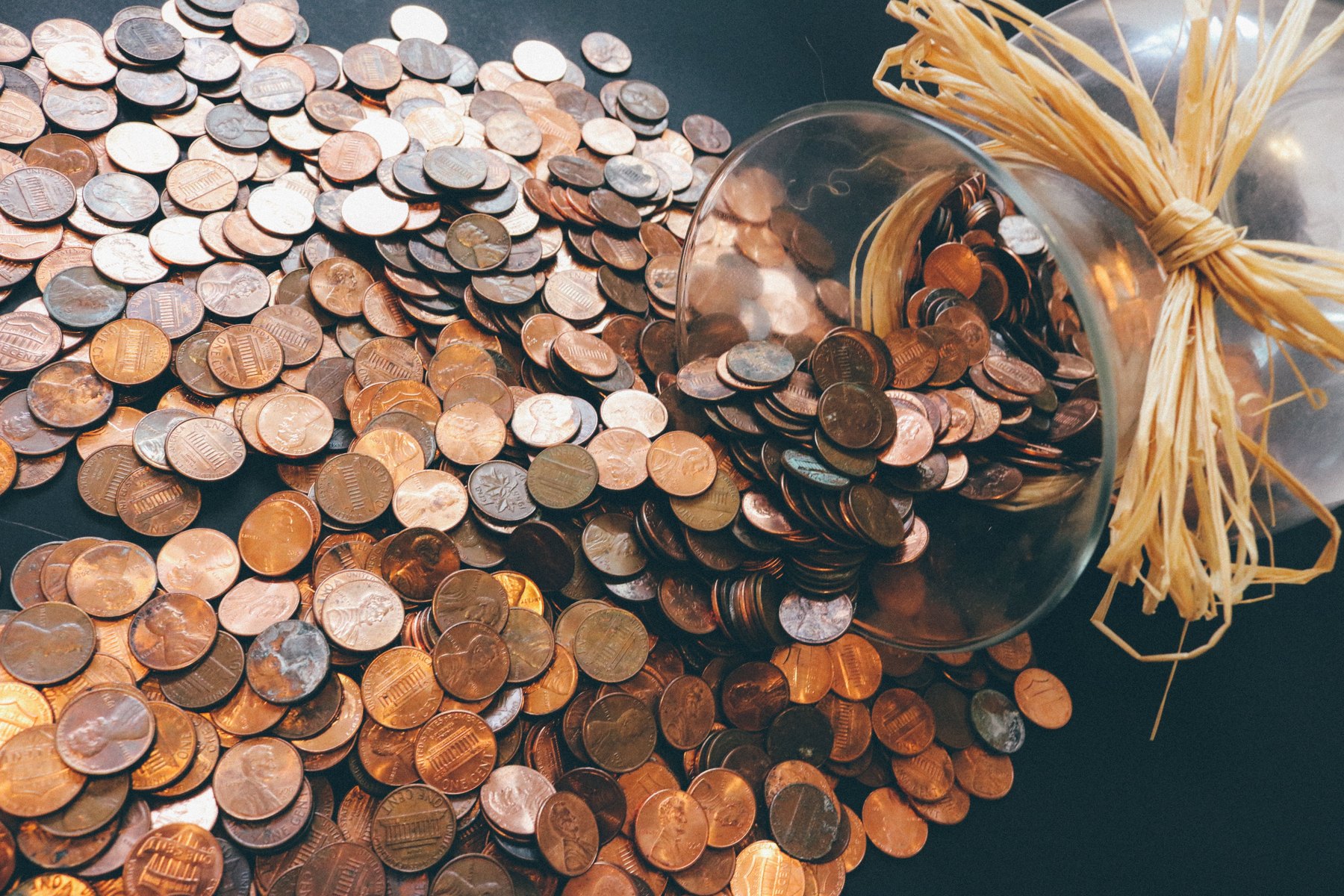
Use this decision table to pick an approach that matches your priorities.
| Option | Best fit | What to compare | Main drawback |
|---|---|---|---|
| Deposit at your bank or credit union | You want low or no fees | Coin acceptance rules, need for rolls, account requirements | May require rolling or an in-branch visit |
| Coin-counting kiosk (Coinstar) | You want speed and convenience | Cash fee vs gift card options, kiosk locations, limits | Fees can reduce your total if you take cash |
| Roll coins yourself and spend or deposit | You have time and want full value | Cost of wrappers, your time, bank roll requirements | Time-consuming and easy to miscount |
| Use pennies for small purchases (exact change) | You want to clear them out gradually | Store policy, your patience, checkout speed | Inconvenient and can frustrate lines |
| Donate to a charity or school fundraiser | You want simplicity and impact | How they accept coins, whether they can process change cheaply | You give up the cash value |
| Keep a small “change fund” at home | You want a tiny emergency cash stash | How much to keep, where to store it safely | Not earning interest and easy to ignore |
Start with a simple sorting and counting system
If you have more than a handful of pennies, sorting first saves time later.
Fast checklist
- Pick a workspace and container for each coin type (pennies, nickels, dimes, quarters).
- Remove obvious non-coins (paper clips, tokens).
- Separate “maybe valuable” coins (see the next section).
- Decide your end goal: deposit, kiosk, donate, or spend.
Before you cash in: check for collectible or unusual pennies
Most pennies are worth face value, but it is smart to do a quick scan before dumping them into a machine. Look for:
- Wheat pennies (1909 to 1958) with wheat stalks on the back.
- Older dates and unusual mint marks (small letters like D or S).
- Errors like off-center strikes or doubled lettering.
- Condition – uncirculated coins can be more desirable to collectors.
If you find something that looks unusual, consider comparing it on reputable coin references or getting an appraisal from a local coin shop. Avoid cleaning coins, which can reduce collector value.
Option 1: Deposit pennies at a bank or credit union
This is often the best value option if your bank accepts coins without charging a separate fee. Policies vary widely.
What to ask your bank
- Do you accept loose coins, or do they need to be rolled?
- Is there a fee for coin deposits?
- Is there a limit per day or per visit?
- Do you provide coin wrappers?
If you are depositing a lot of coins, call ahead. Some branches have coin machines for customers, while others require rolled coins. If you are choosing where to keep savings long term, consider FDIC or NCUA coverage rules and account terms. You can learn more about deposit insurance at the FDIC.
Option 2: Use a coin-counting kiosk (and avoid unnecessary fees)
Coin-counting kiosks are convenient, but cash-out fees can be meaningful if you are converting a large amount. Coinstar is a common example found in grocery stores and big-box locations.
Decision rules for kiosks
- If you want cash, check the current fee and decide if the time saved is worth it.
- If you can use a gift card or e-gift option, compare whether it avoids fees and whether you will actually use it.
- If your coins are dirty or sticky, clean the container, not the coins. Some machines reject damaged coins.
Keep the receipt until you confirm the amount received. If the kiosk offers a donation option, confirm the charity name and keep records if you track charitable giving.
Option 3: Roll pennies yourself (low cost, more time)
Rolling pennies can preserve full face value, especially if your bank requires rolls. It is also a good way to involve kids in basic money skills.
How many pennies per roll?
- Pennies: 50 coins = $0.50
- Nickels: 40 coins = $2.00
- Dimes: 50 coins = $5.00
- Quarters: 40 coins = $10.00
Rolling checklist
- Buy wrappers or ask your bank if they provide them.
- Count carefully and label if wrappers are blank.
- Keep a simple tally sheet so you know your total deposit.
- Bring ID if your bank requires it for cash transactions.
Option 4: Spend pennies strategically (without slowing everyone down)
Using pennies for purchases is legal tender, but stores can set practical policies about how they accept coins. If you choose this route, keep it courteous:
- Use pennies when the line is short.
- Use them to make exact change rather than paying entirely in pennies.
- Pre-count at home into small baggies (for example, $1 in pennies) so checkout is quick.
This method works best for clearing out small amounts over time.
Option 5: Donate pennies (simple and often meaningful)
If the value is small and your time is limited, donating can be the most practical choice. Common places that accept coins include:
- School coin drives
- Local food banks
- Animal shelters
- Community fundraisers
If you want to maximize what the organization receives, ask whether they can deposit coins without paying high fees. Some nonprofits prefer bills or online donations for lower processing costs.
Turn pennies into real savings: where to put the money after you cash in
The point of cashing in pennies is not just to tidy up. It is to direct small money into a bigger plan. Once you convert coins to dollars, choose a “bucket” based on your timeline and goals.
Timeline decision rules
- Under 1 year: Prioritize safety and access. Consider an FDIC-insured high-yield savings account, a money market deposit account, or short-term Treasury bills. Verify current APY or yields, minimums, and withdrawal rules.
- 1 to 3 years: Consider a mix of high-yield savings, CDs, or a Treasury ladder. Compare early withdrawal penalties on CDs and how soon you may need the cash.
- 3 to 7 years: You may be able to take moderate investment risk depending on your comfort level and other savings. Some people use a balanced stock and bond approach for goals that are not immediate, but values can fluctuate.
- 7+ years: Long timelines can support more exposure to diversified investments, but only after you have a solid emergency fund and manageable high-interest debt.
Where pennies fit in common money buckets
| Bucket | Best for | What to check | Tradeoff |
|---|---|---|---|
| FDIC-insured high-yield savings | Emergency fund, near-term goals | Current APY, fees, transfer limits, FDIC coverage | Rates can change; returns may lag inflation |
| Money market deposit account | Cash you may need soon with some yield | Minimum balance, tiered rates, check-writing rules | May require higher balance for best rate |
| Treasury bills (T-bills) | Short-term parking with defined maturity | Current yields, maturity dates, how to buy (TreasuryDirect or brokerage) | Money is tied up until maturity if you hold to term |
| Certificates of deposit (CDs) | Known term and rate for a goal date | Term length, early withdrawal penalty, renewal policy | Less flexible access |
| Brokerage cash sweep / money market fund | Cash inside a brokerage account | Yield, SIPC coverage vs FDIC, fund rules | Not the same as a bank deposit account |
| Diversified stock/bond portfolio | Long-term goals | Fees, diversification, risk level, time horizon | Market risk and volatility |
Three real-number scenarios: what this looks like in practice
These examples show how a pile of pennies and other coins can turn into a plan. Adjust the numbers to match your goals.
Scenario A: Small jar, quick win (total $18)
- $10 deposited into high-yield savings for a starter emergency buffer
- $5 set aside for a specific near-term bill (streaming, school fee, or transit)
- $3 donated to a local cause you care about
Decision rule: If the total is under $25, prioritize a method that costs little time and minimal fees, then move the money into a clear purpose so it does not disappear.
Scenario B: Medium stash from a few years (total $126)
- $60 to an FDIC-insured high-yield savings account
- $40 toward a high-interest debt payment (credit card or personal loan principal) if you are carrying a balance
- $26 into a “car and home” sinking fund for oil changes, filters, or small repairs
Decision rule: If you have high-interest revolving debt, consider directing a meaningful slice to it while still building a small cash cushion.
Scenario C: Big coin cleanout (total $520)
- $250 emergency fund in high-yield savings (aiming toward 3 to 6 months of expenses over time)
- $150 into a 4 to 13 week T-bill ladder for a goal under 1 year (verify current yields and purchase method)
- $100 to a CD timed to a known expense 12 to 24 months away (compare early withdrawal penalties)
- $20 for a small “fun money” reward so the habit feels sustainable
Decision rule: If you are cashing in several hundred dollars, it is worth spending extra time to avoid kiosk fees and to place the money into buckets that match your timeline.
How pennies can support borrowing and credit goals
Pennies will not transform your finances alone, but they can support habits that matter when you borrow.
Use pennies to reinforce these credit-friendly moves
- Build a buffer: Even $50 to $200 can reduce the chance you need to put a surprise expense on a credit card.
- Lower utilization: If you carry credit card balances, extra payments can help reduce balances over time.
- Avoid late fees: A small cash cushion can help you cover a minimum payment during a tight month.
If you are working on your credit profile, review your credit reports for accuracy. You can get free copies at AnnualCreditReport.com.
Common pitfalls to avoid
- Paying high fees for convenience: If a kiosk fee would take a noticeable bite out of your total, consider rolling coins or using a bank deposit option.
- Forgetting about taxes and account rules: Interest from savings accounts, CDs, and Treasuries can be taxable. Verify how your account reports interest and how Treasury interest is treated.
- Over-optimizing tiny amounts: If you have $8 in pennies, the best move may be the simplest move.
- Ignoring fraud and scams: If you are using gift cards or e-gift options, keep receipts and be cautious about anyone asking you to pay with gift cards. The FTC tracks common consumer scams.
A simple “pennies plan” you can repeat every month
Monthly routine (10 to 20 minutes)
- Empty pockets and small containers into one jar.
- When the jar hits a trigger point (for example, once it feels heavy or every 3 months), sort and cash in.
- Send the dollars to a pre-decided destination: emergency fund, debt payment, or a sinking fund.
- Track it once in your budget so you can see progress.
FAQ
Is it legal to melt pennies or sell them for metal value?
In the U.S., melting pennies and nickels for their metal content is restricted. If you are curious about current rules, check official guidance and avoid anyone offering a workaround.
Should I keep pennies at all?
Keeping a small amount of change at home can be useful for parking meters, school events, or quick cash needs. Beyond that, it usually makes sense to convert them to dollars and put the money to work.
What is the fastest way to get rid of a lot of pennies?
A coin-counting kiosk is often the fastest. If you want to keep more of the value, a bank deposit or rolling coins yourself can reduce or avoid fees, but it takes more time.
Bottom line
Pennies are small, but they are still money. Choose a cash-in method that fits your time and fee tolerance, then move the dollars into a clear goal like an emergency fund, a planned expense, or a debt payment. The habit matters more than the coin.
For more help understanding safe places to hold cash, deposit insurance, and consumer protections, you can explore resources from the CFPB and the FDIC.
What this could look like with $100,000
Concrete numbers make the tradeoffs easier to see. These are example frameworks, not personalized advice, but they show how different goals can change where the money sits.
| Scenario | Example allocation | Why it can make sense | Main tradeoff |
|---|---|---|---|
| Safety-first cash plan | $60,000 in FDIC-insured high-yield savings or money market deposit accounts, $25,000 in short CDs or Treasury bills, $15,000 in a conservative investment bucket | Keeps most of the money stable and accessible while still comparing yield options | Lower long-term growth potential |
| Goal-based split | $20,000 emergency fund, $30,000 for 1 to 3 year goals, $25,000 in CDs or Treasury bills, $25,000 for long-term investing | Matches each dollar to a timeline instead of treating the full balance the same way | Requires periodic rebalancing as goals change |
| Longer-term growth plan | $15,000 in cash reserves, $25,000 in high-quality bonds or Treasury funds, $60,000 in a diversified stock index portfolio | Gives long-term dollars more room to grow while keeping a cash cushion | Market values can fall, especially over short periods |
Timeline rules for deciding where the money goes
| When you need the money | Common places to compare | What matters most |
|---|---|---|
| Under 1 year | FDIC-insured high-yield savings, money market deposit accounts, Treasury bills | Principal stability, fast access, insurance coverage, and current yield |
| 1 to 3 years | CD ladder, Treasury bills or notes, high-yield savings for flexible cash | Withdrawal timing, early withdrawal penalties, and rate changes |
| 3 to 7 years | Short-term bond funds, Treasury ladders, partial conservative investing | Balancing inflation risk with market risk |
| 7+ years | Diversified stock and bond portfolio, retirement accounts if eligible | Growth potential, taxes, fees, and risk tolerance |


