

Credit Card Skimmers: Protect Yourself From Card Theft

Credit card skimmers are hidden devices or tampered payment terminals that steal your card information when you pay at a gas pump, ATM, or checkout. They are designed to look normal, work fast, and stay unnoticed until fraudulent charges show up. The good news is you can reduce your risk with a few habits, quick checks at the point of sale, and a clear plan for what to do if your card data is compromised.
Contents
28 sections
-
What credit card skimmers are and how they work
-
Common places skimmers show up
-
Skimmer vs. shimmer vs. "tap" fraud
-
How to spot a skimmer in 10 seconds
-
Fast visual and physical checks
-
Behavioral red flags
-
Safer ways to pay at gas stations, ATMs, and stores
-
At gas pumps
-
At ATMs
-
At checkout counters
-
Debit vs. credit: which is safer if a skimmer hits?
-
Account habits that reduce damage if your card data is stolen
-
Set up alerts and controls
-
Decision rule: how often to review transactions
-
What to do immediately if you suspect a skimmer or fraudulent charges
-
Step-by-step action plan
-
If your debit card and PIN may be compromised
-
Real-number examples: limiting the financial disruption
-
Scenario 1: Tight budget, debit heavy (monthly expenses: $2,200)
-
Scenario 2: Mixed spending, uses credit for most purchases (monthly expenses: $4,000)
-
Scenario 3: Family household, higher cash flow (monthly expenses: $7,500)
-
Timeline decision rules: how to prioritize protection
-
How to check if your identity or credit was affected
-
Where to report skimming and get help
-
Skimmer protection checklist you can save
-
Before you pay
-
While you pay
-
After you pay
What credit card skimmers are and how they work
A skimmer is typically a small piece of hardware or a modified card reader that captures data from your card’s magnetic stripe. Some setups also include a hidden camera or fake keypad overlay to capture your PIN. Others rely on Bluetooth to transmit stolen data to a nearby device.
Common places skimmers show up
- Gas pumps – especially older pumps or pumps far from the store entrance.
- ATMs – particularly standalone machines in convenience stores, bars, or low traffic areas.
- Unattended kiosks – parking meters, ticket machines, and vending areas.
- Small retail terminals – where the reader is out of your sight or handled by staff.
Skimmer vs. shimmer vs. “tap” fraud
People often use “skimmer” as a catch-all, but there are a few different threats:
- Skimmer – captures magnetic stripe data, often via an external overlay or internal device.
- Shimmer – a thin device inserted inside a chip reader slot to intercept chip communication in some scenarios.
- Contactless fraud – less common at the checkout itself, but can involve stolen card numbers used online or via digital wallets if accounts are compromised.
In practice, your best defenses are to prefer chip or tap when available, avoid risky terminals, and monitor accounts closely.
How to spot a skimmer in 10 seconds
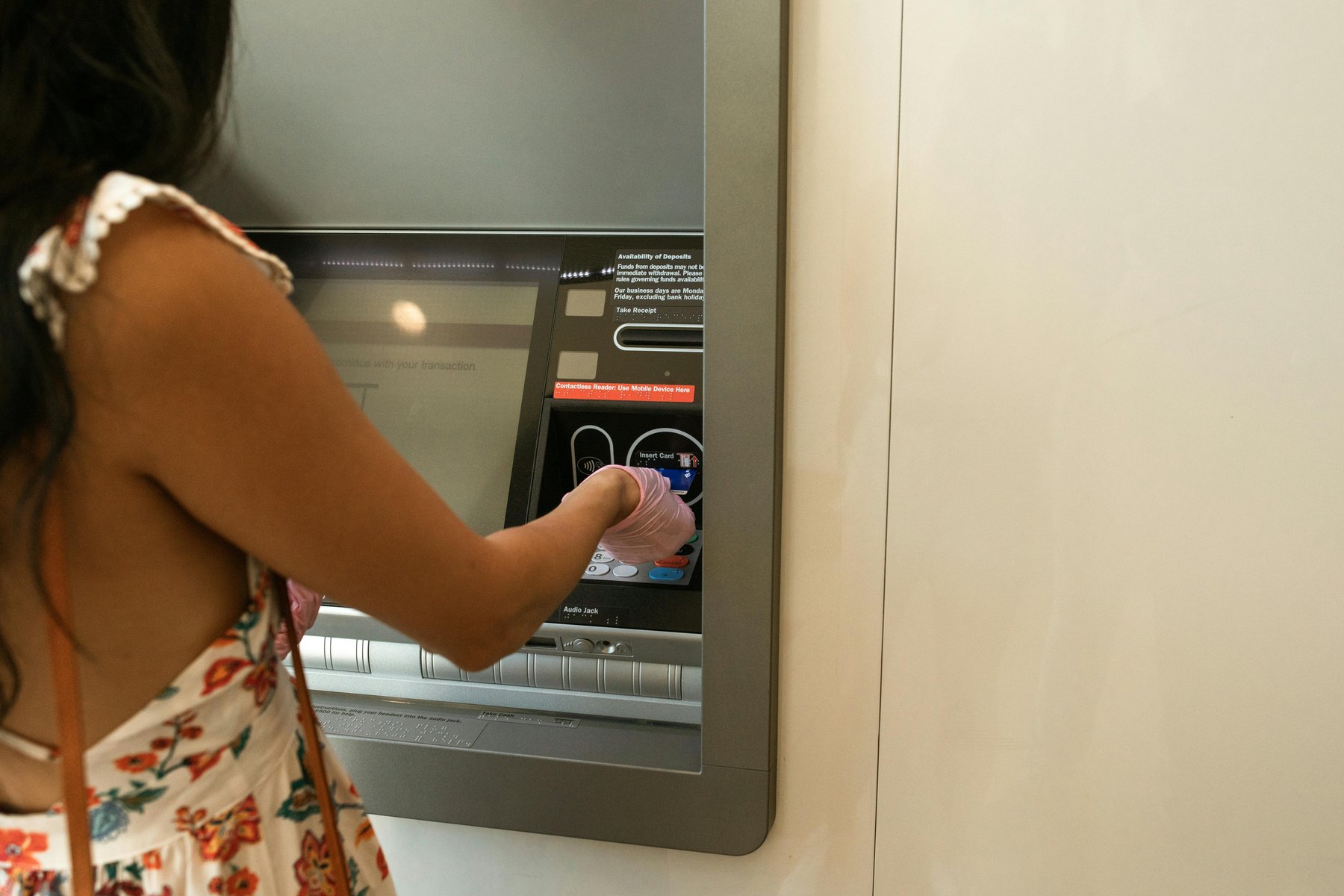
You do not need special tools to do a quick check. Use a short routine before you insert, swipe, or enter a PIN.
Fast visual and physical checks
- Look for mismatched parts – different color plastic, crooked faceplates, or loose seams.
- Wiggle the reader – a legitimate reader should feel firmly attached. If it shifts or clicks, choose a different terminal.
- Check for broken seals – many gas pumps have security stickers over the access panel. If the seal is torn or missing, go inside to pay.
- Inspect the keypad – raised overlays, sticky keys, or a keypad that looks thicker than normal can be a red flag.
- Cover the keypad – if you must enter a PIN, block the view with your hand to reduce camera risk.
Behavioral red flags
- The terminal repeatedly fails and the clerk suggests swiping instead of inserting or tapping.
- You are asked to use a specific pump or a specific ATM for no clear reason.
- The reader is positioned so you cannot see it well, or staff insists on taking your card out of sight.
| Quick check | What you are looking for | What to do if it looks off |
|---|---|---|
| Wiggle test | Loose reader or faceplate | Use another terminal or pay inside |
| Seal check (gas pumps) | Broken or missing security sticker | Choose a different pump or pay inside |
| Keypad look | Thick overlay, sticky keys, odd spacing | Do not enter PIN, use tap or another location |
| Screen prompts | Unusual prompts or repeated “swipe” requests | Cancel and use chip or tap elsewhere |
Safer ways to pay at gas stations, ATMs, and stores
Your payment method and where you use it can meaningfully change your exposure to skimming.
At gas pumps
- Pay inside if the pump looks tampered with or the seal is broken.
- Use tap to pay when the pump supports contactless. Tap transactions generally do not expose magnetic stripe data.
- Choose pumps in view of the cashier – skimmers are more likely on pumps far from the building.
- Use a credit card instead of a debit card to avoid PIN exposure and reduce the chance of direct bank account impact.
At ATMs
- Prefer bank owned ATMs located inside a branch or well monitored area.
- Avoid standalone ATMs in low traffic spots when possible.
- Use your bank’s app for cardless ATM access if available, which can reduce reliance on swiping.
- Cover the keypad every time you enter a PIN.
At checkout counters
- Keep the card in your hand when possible. If a server takes your card away, ask to pay at the table if the business supports it.
- Use chip or tap rather than swipe.
- Use a digital wallet (Apple Pay, Google Pay, Samsung Wallet) when available. These typically use tokenization, which can reduce exposure of your actual card number.
Debit vs. credit: which is safer if a skimmer hits?
Both debit and credit cards can be compromised, but the impact can feel different.
- Debit card risk – fraudulent withdrawals or purchases can affect your checking balance. If a PIN is captured, criminals may attempt ATM withdrawals.
- Credit card risk – fraudulent charges typically hit your credit line rather than your bank balance, and you can dispute unauthorized charges through the issuer.
Many people choose to use credit cards for unattended terminals like gas pumps and reserve debit for situations where it is necessary. If you use debit often, consider keeping a smaller buffer in the checking account tied to your debit card and moving extra cash to savings so a compromise is less disruptive.
| Payment choice | Best fit | What to compare | Main drawback |
|---|---|---|---|
| Credit card | Everyday purchases, gas, travel | Fraud alerts, dispute process, rewards vs. fees | Interest cost if you carry a balance |
| Debit card | Cash withdrawals, budgeting, limited credit access | Account alerts, card controls, ATM network | Checking balance exposure if compromised |
| Apple Pay | iPhone users who tap to pay often | Device security, wallet settings, merchant acceptance | Not accepted everywhere |
| Google Pay | Android users who want tap payments | Device security, wallet settings, acceptance | Not accepted everywhere |
| Samsung Wallet | Samsung users who prefer wallet features | Device security, acceptance, supported banks | Phone specific features vary by model |
| Cash | Small purchases, high risk terminals | ATM access, budgeting method | No fraud dispute if lost or stolen |
Account habits that reduce damage if your card data is stolen
Skimmer prevention is partly about avoiding bad terminals, but it is also about catching fraud quickly and limiting how far it can spread.
Set up alerts and controls
- Turn on transaction alerts for every purchase or for purchases over a small threshold (for example $1 or $10).
- Enable card controls if your bank offers them, such as locking the card when not in use, blocking international transactions, or restricting online purchases.
- Use unique passwords for banking and email, and enable multi-factor authentication to reduce account takeover risk.
Decision rule: how often to review transactions
- High usage cards – scan transactions every 2 to 3 days.
- Low usage cards – scan weekly.
- After travel or heavy gas station use – scan daily for the next week.
What to do immediately if you suspect a skimmer or fraudulent charges
Speed matters. The goal is to stop new transactions, document what happened, and clean up any related risks.
Step-by-step action plan
- Lock the card in your banking app if that feature is available.
- Call the number on the back of your card to report suspicious activity and request a replacement card number.
- Dispute unauthorized charges through your issuer’s process. Save screenshots or receipts that support your claim.
- Change your banking password and email password if you reuse passwords or suspect broader compromise.
- Check other accounts that share the same card number, such as subscription services or digital wallets.
- Report the skimmer location to the merchant and local authorities if appropriate, especially for ATMs and gas pumps.
If your debit card and PIN may be compromised
- Ask your bank to disable the card and issue a new one.
- Request a new PIN.
- Review your checking account for withdrawals and transfers, not just card purchases.
Real-number examples: limiting the financial disruption
Skimming is mainly an identity and payment security issue, but it can become a cash flow problem if your debit card is hit and funds are temporarily tied up during investigation. Here are three sample setups that can reduce day-to-day disruption. These are examples, not one-size-fits-all plans.
Scenario 1: Tight budget, debit heavy (monthly expenses: $2,200)
- $400 kept as a checking buffer for bill timing and small surprises
- $1,800 in a savings account for near-term bills and cushion
- $0 kept in the debit-linked checking beyond what you need for the next 1 to 2 weeks
Decision rule: If you rely on debit, consider keeping only 1 to 2 weeks of spending in the account tied to your debit card, and move the rest to savings you can transfer from quickly.
Scenario 2: Mixed spending, uses credit for most purchases (monthly expenses: $4,000)
- $1,500 in checking for rent or mortgage and recurring bills
- $6,000 in savings as a 1.5 month buffer
- $500 in a separate checking account for ATM cash and debit-only merchants
Decision rule: Use credit for day-to-day purchases and keep a smaller, separate debit account for cash withdrawals to reduce exposure.
Scenario 3: Family household, higher cash flow (monthly expenses: $7,500)
- $3,000 in checking for bills and childcare timing
- $15,000 in savings as a 2 month buffer
- $1,000 in a separate checking account tied to the debit card used at gas pumps and ATMs
Decision rule: If multiple people use the same debit card, consider separating the “spend” account from the “bill pay” account and using alerts on both.
Timeline decision rules: how to prioritize protection
Skimming prevention is mostly about daily habits, but your broader financial setup can make incidents easier to handle.
- Under 1 year – prioritize transaction alerts, using tap or chip, and keeping a small debit-linked checking balance.
- 1 to 3 years – build a larger cash buffer (often 3 to 6 months of expenses) and streamline accounts so you can lock cards and move money quickly.
- 3 to 7 years – review credit reports regularly, keep older accounts in good standing when practical, and maintain strong account security habits.
- 7+ years – keep identity monitoring routines consistent, especially after major life changes like moving, changing jobs, or frequent travel.
How to check if your identity or credit was affected
Many skimmer incidents lead to card fraud only, but stolen data can sometimes be used in broader identity theft attempts. If you see signs like new accounts you did not open, collection notices, or address changes you did not request, check your credit reports.
- Get your credit reports at AnnualCreditReport.com.
- Review inquiries, new accounts, and personal information changes.
- Consider placing a fraud alert or credit freeze if you see clear signs of identity misuse.
Where to report skimming and get help
- FTC identity theft resources: https://consumer.ftc.gov/identity-theft
- CFPB guidance on disputing credit card charges: https://www.consumerfinance.gov/ask-cfpb/how-do-i-dispute-a-charge-on-my-credit-card-en-61/
- CFPB guidance on debit card errors: https://www.consumerfinance.gov/ask-cfpb/how-do-i-dispute-an-error-on-my-debit-card-en-1123/
Skimmer protection checklist you can save
Before you pay
- Prefer tap or chip, avoid swipe when possible
- Wiggle the reader and check for broken seals at gas pumps
- Use well-lit, high-traffic locations and bank owned ATMs
While you pay
- Cover the keypad when entering a PIN
- Do not let your card leave your sight when possible
After you pay
- Turn on real-time alerts
- Review transactions regularly
- Act quickly if you see a suspicious charge
Credit card skimmers are hard to eliminate completely, but you can make yourself a much tougher target by choosing safer payment methods, checking terminals quickly, and setting up alerts that help you catch problems early.


