

Telematics Savings on Car Insurance: How Usage-Based Programs Work

Telematics savings on car insurance can lower your premium when your driving behavior and mileage look lower risk to an insurer.
Contents
22 sections
-
What telematics is and what it tracks
-
How data is collected: app, plug-in device, or built-in system
-
Telematics savings on car insurance: who tends to benefit most
-
Discount-only vs. rate-adjustment programs
-
How to estimate the savings with real numbers
-
Scenario 1: Low-mileage driver with a moderate premium
-
Scenario 2: Higher premium, mixed driving patterns
-
Scenario 3: Household with two drivers and one car
-
Comparison table: recognizable telematics and usage-based programs
-
Checklist: questions to ask before you enroll
-
Decision rules: when telematics makes sense by your timeline
-
How telematics interacts with other ways to lower car insurance costs
-
Real-number example: choosing between telematics and a higher deductible
-
Privacy, data sharing, and how to protect yourself
-
Common pitfalls and how to avoid them
-
Pitfall 1: The app thinks you were driving when you were a passenger
-
Pitfall 2: Stop-and-go traffic triggers hard braking events
-
Pitfall 3: Night driving is unavoidable
-
Pitfall 4: You focus on the discount and ignore coverage
-
How to compare quotes the right way (step-by-step)
-
Credit and insurance: a quick connection worth knowing
-
Quick takeaways
These programs are often called usage-based insurance (UBI) or pay-how-you-drive. You typically install an app on your phone, plug a device into your car, or use a built-in connected car system. The insurer collects driving data for a period of time, then applies a discount, adjusts your rate at renewal, or both depending on the program.
Telematics can be a good fit for some drivers, but it is not automatic savings for everyone. The details matter: what the program measures, how it scores you, whether rates can go up, and what happens if you drive at night or in heavy traffic. This guide breaks down how telematics works, how to estimate the dollars, and how to compare programs with fewer surprises.
What telematics is and what it tracks
Telematics is the collection of driving and vehicle-use data using sensors and GPS. In car insurance, telematics programs usually track a mix of:
- Mileage and trip frequency – how much you drive and how often.
- Time of day – more weight may be given to late-night driving.
- Hard braking and rapid acceleration – sudden changes in speed can be treated as risk signals.
- Speed relative to limits – some programs compare your speed to posted limits.
- Cornering and handling – sharp turns can be scored as aggressive driving.
- Phone distraction – some apps detect phone use while the car is moving.
- Location patterns – routes and areas can be part of the risk model, even if the insurer says it does not use exact locations for pricing.
Not every program uses every data point, and insurers do not all score the same way. Before enrolling, look for a plain-language list of what is tracked and how it affects your premium.
How data is collected: app, plug-in device, or built-in system
- Smartphone app: Convenient, but may misclassify trips (for example, if you are a passenger). Some apps also score phone handling.
- OBD-II plug-in device: Plugs into a port under the dashboard. Often captures braking and acceleration well. You may need to return it if you cancel.
- Connected car: Some newer vehicles can share data through built-in systems. Check what is shared and whether you can opt out.
Telematics savings on car insurance: who tends to benefit most
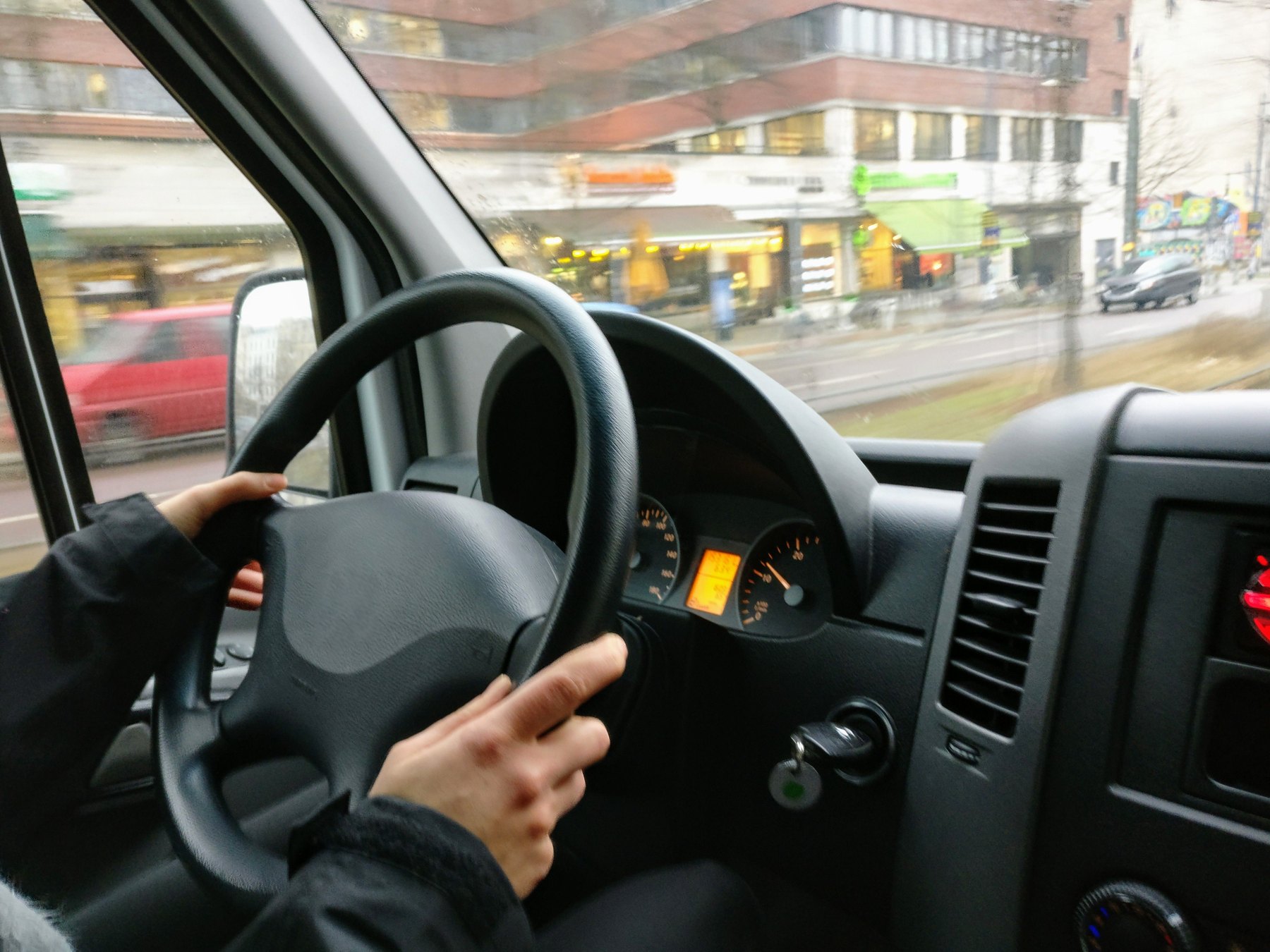
Telematics tends to reward patterns that insurers associate with fewer claims. You are more likely to benefit if several of these are true:
- You drive fewer miles than average (for example, remote work or short commutes).
- You avoid late-night driving most weeks.
- You brake smoothly and keep steady speeds.
- You can keep your phone out of your hands while driving.
- You are willing to review trip logs and fix misclassified trips.
You may see less benefit, or even a higher renewal price in some programs, if you routinely drive in stop-and-go traffic (more hard braking), drive late at night, or have a long commute. The key is whether the program is discount-only or can change your rate up or down.
Discount-only vs. rate-adjustment programs
Telematics programs generally fall into two buckets:
- Discount-only: You can earn a discount, but the program is not designed to raise your premium based on the telematics score. Your rate can still change for other reasons (claims, inflation, statewide changes, coverage changes).
- Rate-adjustment: Your score can influence your renewal price in either direction. This can work well for low-risk driving patterns, but it adds uncertainty.
When you compare programs, ask: Can my premium increase because of the telematics score? If yes, what is the maximum impact and when does it apply?
How to estimate the savings with real numbers
Insurers often advertise “up to” discounts, but your results depend on your baseline premium and your driving score. A practical way to think about it is to estimate a range and compare it to the hassle and privacy trade-offs.
Scenario 1: Low-mileage driver with a moderate premium
Assumptions: Current premium $1,200 per year. You drive 6,000 miles per year, mostly daytime, smooth braking.
- If you earn a 5% discount: $1,200 x 0.05 = $60 per year.
- If you earn a 15% discount: $1,200 x 0.15 = $180 per year.
Decision rule: If you are comfortable sharing data and can keep phone distraction low, a discount in the $60 to $180 range may be worth it, especially if the program is discount-only.
Scenario 2: Higher premium, mixed driving patterns
Assumptions: Current premium $2,400 per year. You drive 12,000 miles per year, some late-night trips, heavy traffic commute.
- 5% discount: $120 per year.
- 10% discount: $240 per year.
Decision rule: If the program can raise rates based on score, weigh the uncertainty. You might prefer to shop multiple insurers and adjust deductibles instead of relying on telematics.
Scenario 3: Household with two drivers and one car
Assumptions: Premium $1,800 per year. Driver A is cautious. Driver B drives late and brakes hard. The program scores the vehicle or the phone used for tracking.
- If the program scores the car overall, Driver B may reduce the discount for both.
- If the program scores per driver, you may be able to assign trips correctly, but it takes effort.
Decision rule: Before enrolling, confirm whether the score is per driver or per vehicle, and how the app handles multiple drivers.
Comparison table: recognizable telematics and usage-based programs
Availability and program rules vary by state and policy type. Verify current terms, privacy settings, and whether the program can affect renewal pricing.
| Option | Best fit | What to compare | Main drawback |
|---|---|---|---|
| Progressive Snapshot | Drivers comfortable with app or device tracking | Discount-only vs. rate-adjustment rules, braking metrics, program length | Driving patterns can reduce discount; rules vary by state |
| State Farm Drive Safe & Save | Shoppers who want agent support and telematics | How trips are scored, phone distraction scoring, device or app requirements | May not be the cheapest quote even with a discount |
| Allstate Drivewise | Drivers who want feedback on habits | What counts as “hard braking,” how phone use is detected, renewal impact | App-based tracking may misclassify trips |
| GEICO DriveEasy | Drivers who prefer app-based enrollment | Data collected, scoring transparency, how to dispute trip errors | Phone handling metrics can be hard to manage |
| Nationwide SmartRide | Drivers focused on mileage and smooth driving | Program duration, device return rules, how nighttime driving is weighted | Discount depends heavily on driving mix |
| Liberty Mutual RightTrack | Drivers willing to do a short monitoring period | Monitoring window, discount application timing, device/app setup | Short window may not reflect your typical year |
Checklist: questions to ask before you enroll
Use this checklist when you read the program terms or talk to an agent. The goal is to understand what you are trading for the potential discount.
| Question | Why it matters | What to look for |
|---|---|---|
| Can the telematics score increase my premium? | Some programs affect renewal pricing both ways | Clear statement of discount-only vs. rate-adjustment |
| What data is collected and for how long? | Privacy and long-term tracking concerns | List of data points, retention period, and sharing rules |
| Is scoring per driver or per vehicle? | Households with multiple drivers can be penalized | Trip assignment tools and passenger mode |
| How are phone distraction and hands-free use measured? | App programs may score phone handling even at stoplights | Definitions of “phone use,” exceptions, and how to correct errors |
| What happens if I stop using the app or unplug the device? | You could lose the discount or violate program terms | Grace periods, device return policy, and cancellation rules |
| Does the program require location services always on? | Location data can feel sensitive | Whether precise location is collected and how it is used |
Decision rules: when telematics makes sense by your timeline
Telematics is not a long-term investment decision, but timeline still matters because discounts and scoring periods vary.
- Under 1 year: Consider telematics if the discount applies quickly or you are shopping for a new policy now. Favor programs with a short monitoring period and clear rules.
- 1 to 3 years: Telematics can be useful if your driving habits are stable and you are comfortable with ongoing tracking. Re-shop at least annually to compare total premium, not just the telematics discount.
- 3 to 7 years: If your life is changing (moving, new job commute, teen driver), expect your telematics score and premium to change. Decide whether you want that variability or prefer a more traditional rating approach.
- 7+ years: If you keep cars a long time, consider whether you want a program tied to a specific vehicle, device, or app ecosystem. Also review how data retention and account history work.
How telematics interacts with other ways to lower car insurance costs
Telematics is only one lever. In many cases, you can combine it with other moves that may have a more predictable impact:
- Raise your deductible if you have the cash to cover it. Example: moving from a $500 to $1,000 deductible can reduce premium for some drivers, but you take on more out-of-pocket risk in a claim.
- Review coverage limits to make sure they match your situation. Cutting coverage too far can backfire after an accident.
- Bundle policies (auto plus renters or homeowners) if the combined price is lower.
- Ask about low-mileage discounts even without telematics if you drive very little.
- Improve credit where it is used. In many states, insurers use credit-based insurance scores. Paying bills on time and lowering revolving utilization may help over time.
Real-number example: choosing between telematics and a higher deductible
Suppose your premium is $1,600 per year.
- Telematics might save 5% to 15%: about $80 to $240 per year.
- Raising your deductible might save, for example, $100 to $250 per year depending on the insurer and your profile.
Decision rule: If you do not want ongoing tracking, compare the premium difference from deductible changes and bundling first. If you do want tracking and your driving is low-risk, telematics can be a reasonable add-on.
Privacy, data sharing, and how to protect yourself
Telematics is a trade: you share data in exchange for potential pricing benefits and driving feedback. To manage that trade well:
- Read the privacy policy and program terms for data retention and sharing. Look for whether data may be shared with affiliates, service providers, or for research.
- Check your phone permissions. Some apps request location “always,” motion sensors, and Bluetooth. Decide what you are comfortable enabling.
- Use passenger mode if available when you are not driving, and review trip logs for errors.
- Know how to opt out and what happens to your discount if you do.
If you want more general guidance on protecting your personal information and avoiding scams, the FTC has practical resources at consumer.ftc.gov.
Common pitfalls and how to avoid them
Pitfall 1: The app thinks you were driving when you were a passenger
Fix: Use passenger mode, correct trips promptly, and keep Bluetooth connections consistent if the app uses them.
Pitfall 2: Stop-and-go traffic triggers hard braking events
Fix: Leave more following distance and drive smoother where possible. If your commute makes this unavoidable, a program that heavily weights braking may not be a great match.
Pitfall 3: Night driving is unavoidable
Fix: Ask how nighttime driving is defined and weighted. If you work late shifts, compare insurers that offer strong non-telematics discounts instead of relying on UBI.
Pitfall 4: You focus on the discount and ignore coverage
Fix: Compare apples to apples. When you get quotes, keep liability limits, comprehensive and collision deductibles, and optional coverages consistent.
How to compare quotes the right way (step-by-step)
- Set your coverage baseline: pick liability limits and deductibles you can live with.
- Get at least three quotes: include one insurer with telematics and one without.
- Ask the same questions: discount-only or rate-adjustment, monitoring period, data tracked, and opt-out rules.
- Estimate your realistic discount range: use 5% to 15% as a planning range unless the insurer provides a personalized estimate.
- Decide what you will do if the score is poor: can you leave the program without penalties, and will your premium revert?
Credit and insurance: a quick connection worth knowing
In many states, insurers use credit-based insurance scores as one factor in pricing. If you are working on your credit, it can help to monitor your credit reports for errors. You can check your reports at AnnualCreditReport.com. If you find inaccurate information, the CFPB explains how to dispute errors and manage credit reporting issues at consumerfinance.gov.
Quick takeaways
- Telematics programs measure driving behavior and mileage using an app, plug-in device, or connected car data.
- The biggest “make or break” detail is whether the program is discount-only or can change your renewal price based on score.
- Estimate savings with your real premium: a 5% to 15% discount on $1,200 is $60 to $180 per year.
- Compare programs by what they track, how they score, how long they monitor, and how easy it is to correct trip errors.
- Do not let a telematics discount distract you from choosing solid coverage limits and deductibles you can afford.
If you are deciding between multiple insurers, keep your comparison consistent and verify current program terms in your state before enrolling.


