

AI Picks Stocks This Month: What It Means for Your Money and Your Debt Plan

AI picks stocks this month is a headline that can make investing sound easy: let a model choose, then you profit. In real life, AI stock picking can be useful, but it is not magic. The bigger question is how to use AI tools without ignoring basics like emergency savings, high-interest debt, taxes, and your time horizon.
Contents
28 sections
-
What "AI stock picks" usually are (and what they are not)
-
AI picks stocks this month: how the models typically choose
-
Where AI stock picks can help
-
Common risks and failure points (especially for monthly picks)
-
1) Overtrading and taxes
-
2) Hidden costs: spreads, slippage, and fees
-
3) Concentration risk
-
4) Data quality and "story" risk
-
5) Scams and fake "AI trading" claims
-
A quick decision rule: should you follow AI picks at all?
-
Named examples: tools people use for AI signals or automated investing
-
Timeline rules: where AI stock picks fit (and where they usually do not)
-
Under 1 year
-
1 to 3 years
-
3 to 7 years
-
7+ years
-
What this looks like with real numbers: 3 sample allocations
-
Scenario 1: $5,000 available, credit card debt at 24% APR
-
Scenario 2: $20,000 available, no high-interest debt, renting, job stable
-
Scenario 3: $50,000 available, planning a home down payment in 24 months
-
How to test an AI stock-pick service without blowing up your plan
-
Step 1: Set a hard allocation cap
-
Step 2: Define your rules before you start
-
Step 3: Track performance net of everything
-
Step 4: Avoid leverage until you have experience
-
Debt and credit: don't let AI picks distract you from the basics
-
Practical safeguards when using any investing platform
-
Bottom line: a simple framework for "AI picks"
This guide explains how AI stock selection typically works, what can go wrong, and how to decide whether to follow AI picks at all. You will also see concrete money scenarios, decision rules by timeline, and a comparison of recognizable tools people use to get AI-driven signals or automated portfolios.
What “AI stock picks” usually are (and what they are not)
When people say “AI picks stocks,” they usually mean one of these:
- Signal tools that rank stocks based on patterns in financial statements, price trends, news, or alternative data.
- Robo-advisors that build diversified portfolios (often ETFs) using algorithms. Some use machine learning for tax-loss harvesting or risk management, but many rely on modern portfolio theory rather than stock-by-stock prediction.
- Quant strategies packaged into newsletters, model portfolios, or managed accounts.
- Broker “insights” that summarize analyst ratings, earnings trends, and sentiment with AI-generated text.
What AI stock picks are not:
- A guarantee of beating the market every month.
- A substitute for diversification, risk controls, or a plan for cash needs.
- A replacement for understanding costs like taxes, spreads, and fees.
AI picks stocks this month: how the models typically choose
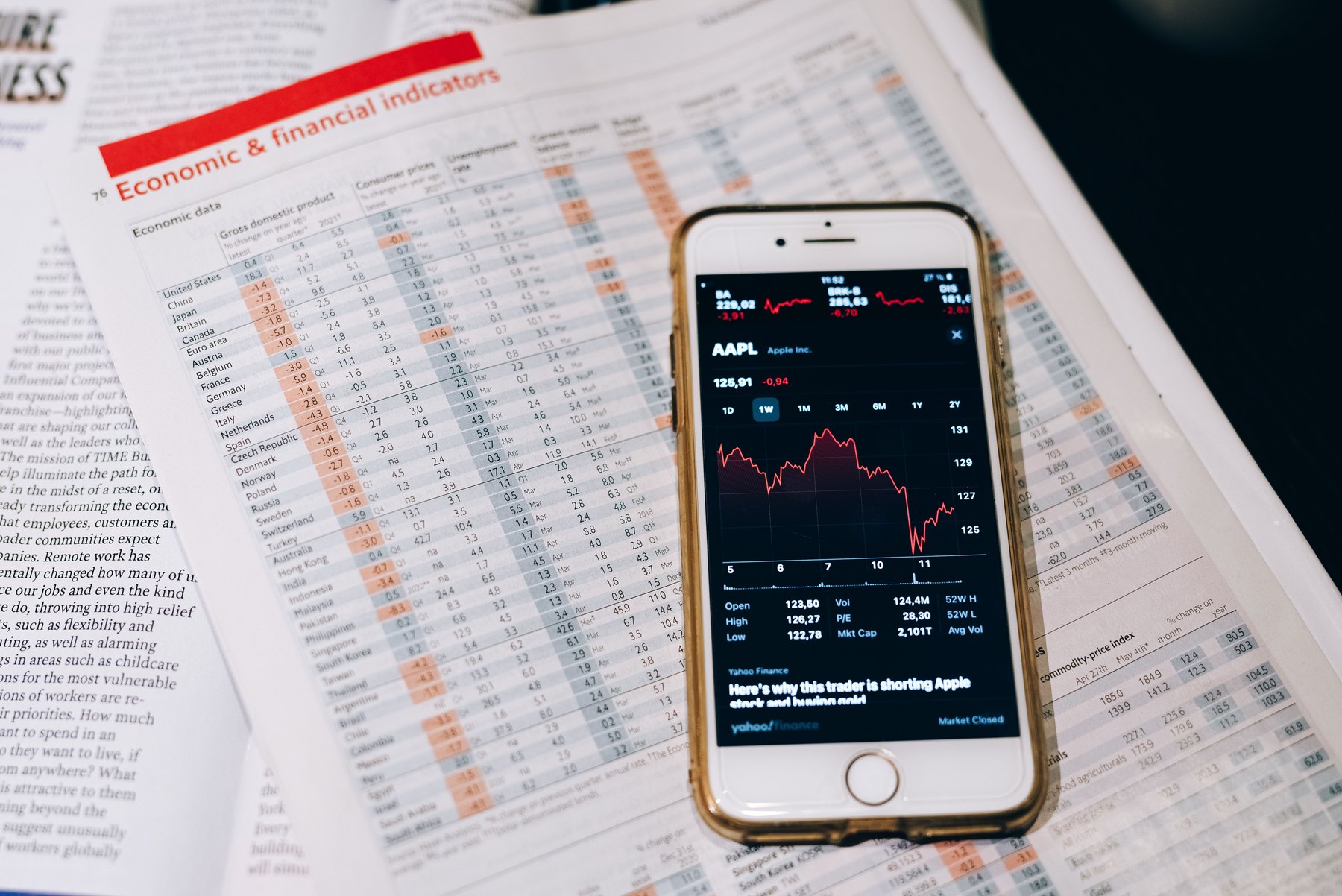
Most AI stock-picking systems combine some mix of these inputs:
- Fundamentals: revenue growth, margins, free cash flow, debt ratios, valuation multiples.
- Price and volume: momentum, trend strength, volatility, liquidity.
- News and text: earnings call transcripts, headlines, social sentiment, regulatory filings.
- Macro data: rates, inflation, commodities, FX, sector rotation signals.
Then the system outputs something like:
- A score (0 to 100), rank, or “buy/hold/sell” style label.
- A target allocation (for example, 5% in a stock, 20% in a sector).
- A rebalancing schedule (weekly, monthly, quarterly).
Key detail: many models are trained on historical data. Markets change. A strategy that looked great in backtests can struggle when conditions shift, trading costs rise, or too many people copy it.
Where AI stock picks can help
Used carefully, AI tools can improve your process in a few practical ways:
- Screening: narrowing 5,000 stocks to a short list based on consistent rules.
- Consistency: reducing emotional decisions like panic selling or chasing hype.
- Speed: summarizing earnings, filings, and news faster than a human can.
- Risk flags: highlighting volatility spikes, earnings surprises, or leverage concerns.
Even then, the best use case for many households is not “monthly stock picks.” It is building a diversified plan and automating contributions, especially if you are also managing debt.
Common risks and failure points (especially for monthly picks)
1) Overtrading and taxes
Monthly pick lists can push frequent buying and selling. In a taxable account, short-term capital gains are typically taxed at ordinary income rates. That can reduce your after-tax return compared with a lower-turnover approach.
2) Hidden costs: spreads, slippage, and fees
Even with $0 commissions, you can pay through bid-ask spreads and price movement between signal time and execution. Some “AI” services also charge subscription fees. Always compare the subscription cost to your portfolio size.
3) Concentration risk
Many AI picks cluster in the same sector (like tech) because the data patterns look strong. That can raise risk if the sector drops.
4) Data quality and “story” risk
AI models can be misled by noisy data, misleading headlines, or one-time events. They can also overfit to the past, meaning they learn patterns that do not repeat.
5) Scams and fake “AI trading” claims
Be cautious with anyone promising guaranteed returns, “secret” bots, or pressure to deposit quickly. The FTC has guidance on spotting and reporting scams at https://consumer.ftc.gov/.
A quick decision rule: should you follow AI picks at all?
Use this checklist before you act on any monthly AI stock list.
| Question | If “No” | Practical next step |
|---|---|---|
| Do you have an emergency fund (at least 3 months of essentials)? | AI picks can force you to sell at a bad time. | Build cash first, then invest. |
| Do you have high-interest debt (often 10%+ APR)? | Debt interest can outpace expected returns. | Prioritize extra payments while investing modestly. |
| Is this money needed within 1 to 3 years? | Stocks can drop when you need cash. | Use safer options like HYSA or short-term Treasuries. |
| Can you stick to rules during a 20% to 50% market drop? | You may sell low and lock in losses. | Use diversified funds and automate contributions. |
| Do you understand the tool’s fees, turnover, and methodology? | You may pay for hype, not value. | Read the methodology and track results net of fees. |
Named examples: tools people use for AI signals or automated investing
Below are recognizable options. Availability, features, and pricing change, so verify current fees and supported accounts before you commit.
| Option | Best fit | What to compare | Main drawback |
|---|---|---|---|
| Wealthfront | Hands-off diversified portfolios and automation | Advisory fee, tax-loss harvesting rules, cash features | Less control over individual stock picks |
| Betterment | Goal-based investing with automated rebalancing | Advisory fee tiers, account minimums, tax features | Ongoing fee can add up over time |
| Schwab Intelligent Portfolios | Robo allocation for investors who want Schwab ecosystem | Cash allocation, underlying fund costs, rebalancing approach | Cash allocation may reduce expected returns |
| Interactive Brokers (IBKR) tools | Active investors using advanced analytics and automation | Platform complexity, data fees, order types, margin rates | Steeper learning curve |
| TradingView (screeners and alerts) | DIY traders who want technical screening and alerts | Subscription cost, indicator reliability, alert execution workflow | Signals are not a full portfolio plan |
| TipRanks (AI summaries and analyst aggregation) | Investors who want research aggregation and sentiment tools | What data is included, subscription cost, update frequency | Can encourage chasing ratings instead of fundamentals |
How to use this table: pick the category that matches your behavior. If you want “monthly picks,” you are likely in a higher-turnover, higher-discipline lane than a long-term index investor.
Timeline rules: where AI stock picks fit (and where they usually do not)
Under 1 year
- Primary goal: protect principal and keep money accessible.
- Typical fit: emergency fund, upcoming rent move, car repair buffer, near-term tuition.
- Common tools: high-yield savings accounts, money market funds, short-term Treasuries.
If you need the money within 12 months, monthly AI stock picks can add risk you do not have time to recover from.
1 to 3 years
- Primary goal: balance modest growth with stability.
- Typical fit: house down payment, wedding, starting a business.
- Common tools: a mix of cash and high-quality bonds or Treasuries, depending on risk tolerance.
Stocks can still be appropriate for a portion, but consider limiting “pick-based” exposure and focusing on diversified funds.
3 to 7 years
- Primary goal: growth with the ability to ride out downturns.
- Typical fit: medium-term goals, early retirement bridge planning.
- Common tools: diversified stock and bond mix, broad ETFs, systematic rebalancing.
This is where a small “satellite” allocation to AI picks can be more reasonable if you keep it capped and rules-based.
7+ years
- Primary goal: long-term growth.
- Typical fit: retirement investing, long-term wealth building.
- Common tools: diversified equity-heavy portfolios, low-cost index funds, periodic rebalancing.
Even here, many investors do best with a simple core portfolio. If you use AI picks, treat them as a small add-on, not the foundation.
What this looks like with real numbers: 3 sample allocations
These examples show how someone might balance cash, debt payoff, and investing. Adjust for your income stability, interest rates, and goals.
Scenario 1: $5,000 available, credit card debt at 24% APR
- $3,500 – extra payment toward the highest APR card (keep minimum payments on all cards)
- $1,000 – starter emergency fund buffer (if you do not already have one)
- $500 – investing (broad index fund or diversified robo portfolio)
Total: $5,000
Decision rule: if you are paying double-digit credit card APR, consider making debt payoff the “guaranteed” part of your plan and keep AI stock picks small until the balance is under control.
Scenario 2: $20,000 available, no high-interest debt, renting, job stable
- $9,000 – emergency fund (around 3 months of essential expenses if essentials are $3,000 per month)
- $9,000 – long-term investing in diversified funds (IRA, 401(k), or taxable depending on goals)
- $2,000 – “explore” bucket for AI picks or a thematic ETF, capped at 10% of total
Total: $20,000
Decision rule: cap higher-risk experiments (including monthly AI picks) at 5% to 10% until you have a track record of sticking to rules.
Scenario 3: $50,000 available, planning a home down payment in 24 months
- $35,000 – down payment fund in cash or short-term Treasuries
- $10,000 – emergency fund (size depends on expenses and job risk)
- $5,000 – long-term investing (diversified funds), not tied to the home goal
Total: $50,000
Decision rule: keep near-term goal money out of volatile monthly stock-pick strategies. Separate “goal money” from “long-term money.”
How to test an AI stock-pick service without blowing up your plan
Step 1: Set a hard allocation cap
Pick a percentage you can live with if it drops sharply, such as 0% to 10% of your investable assets. Keep the rest in a diversified core portfolio.
Step 2: Define your rules before you start
- How often will you trade (monthly, quarterly)?
- Will you use stop losses, or will you hold for a set time?
- How many positions will you hold to avoid single-stock blowups?
- What is your maximum loss you will tolerate in the AI bucket?
Step 3: Track performance net of everything
Include subscription fees, spreads, taxes, and time spent. Compare to a simple benchmark like a total market index fund.
Step 4: Avoid leverage until you have experience
Margin and leveraged ETFs can magnify losses quickly. If you are also paying down debt, leverage can add stress to your cash flow.
Debt and credit: don’t let AI picks distract you from the basics
If you are borrowing or planning to borrow soon, your credit profile and debt-to-income ratio can matter more than a few months of stock performance. Practical moves that often help:
- Pay every bill on time.
- Keep credit card utilization low relative to limits.
- Limit new credit applications right before major borrowing.
- Review your credit reports for errors.
You can get free credit reports at https://www.annualcreditreport.com/. For help understanding credit and debt products, the CFPB has consumer resources at https://www.consumerfinance.gov/.
Practical safeguards when using any investing platform
- Confirm account protection: understand SIPC coverage for brokerage accounts and FDIC insurance for bank deposits. FDIC information is available at https://www.fdic.gov/.
- Use two-factor authentication and unique passwords.
- Beware of “customer support” imposters asking for codes or remote access.
- Know your liquidity: can you sell and withdraw quickly, and are there restrictions?
Bottom line: a simple framework for “AI picks”
- Build the base first: emergency fund, high-interest debt payoff, and a diversified core portfolio.
- Match risk to timeline: the shorter the timeline, the less room you have for monthly pick volatility.
- Keep AI picks small and rules-based: treat them as an experiment, not a plan.
- Compare tools on costs and behavior fit: fees, turnover, taxes, and how likely you are to stick with it.
If you want to try AI picks this month, decide the maximum you are willing to risk, write down your rules, and keep your long-term goals on autopilot.


