

Gold vs. Bitcoin: How to Choose for Your Money Goals

Gold vs. Bitcoin is a common comparison when people want an asset that is not tied to a single company or government and may behave differently than stocks and bonds.
Contents
40 sections
-
Gold vs. Bitcoin: the core differences
-
What problem are you trying to solve?
-
1) Diversification from stocks and bonds
-
2) Inflation concerns
-
3) A portable, self-custodied asset
-
4) A speculative growth bet
-
Ways to buy and hold gold (and what to compare)
-
Physical gold: coins and bars
-
Gold ETFs and similar funds
-
Gold mining stocks and funds
-
Ways to buy and hold Bitcoin (and what to compare)
-
Buying through a crypto exchange
-
Buying through a broker or payment app
-
Bitcoin ETFs (where available)
-
Self-custody with a hardware wallet
-
Named options comparison: gold and Bitcoin vehicles
-
Costs you can actually control
-
Gold cost drivers
-
Bitcoin cost drivers
-
Risk checklist: what to stress-test before you buy
-
Decision rules by timeline
-
Under 1 year
-
1 to 3 years
-
3 to 7 years
-
7+ years
-
What this looks like with real numbers
-
Scenario A: $10,000 saved, building stability
-
Scenario B: $50,000 saved, moderate risk tolerance
-
Scenario C: $200,000 saved, long timeline, wants diversification
-
How gold and Bitcoin interact with borrowing and debt decisions
-
If you have credit card debt
-
If you are considering a personal loan to invest
-
If you need collateral
-
Practical buying checklist
-
Before buying gold
-
Before buying Bitcoin
-
Taxes and recordkeeping basics
-
Common scams and how to avoid them
-
So which is better: gold or Bitcoin?
-
A simple decision matrix you can use today
Both can play a role in a diversified plan, but they work in very different ways. Gold is a physical commodity with centuries of history as a store of value. Bitcoin is a digital asset with a fixed supply schedule and a shorter track record, with price moves that can be extreme. The better fit depends on your timeline, your need for liquidity, how much volatility you can tolerate, and how you plan to store and access the asset.
Gold vs. Bitcoin: the core differences
Before you compare returns, start with what you are actually buying and what risks come with owning it.
| Category | Gold | Bitcoin | Why it matters |
|---|---|---|---|
| What it is | Physical commodity (metal) or claims on gold (ETFs) | Digital asset on a decentralized network | Ownership, custody, and failure points differ |
| Track record | Long history across many economic regimes | Shorter history, still evolving market structure | Less data can mean more uncertainty |
| Volatility | Typically lower than Bitcoin | Often very high, with large drawdowns possible | Impacts how much you can hold without panic selling |
| Income | No interest or dividends | No interest or dividends by default | Returns depend mostly on price changes |
| Storage | Home safe, bank safe deposit box, or vaulting service | Exchange account, software wallet, or hardware wallet | Custody choices change theft and access risk |
| Liquidity | High for ETFs, moderate for physical (dealer spreads) | High on major exchanges, but can vary by platform | How quickly you can sell and at what cost |
| Key risks | Theft, counterfeit risk, storage costs, dealer spreads | Custody errors, hacks, platform risk, regulatory changes | Different risks require different safeguards |
What problem are you trying to solve?
People usually consider gold or Bitcoin for one of these reasons. Pick the primary goal first, then choose the tool.
1) Diversification from stocks and bonds
Gold has often behaved differently than stocks during certain stress periods, though it is not guaranteed. Bitcoin sometimes moves with risk assets, especially during broad market selloffs, but its behavior can change over time.
2) Inflation concerns
Gold is commonly viewed as an inflation hedge over long periods, but it can lag inflation for years at a time. Bitcoin is sometimes described as “digital gold” because of its capped supply, but its price is driven heavily by adoption, liquidity, and sentiment, which can overwhelm inflation dynamics in the short and medium term.
3) A portable, self-custodied asset
Bitcoin can be moved globally and stored with a private key, which appeals to people who value portability. Gold is portable too, but moving meaningful value can be bulky, expensive, and risky.
4) A speculative growth bet
If your main goal is high upside potential and you can tolerate large swings, Bitcoin may fit better than gold. If your goal is stability relative to Bitcoin, gold may fit better.
Ways to buy and hold gold (and what to compare)
“Gold” can mean physical metal or a financial product tied to gold. The structure changes your costs and risks.
Physical gold: coins and bars
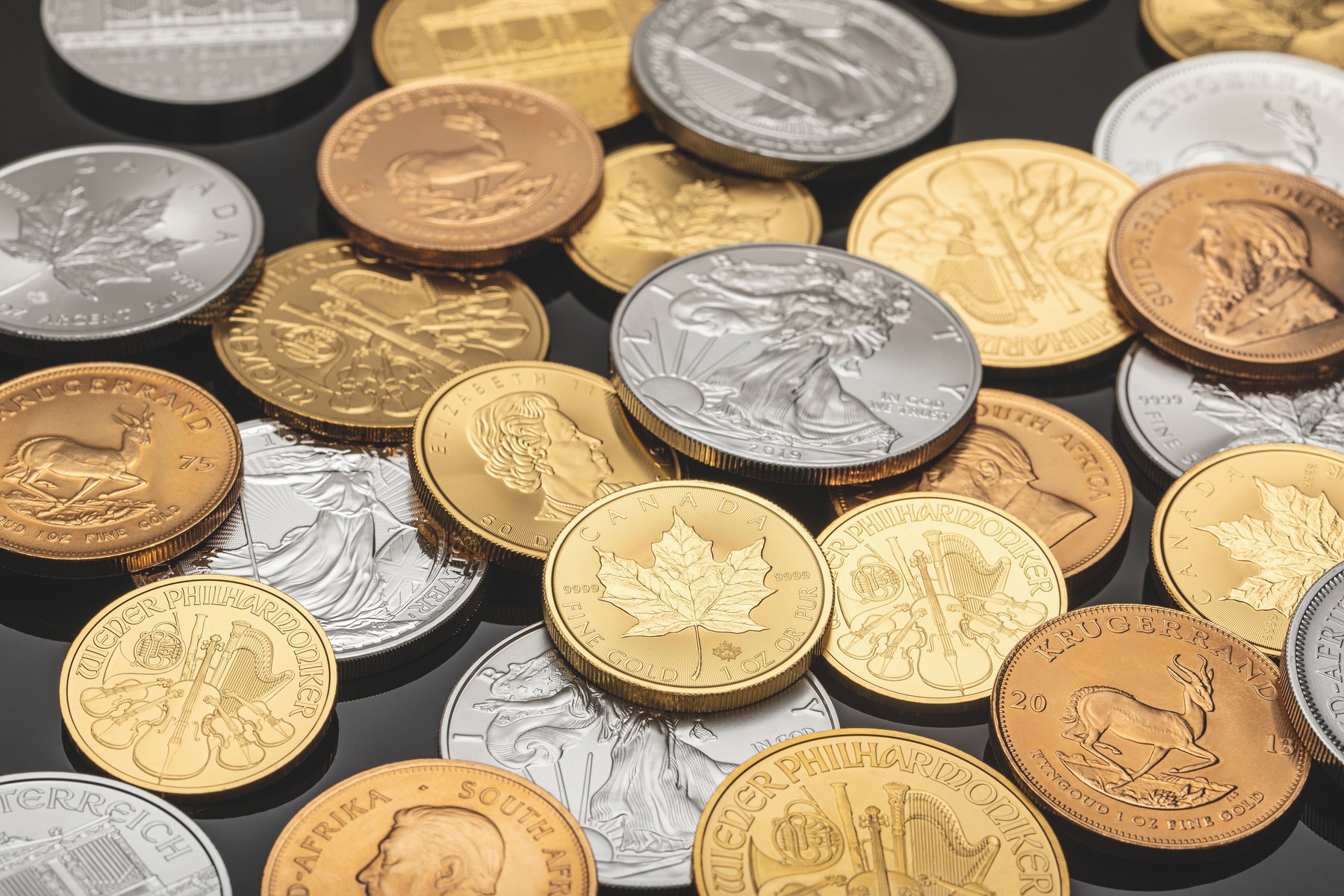
- Common forms: American Gold Eagle, Canadian Maple Leaf, gold bars from recognized refiners.
- What to compare: dealer premium over spot price, buyback policy, authenticity guarantees, shipping and insurance, and storage plan.
- Main drawback: spreads can be meaningful, and safe storage is your responsibility.
Gold ETFs and similar funds
- Examples: SPDR Gold Shares (GLD), iShares Gold Trust (IAU).
- What to compare: expense ratio, liquidity, how the fund holds gold, and tax considerations.
- Main drawback: you own shares of a fund, not specific coins in your hand.
Gold mining stocks and funds
- What to know: miners can move differently than gold because company operations, debt, and energy costs matter.
- Main drawback: adds business risk on top of commodity exposure.
Ways to buy and hold Bitcoin (and what to compare)
Bitcoin ownership is mostly about custody and platform risk. Decide whether you want to self-custody or rely on a custodian.
Buying through a crypto exchange
- Named examples: Coinbase, Kraken, Gemini, Bitstamp.
- What to compare: trading fees, spreads, withdrawal fees, security features (2FA, address whitelisting), and whether you can withdraw to your own wallet.
- Main drawback: exchange accounts can be hacked or frozen, and you rely on the platform’s controls.
Buying through a broker or payment app
- Named examples: Fidelity Crypto, Robinhood, Cash App.
- What to compare: spreads, custody model, transferability (can you move coins to your own wallet), and account protections.
- Main drawback: some apps limit transfers or have wider spreads than exchanges.
Bitcoin ETFs (where available)
- What to compare: expense ratio, liquidity, how the ETF holds Bitcoin, and how it fits in your taxable or retirement accounts.
- Main drawback: you get price exposure, not direct control of coins.
Self-custody with a hardware wallet
- Named examples: Ledger, Trezor.
- What to compare: backup process, passphrase support, and your ability to follow secure setup steps.
- Main drawback: if you lose your recovery phrase or make a mistake, you may not be able to recover funds.
Named options comparison: gold and Bitcoin vehicles
These are recognizable ways people get exposure. Use them as a starting list, then compare costs, custody, and liquidity.
| Option | Best fit | What to compare | Main drawback |
|---|---|---|---|
| Physical gold coins (American Gold Eagle) | People who want direct physical ownership | Premiums, authenticity, storage and insurance | Storage risk and dealer spreads |
| GLD (SPDR Gold Shares) | Easy gold exposure in a brokerage account | Expense ratio, liquidity, tracking | Ongoing fund fees, not physical possession |
| IAU (iShares Gold Trust) | Lower-cost style gold ETF exposure | Expense ratio, liquidity, tracking | Ongoing fund fees, not physical possession |
| Coinbase | Beginners who want a large, well-known exchange | Trading fees, spreads, withdrawal options, security tools | Custodial platform risk if you leave coins on exchange |
| Kraken | Users who want exchange features and transfers | Fees, security settings, withdrawal costs | Still a centralized custodian unless you self-custody |
| Cash App (Bitcoin) | Small, simple recurring buys | Spread, transfer limits, fees | Costs can be less transparent than an exchange order book |
| Hardware wallet (Ledger or Trezor) | Long-term holders who want self-custody | Setup process, backups, passphrase use | User error can be irreversible |
Costs you can actually control
Gold and Bitcoin both have “friction” costs. Small differences add up, especially if you buy and sell often.
Gold cost drivers
- Premiums and spreads: the difference between what you pay and what you can sell for.
- Storage: home safe cost, vault fees, or safe deposit box fees.
- Insurance: optional but relevant for large holdings.
- Fund expenses: ETFs charge an annual expense ratio.
Bitcoin cost drivers
- Trading fees and spreads: vary by platform and order type.
- Withdrawal fees: some platforms charge to move Bitcoin off-platform.
- Network fees: can vary based on congestion when you send Bitcoin.
- Custody costs: hardware wallet purchase and secure backup materials.
Risk checklist: what to stress-test before you buy
| Risk question | If you choose gold | If you choose Bitcoin | Practical mitigation |
|---|---|---|---|
| What if I need cash fast? | ETFs can sell quickly; physical may take time | Usually quick to sell on major platforms | Keep an emergency fund in cash first |
| What if it drops 30% to 70%? | Possible, but historically less common than Bitcoin | Large drawdowns have happened | Size the position so you can hold through volatility |
| What if it is stolen? | Physical theft risk | Key theft, phishing, SIM swap, exchange hacks | Secure storage, 2FA, hardware wallet, careful backups |
| What if I make a mistake? | Less technical, but counterfeit risk exists | Wrong address or lost seed phrase can be permanent | Test small transfers, keep written backups, use whitelists |
| What if rules change? | Gold markets are mature but can face taxes and reporting rules | Regulatory and tax rules can evolve quickly | Track IRS guidance and keep good records |
Decision rules by timeline
Timeline is one of the simplest ways to decide how much risk you can take.
Under 1 year
- Primary goal: stability and access.
- Rule of thumb: keep money needed within a year in cash or cash-like accounts, not gold or Bitcoin.
- Why: both can drop sharply at the wrong time, forcing a sale at a loss.
1 to 3 years
- Primary goal: limited volatility.
- Rule of thumb: if you use gold or Bitcoin at all, keep it small and assume you might need to sell during a downturn.
- Practical approach: consider a small “diversifier” slice only after your short-term cash needs are covered.
3 to 7 years
- Primary goal: balance growth and resilience.
- Rule of thumb: gold can be a steadier diversifier; Bitcoin can be a higher-volatility satellite holding.
- Practical approach: decide a maximum percentage you can hold through a major drawdown without selling.
7+ years
- Primary goal: long-term purchasing power and diversification.
- Rule of thumb: you can consider a modest allocation to either or both, with rebalancing rules.
- Practical approach: set target percentages and rebalance annually or when allocations drift.
What this looks like with real numbers
These examples show how someone might allocate a lump sum while keeping basic financial priorities in place. The point is not the exact percentages, but the logic: cover near-term needs first, then size volatile assets conservatively.
Scenario A: $10,000 saved, building stability
- $7,000 emergency fund (aiming toward 3 to 6 months of essential expenses)
- $2,500 high-interest debt payoff (credit cards or similar, if applicable)
- $500 small diversifier bucket (for example, $300 gold ETF and $200 Bitcoin, or just one)
Decision rule: If you carry revolving credit card debt or have no emergency fund, keep gold and Bitcoin small until those are addressed.
Scenario B: $50,000 saved, moderate risk tolerance
- $18,000 emergency fund (about 6 months at $3,000 per month)
- $27,000 diversified long-term investing (for example, broad stock and bond funds)
- $3,000 gold exposure (6% of total)
- $2,000 Bitcoin exposure (4% of total)
Decision rule: If a 50% Bitcoin drop would cause you to sell, size it smaller or skip it.
Scenario C: $200,000 saved, long timeline, wants diversification
- $36,000 emergency fund (9 months at $4,000 per month)
- $150,000 core portfolio (broad diversified funds across stocks and bonds)
- $10,000 gold (5%)
- $4,000 Bitcoin (2%)
Decision rule: Treat gold and Bitcoin as satellites. Rebalance back to targets if they grow or shrink a lot, rather than chasing performance.
How gold and Bitcoin interact with borrowing and debt decisions
Because this site focuses on borrowing, it is worth connecting the dots: holding volatile assets while carrying expensive debt can increase financial stress.
If you have credit card debt
Credit card APRs are often high. Buying gold or Bitcoin while paying high interest can be a tough tradeoff. Many people prioritize paying down high-interest balances first, then invest once cash flow is stable.
If you are considering a personal loan to invest
Borrowing to buy gold or Bitcoin increases risk because you owe fixed payments even if the asset price falls. If you are comparing loan options, look closely at APR, origination fees, prepayment terms, and whether the payment fits your budget with room for surprises.
If you need collateral
Gold can sometimes be used in secured lending through specialty lenders or pawn arrangements, but terms vary widely and costs can be high. Bitcoin-backed loans exist on some platforms, but they can involve margin-call style liquidation risk if prices drop. Compare the contract terms carefully and understand what triggers forced selling.
Practical buying checklist
Before buying gold
- Decide: physical gold or ETF.
- For physical: choose common, widely recognized products and verify dealer policies.
- Plan storage first: home safe, vault, or safe deposit box.
- Know your sell plan: where you would sell and what spread you might pay.
Before buying Bitcoin
- Decide: ETF, exchange custody, or self-custody.
- Turn on strong security: unique password, 2FA, and withdrawal protections.
- If self-custody: practice with a small test amount and secure your recovery phrase offline.
- Keep records for taxes: dates, amounts, and cost basis.
Taxes and recordkeeping basics
Taxes vary by country and situation, but in the US both gold products and Bitcoin transactions can create taxable events when you sell at a gain. Keep clean records of purchase dates, amounts, and proceeds. For current guidance, review IRS resources on digital assets and general tax topics at IRS.gov.
Common scams and how to avoid them
Scams exist in both markets, especially when prices are moving fast.
- Gold scams: high-pressure sales, overpriced collectibles marketed as “rare,” and counterfeit bars or coins.
- Bitcoin scams: fake support messages, phishing links, “guaranteed returns,” and impersonation of exchanges or influencers.
Use official support channels, verify URLs, and be skeptical of anyone pushing urgency or secrecy. The FTC’s scam guidance can help you spot patterns at consumer.ftc.gov.
So which is better: gold or Bitcoin?
For many households, the decision is less about picking a winner and more about choosing the right role and size.
- Gold may fit better if you want a long-established diversifier, prefer lower volatility than Bitcoin, and are comfortable with ETF ownership or physical storage.
- Bitcoin may fit better if you want a high-volatility satellite asset, value portability and self-custody, and can tolerate large drawdowns without needing to sell.
- Neither may fit right now if you need the money within a few years, lack an emergency fund, or are juggling high-interest debt.
If you are deciding where to keep near-term money, consider insured deposit accounts for your cash reserves. You can learn how deposit insurance works at FDIC.gov. If you are working on overall financial stability and credit readiness for future borrowing, the CFPB has practical tools and explainers at consumerfinance.gov.
A simple decision matrix you can use today
| If you are… | Gold may be a better first step | Bitcoin may be a better first step | Consider skipping both for now |
|---|---|---|---|
| Saving for a home down payment in 12 to 24 months | No | No | Yes – prioritize cash reserves |
| Building a long-term diversified portfolio | Yes – small allocation can diversify | Maybe – keep it small | Only if volatility would derail your plan |
| Comfortable with self-custody and security steps | Not required | Yes – important if you self-custody | If you cannot secure accounts and backups |
| Carrying high-interest credit card debt | Usually not first | Usually not first | Yes – focus on payoff and cash flow |
| Wanting an asset you can hold outside financial institutions | Yes – physical gold | Yes – self-custodied Bitcoin | If storage or security is not realistic |
Once you choose, write down three rules: your target percentage, your maximum buy amount per month, and the condition that would make you sell (for example, rebalancing only, not headlines). That turns “Gold vs. Bitcoin” from a debate into a plan you can follow.


