

How Much Is an Ounce of Gold Worth

How much is an ounce of gold worth depends on the live spot price, the type of gold you have, and the premiums and fees involved in buying or selling.
Contents
32 sections
-
What "an ounce of gold" means (troy ounce vs regular ounce)
-
Quick conversions you can use
-
How much is an ounce of gold worth right now?
-
Spot price vs retail price vs buyback price
-
What moves the price of gold (and why it changes daily)
-
How to calculate what your gold is worth (step by step)
-
Step 1: Identify purity (karat or fineness)
-
Step 2: Convert weight to troy ounces of pure gold
-
Step 3: Apply a realistic sell price
-
Checklist: what to gather before you ask for offers
-
Gold coins and bars: premiums, liquidity, and what you might receive
-
Named examples of common gold products
-
Jewelry gold value: why "melt value" is not the same as resale value
-
Decision rules for jewelry
-
Where to check gold prices and verify information
-
Real-number examples: what this looks like in dollars
-
Example 1: 1 oz (troy) 24K gold coin
-
Example 2: 10 gram 24K gold bar
-
Example 3: 22K coin that weighs 1 troy ounce gross
-
Buying or selling gold: a practical comparison checklist
-
Gold and your financial plan: timeline-based decision rules
-
Under 1 year
-
1 to 3 years
-
3 to 7 years
-
7+ years
-
Sample allocations with real dollar amounts
-
Allocation A: $5,000 set aside (small, flexible)
-
Allocation B: $20,000 set aside (balanced priorities)
-
Allocation C: $100,000 set aside (more moving parts)
-
Common mistakes that change the "worth" of your gold
-
How to sell gold more confidently
-
Bottom line
If you have a gold coin, bar, or jewelry and you are trying to put a real number on it, you need two steps: (1) translate what you own into pure gold content (measured in troy ounces), and (2) apply a realistic buy or sell price after premiums, spreads, and any testing or shipping costs.
What “an ounce of gold” means (troy ounce vs regular ounce)
Gold is priced in troy ounces, not the regular kitchen or postal ounce. A troy ounce is about 31.1035 grams, while a regular (avoirdupois) ounce is about 28.3495 grams. That difference is a little under 10%, which matters if you are doing quick math.
When you see headlines like “gold is $X per ounce,” they almost always mean $X per troy ounce of pure gold (24K).
Quick conversions you can use
- 1 troy ounce = 31.1035 grams
- 1 gram = 0.0321507 troy ounces
- 10 grams = 0.321507 troy ounces
How much is an ounce of gold worth right now?
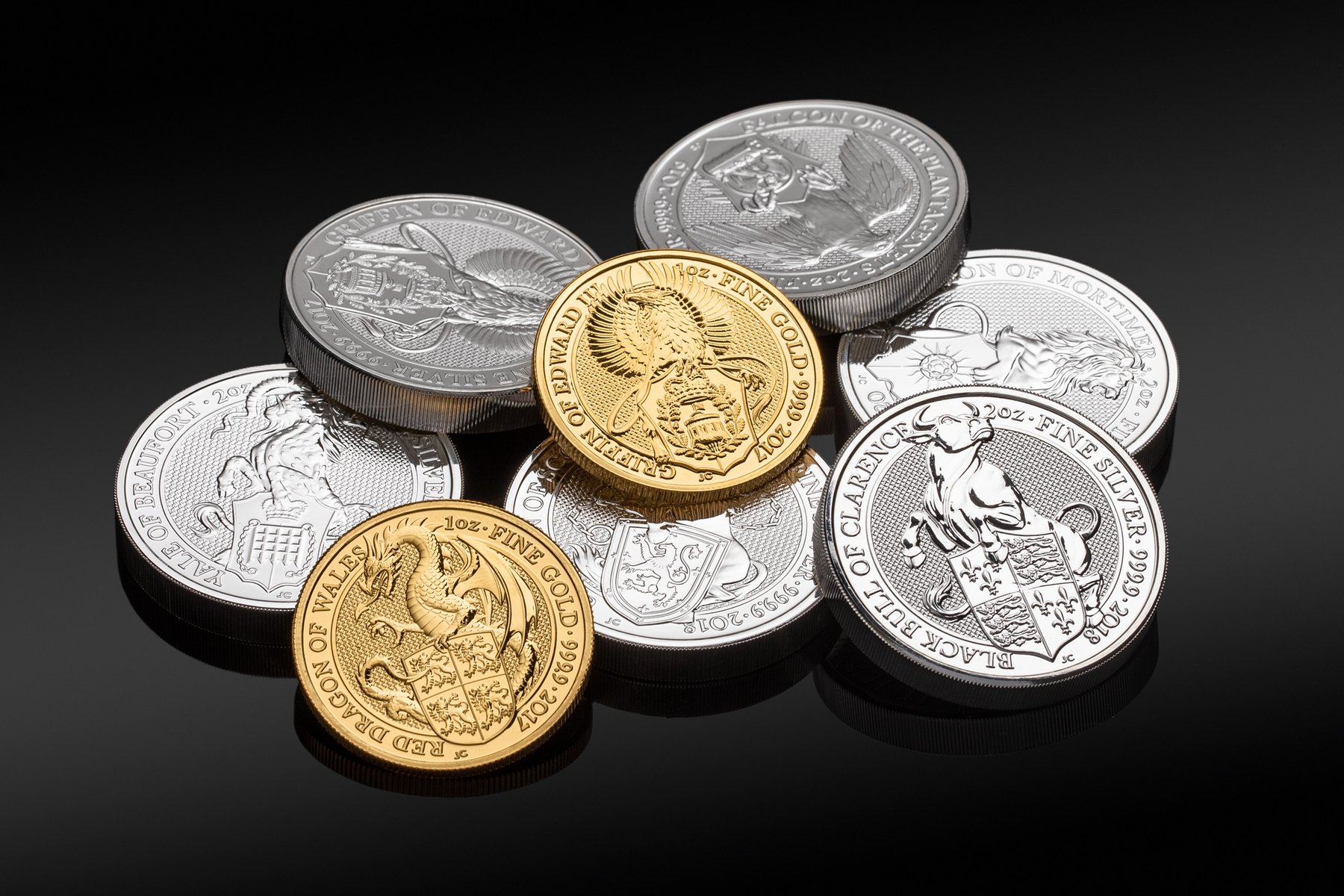
The simplest starting point is the spot price of gold, which changes throughout the trading day. Spot is the market price for immediate delivery of pure gold, and it is the reference point for most coins, bars, and many buyback offers.
To find today’s spot price, check a reputable market data source or a major bullion dealer’s live chart. Then adjust for:
- Purity (24K vs 22K vs 14K jewelry)
- Product type (popular coins often trade above spot)
- Dealer spread (the gap between what you pay and what you can sell for)
- Transaction costs (shipping, insurance, assay/testing, marketplace fees)
Spot price vs retail price vs buyback price
It helps to separate three numbers:
- Spot price: the benchmark price for pure gold.
- Retail price: what you pay to buy a coin or bar. Often spot plus a premium.
- Buyback price: what you receive when you sell. Often spot minus a discount, or spot plus a smaller premium for highly liquid items.
| Price type | What it represents | Commonly used for | What can move it |
|---|---|---|---|
| Spot price | Market price for pure gold (troy oz) | Starting point for valuation | Global markets, USD, rates, inflation expectations |
| Retail (ask) price | What buyers pay | Buying coins and bars | Demand, minting costs, dealer inventory, shipping |
| Buyback (bid) price | What sellers receive | Selling to dealers or shops | Dealer margin, verification costs, item liquidity |
What moves the price of gold (and why it changes daily)
Gold prices can move quickly because gold trades globally and is influenced by both investment demand and currency and interest rate expectations. Common drivers include:
- U.S. dollar strength: Gold is priced in dollars, so a stronger dollar can pressure gold prices and a weaker dollar can support them.
- Interest rates and real yields: When yields rise, holding non-yielding assets like gold can look less attractive to some investors.
- Inflation expectations: Gold is sometimes used as an inflation hedge, though it does not move one-for-one with inflation.
- Geopolitical risk: In periods of uncertainty, demand for gold can rise.
- Supply and demand: Mining supply, recycling, central bank activity, and jewelry demand can all matter.
How to calculate what your gold is worth (step by step)
Use this practical method to estimate value with real numbers.
Step 1: Identify purity (karat or fineness)
Pure gold is 24K. Common purities:
- 24K = 99.9% (often marked 999 or 999.9)
- 22K = 91.7% (often marked 916 or 917)
- 18K = 75.0% (750)
- 14K = 58.3% (583 or 585)
- 10K = 41.7% (417)
Step 2: Convert weight to troy ounces of pure gold
Formula: (grams x 0.0321507) x purity = pure gold troy ounces
Example: You have a 14K bracelet that weighs 20 grams.
- 20 grams x 0.0321507 = 0.6430 troy oz (gross weight)
- 0.6430 x 0.583 = 0.3749 troy oz of pure gold
Step 3: Apply a realistic sell price
If spot is $2,000 per troy ounce (example number for illustration), the pure gold melt value is:
- 0.3749 x $2,000 = $749.80
But jewelry often sells for less than melt value because of buyer margins, testing, and the fact that some pieces include stones or non-gold parts. A local shop might quote a percentage of melt value, depending on the item and market conditions.
Checklist: what to gather before you ask for offers
- Weight (preferably in grams) and photos of markings (14K, 585, 999)
- Item type (coin, bar, jewelry) and brand or mint if known
- Any receipts, certificates, or assay cards (for bars)
- Whether stones can be removed or are part of the piece
- Two to three quotes from different buyers
Gold coins and bars: premiums, liquidity, and what you might receive
Coins and bars can trade closer to spot than jewelry, but the exact premium depends on the product and market demand. Highly recognized bullion coins often have strong liquidity, which can help when selling.
Named examples of common gold products
- American Gold Eagle (U.S. Mint)
- American Gold Buffalo (U.S. Mint)
- Canadian Gold Maple Leaf (Royal Canadian Mint)
- South African Krugerrand
- Austrian Philharmonic
- Gold bars from PAMP Suisse, Valcambi, or Credit Suisse (availability varies)
| Option | Best fit | What to compare | Main drawback |
|---|---|---|---|
| American Gold Eagle | Buyers who want a widely recognized U.S. coin | Dealer premium over spot, buyback policy, shipping insurance | Premiums can be higher than some alternatives |
| American Gold Buffalo | Those who prefer 24K U.S. bullion | Premiums, authenticity verification, resale spread | Can cost more than 22K coins |
| Canadian Gold Maple Leaf | People who want 24K with strong global recognition | Premiums, availability, buyback pricing | Premium varies by dealer and market demand |
| South African Krugerrand | Buyers focused on liquidity and long history | Premiums, condition, dealer bid price | Not 24K, which can confuse new buyers |
| PAMP Suisse 1 oz bar | Those who want compact storage and serial-numbered bars | Assay card condition, buyback rules, shipping costs | Some buyers pay less if packaging is damaged |
Jewelry gold value: why “melt value” is not the same as resale value
Jewelry pricing includes design, brand, labor, and retail markup. When you sell, many buyers focus mainly on the gold content and may discount for stones, clasps, or uncertainty about purity.
Decision rules for jewelry
- If it is branded or collectible (for example, certain designer pieces), consider getting an appraisal and checking resale marketplaces before accepting a scrap offer.
- If it is broken, mismatched, or unbranded, scrap-style offers may be more realistic.
- If it has valuable stones, ask how the buyer treats stone value and whether stones are returned.
Where to check gold prices and verify information
Use multiple sources to reduce the chance of relying on a stale quote. For consumer protection and fraud prevention basics, you can review guidance from the FTC at https://consumer.ftc.gov/.
If you are storing significant value at a bank, it can help to understand how deposit insurance works for cash accounts. The FDIC explains coverage at https://www.fdic.gov/.
Real-number examples: what this looks like in dollars
Below are practical examples using simple math. Replace the spot price with today’s number and adjust for your item’s purity and likely spread.
Example 1: 1 oz (troy) 24K gold coin
- Spot price: $2,000 per troy oz (example)
- Gold content: 1.000 troy oz
- Melt value: $2,000
- Possible sell range: depends on coin type and buyer. A highly liquid bullion coin may sell closer to spot than a less recognized item, after any fees.
Example 2: 10 gram 24K gold bar
- 10 grams x 0.0321507 = 0.3215 troy oz
- Melt value at $2,000 spot: 0.3215 x $2,000 = $643.00
- Small bars can have higher premiums when buying, and a wider spread when selling, so compare offers carefully.
Example 3: 22K coin that weighs 1 troy ounce gross
- Purity: 91.7%
- Pure gold content: 1.000 x 0.917 = 0.917 troy oz
- Melt value at $2,000 spot: 0.917 x $2,000 = $1,834
Buying or selling gold: a practical comparison checklist
| What to compare | Why it matters | Good practice |
|---|---|---|
| Premium over spot | Determines how much extra you pay | Compare the same product across multiple sellers |
| Bid-ask spread | Impacts what you might get when selling | Ask for a written buyback quote or policy |
| Authentication and assay | Testing can reduce fraud risk and affect fees | Prefer sealed bars from reputable mints and keep documentation |
| Shipping and insurance | Can materially change net proceeds | Confirm who pays shipping and how packages are insured |
| Payment method and timing | Some methods have holds or fees | Ask when funds are released and what identification is required |
Gold and your financial plan: timeline-based decision rules
Gold can play different roles depending on when you might need the money and how much price fluctuation you can tolerate.
Under 1 year
- Priority is usually liquidity and stability. If you may need the money soon, large gold purchases can add price risk and selling friction.
- Decision rule: keep near-term needs in cash-like accounts and treat gold, if any, as a small, optional allocation.
1 to 3 years
- Gold prices can swing over a few years. If the money has a planned use date, consider limiting exposure.
- Decision rule: if a shortfall would disrupt your plan, keep gold exposure modest and focus on low-fee, easy-to-sell forms if you do buy.
3 to 7 years
- You have more time to ride out volatility, but spreads and storage still matter.
- Decision rule: if you want gold for diversification, consider a defined percentage and rebalance occasionally rather than trying to time the market.
7+ years
- Long horizons can support a diversified approach, but gold is still not guaranteed to outperform other assets.
- Decision rule: decide whether your goal is diversification, inflation sensitivity, or collecting, then choose the simplest product that matches that goal.
Sample allocations with real dollar amounts
These examples show how gold might fit into a broader household plan. They are not one-size-fits-all. The point is to see how percentages translate into dollars and how much volatility you are taking on.
Allocation A: $5,000 set aside (small, flexible)
- $3,500 in emergency cash (high-yield savings or similar)
- $1,000 toward high-interest debt payoff
- $500 in gold exposure (coins or a small bar) for diversification
Allocation B: $20,000 set aside (balanced priorities)
- $12,000 emergency fund (roughly 3 to 6 months of core expenses for some households)
- $6,000 retirement or long-term investing contribution (if eligible and appropriate)
- $2,000 in gold exposure (for example, up to 10% of this bucket)
Allocation C: $100,000 set aside (more moving parts)
- $30,000 emergency and near-term goals (cash and short-term instruments)
- $60,000 long-term diversified investments
- $10,000 gold exposure (up to 10% of this pool), focusing on liquidity and low transaction friction
Common mistakes that change the “worth” of your gold
- Using regular ounces instead of troy ounces, which can understate or overstate value.
- Ignoring purity, especially with 10K to 18K jewelry.
- Assuming retail price equals resale value. The spread can be meaningful.
- Not accounting for fees like shipping, insurance, or marketplace commissions.
- Skipping verification. If a buyer doubts authenticity, the offer may drop or require paid testing.
How to sell gold more confidently
If you are selling, focus on net proceeds and risk reduction:
- Get at least two to three offers and compare how each buyer calculates price.
- Ask for the quote in terms of spot plus or minus a specific amount or percentage.
- Confirm whether the offer is based on gross weight or pure gold content.
- Understand identification requirements and keep records for your own tracking.
If you suspect a scam or unfair practice, the CFPB and FTC have consumer resources and complaint pathways. Start with the CFPB at https://www.consumerfinance.gov/ and the FTC at https://consumer.ftc.gov/.
Bottom line
An ounce of gold is priced as a troy ounce of pure gold, but what your gold is worth in real life depends on purity, product type, and the premium or discount you face when you buy or sell. Start with spot, convert your item into pure gold content, then compare multiple offers to estimate your realistic net value.


