

Inflation Proof Grocery Shopping Guide

Inflation proof grocery shopping starts with a plan you can repeat every week, even when prices change aisle by aisle.
Contents
31 sections
-
Why grocery prices feel unpredictable (and what you can control)
-
Set a grocery baseline you can actually follow
-
Step 1: Find your current weekly average
-
Step 2: Choose a "default week" and a "tight week"
-
Real-number weekly budgets (three sample allocations)
-
Inflation proof grocery shopping: a repeatable 5-step system
-
Step 1: Build meals around flexible "swap slots"
-
Step 2: Use unit pricing every time
-
Step 3: Shop in a price order that reduces impulse buys
-
Step 4: Keep a "price reality" list for 15 staples
-
Step 5: Reduce waste with a 2-day leftover plan
-
Choose the right store mix (named options to compare)
-
Decision rules for picking your store strategy
-
Coupons, apps, and loyalty programs: how to use them without overspending
-
A simple coupon filter
-
Watch for common pricing traps
-
Build an inflation-resistant pantry and freezer
-
Starter list: pantry staples that support flexible meals
-
Freezer staples that prevent waste
-
How much to stock: timeline-based decision rules
-
When grocery costs push you toward credit, use a safer decision path
-
Decision path if you are short this month
-
Cost and risk checklist before borrowing for essentials
-
Where to verify help and protect yourself
-
Practical meal templates that stay cheap when prices change
-
Template 1: Sheet pan dinner
-
Template 2: Big pot meal (chili, soup, curry)
-
Template 3: Breakfast-for-dinner
-
Track progress without obsessing
-
Quick checklist: your next grocery trip
-
One more way to protect your budget: monitor your credit if you rely on cards
This guide shows how to lower your grocery bill without relying on extreme rules. You will learn how to set a realistic budget, choose stores strategically, use unit pricing, and build flexible meals that still work when your usual items jump in price.
Why grocery prices feel unpredictable (and what you can control)
Food inflation often shows up as smaller packages, sudden price spikes on staples, and fewer deep discounts. You cannot control the overall price level, but you can control:
- Where you shop (store pricing and promotions vary widely)
- What you buy (substitutions and seasonal choices matter)
- How you buy (unit price, bulk sizing, and timing)
- How much you waste (leftovers and storage habits)
Think of your grocery bill as a system. Small changes in 3 to 5 steps can add up over a month without needing perfect discipline.
Set a grocery baseline you can actually follow
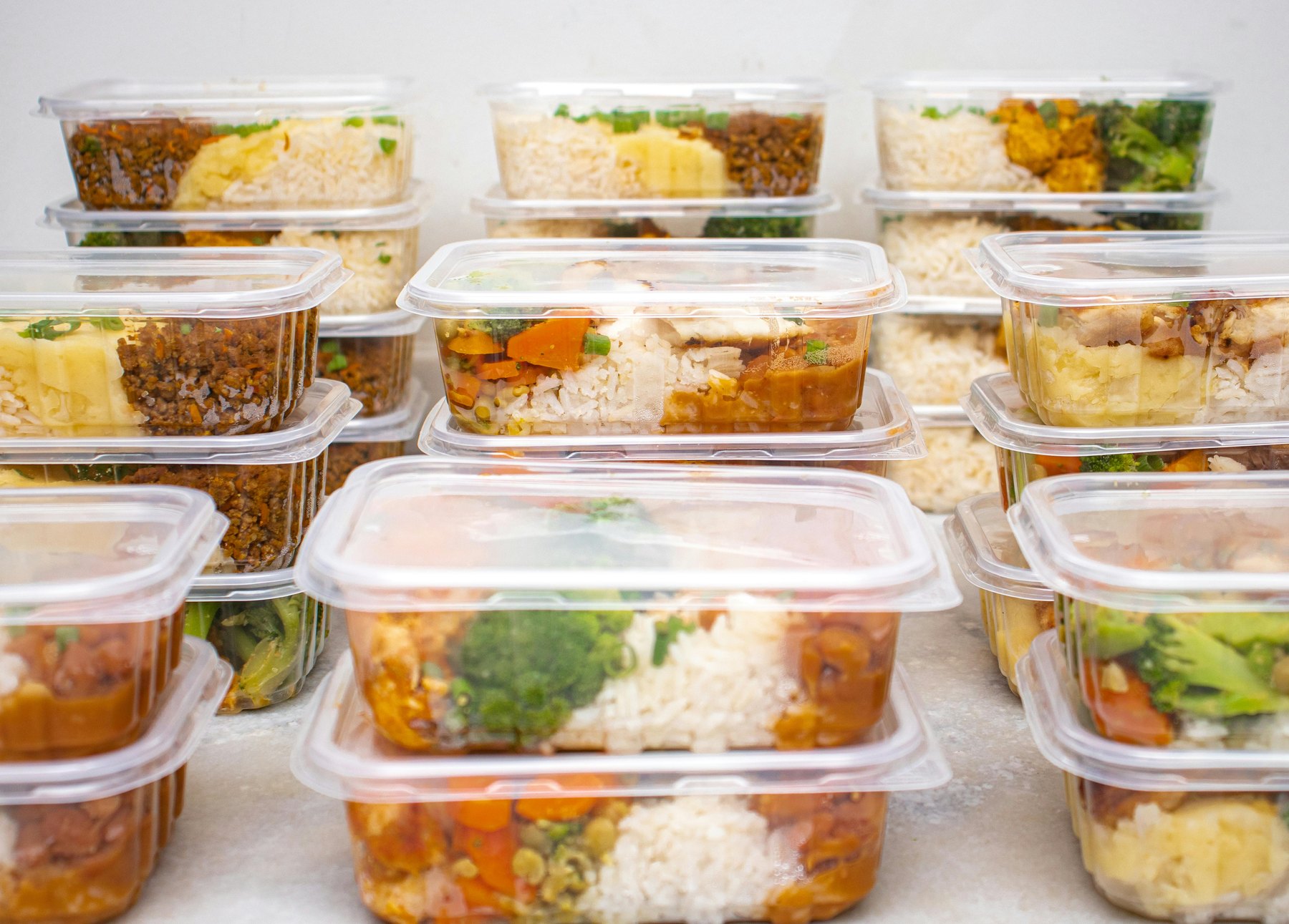
Before tactics, you need a baseline. A workable baseline is not a strict number. It is a range with rules for when to tighten or loosen.
Step 1: Find your current weekly average
- Look at the last 4 to 8 weeks of grocery spending (bank or card transactions).
- Separate true groceries from household items if you can (paper goods, toiletries, pet food).
- Calculate a weekly average.
If your spending varies a lot, use a range like $140 to $170 per week instead of one number.
Step 2: Choose a “default week” and a “tight week”
Inflation proofing works better when you pre-decide what happens in a tight month.
- Default week: your normal plan with a few convenience items.
- Tight week: fewer snacks and drinks, more store brands, more frozen and pantry meals.
| Budget lever | Default week | Tight week | Tradeoff to watch |
|---|---|---|---|
| Protein | Mix of chicken, eggs, some beef or fish | More beans, lentils, eggs, frozen chicken | Meal fatigue if variety drops too far |
| Produce | Fresh plus some frozen | Seasonal fresh plus more frozen | Waste if fresh spoils before use |
| Snacks and drinks | Some packaged snacks, sparkling water | Limit to 1 to 2 items, switch to tap or store brand | Impulse buys can erase savings |
| Convenience foods | Some pre-cut or ready meals | Cook once, eat twice meals | Time cost goes up |
Real-number weekly budgets (three sample allocations)
These examples show how a weekly grocery budget can be split so you are not guessing at checkout. Adjust for household size, dietary needs, and local prices.
- Example A: $100/week – Protein $30, Produce $25, Pantry staples $20, Dairy $10, Snacks/drinks $10, Buffer $5. Total = $100.
- Example B: $160/week – Protein $50, Produce $35, Pantry staples $30, Dairy $15, Snacks/drinks $20, Buffer $10. Total = $160.
- Example C: $240/week – Protein $75, Produce $55, Pantry staples $45, Dairy $25, Snacks/drinks $30, Buffer $10. Total = $240.
The buffer category matters because prices move. If you do not plan for it, you will usually overspend or cut essentials at the last minute.
Inflation proof grocery shopping: a repeatable 5-step system
Use this system each week. It is designed to work even when your favorite items are suddenly expensive.
Step 1: Build meals around flexible “swap slots”
Instead of planning exact meals that require exact ingredients, plan meals with swap slots:
- Protein slot: chicken thighs, ground turkey, tofu, beans, eggs
- Veg slot: whatever is seasonal or on sale, plus frozen backup
- Carb slot: rice, pasta, potatoes, tortillas, oats
- Sauce or seasoning slot: salsa, curry paste, marinara, soy sauce
Decision rule: if your usual protein is up sharply, swap to the cheapest option that still fits your diet and cooking time.
Step 2: Use unit pricing every time
Unit price (cost per ounce, pound, or count) is the fastest way to spot shrinkflation and misleading “sale” tags. Compare unit prices across:
- Different package sizes
- Store brand vs name brand
- Fresh vs frozen
Decision rule: if the larger size is not at least 10% cheaper per unit, buy the size you will finish before it goes bad.
Step 3: Shop in a price order that reduces impulse buys
Impulse spending often comes from shopping hungry, shopping without a list, or browsing endcaps. Try this order:
- Frozen vegetables and frozen fruit
- Proteins
- Produce
- Pantry staples
- Dairy
- Snacks and drinks last
Decision rule: if you did not plan it, do not buy it unless it replaces something already on your list at the same or lower cost.
Step 4: Keep a “price reality” list for 15 staples
Pick 15 items you buy often and track the typical price range in your area. This helps you recognize a real deal quickly. Examples:
- Eggs (per dozen)
- Milk (per gallon)
- Chicken thighs (per pound)
- Ground turkey (per pound)
- Rice (per pound)
- Pasta (per pound)
- Frozen mixed vegetables (per bag)
- Apples or bananas (per pound)
Decision rule: if an item is below your usual range and you will use it before it expires, buy one extra and rotate it into next week’s plan.
Step 5: Reduce waste with a 2-day leftover plan
Food waste is hidden inflation. A simple rule: cook two “base” items that can become multiple meals.
- Base 1: a protein (roasted chicken, beans, or tofu)
- Base 2: a carb (rice, potatoes, pasta)
Then use different sauces and vegetables to keep meals from feeling repetitive.
Choose the right store mix (named options to compare)
Different stores are good at different categories. Many households save money by splitting shopping into two trips: one value-focused store for staples and one store for specific items or produce quality.
| Option | Best fit | What to compare | Main drawback |
|---|---|---|---|
| Aldi | Low-cost staples and store brands | Unit prices on pantry, dairy, frozen | Fewer name brands and smaller selection |
| Walmart | One-stop shopping and broad pricing | Everyday prices vs weekly specials | Quality can vary by location |
| Costco | Bulk buying for families and meal prep | Per-unit cost after membership fee | Large sizes can increase waste if unused |
| Sam’s Club | Bulk staples and household items | Bulk unit price and package sizes | Not ideal for small households |
| Kroger (and Kroger-owned stores) | Sales, digital coupons, fuel points | Coupon rules, store brand value | Full-price items can be expensive |
| Target | Convenience, some competitive store brands | Cart total vs grocery-only stores | Easy to overspend on non-grocery items |
Decision rules for picking your store strategy
- If you buy a lot of packaged staples: test Aldi or Walmart for a month and compare totals.
- If you have storage space and a predictable routine: compare Costco or Sam’s Club for bulk proteins, rice, paper goods, and freezer items.
- If you rely on promotions: use Kroger-style weekly sales, but set a list first so “deals” do not drive the cart.
Coupons, apps, and loyalty programs: how to use them without overspending
Digital coupons can help, but they can also push you toward items you would not buy. Use them as a discount tool, not a shopping plan.
A simple coupon filter
- Use it if it discounts something already on your list.
- Skip it if it requires buying more than you can use before it expires.
- Be cautious if it is a “spend $X, get $Y” offer that increases your total.
Watch for common pricing traps
- Multi-buy deals: “Buy 5 save $5” can be good, but only if you would buy those items anyway.
- Endcap displays: often not the best unit price.
- Snack inflation: chips, soda, and single-serve items can quietly add $10 to $30 per trip.
Build an inflation-resistant pantry and freezer
A well-stocked pantry reduces emergency trips and makes it easier to swap ingredients when prices spike.
Starter list: pantry staples that support flexible meals
- Rice, pasta, oats
- Canned beans, lentils, chickpeas
- Canned tomatoes, broth
- Peanut butter
- Flour or tortillas
- Spices you actually use (garlic powder, chili powder, Italian seasoning)
Freezer staples that prevent waste
- Frozen vegetables (broccoli, mixed veg, spinach)
- Frozen fruit for smoothies or oatmeal
- Portion-sized proteins (freeze in meal-size bags)
- Bread or tortillas (freeze extras)
How much to stock: timeline-based decision rules
- Under 1 year: focus on a 2 to 4 week pantry buffer of items you already eat. Avoid buying large quantities just because of a sale if cash is tight.
- 1 to 3 years: build a stable rotation of staples and freezer meals so you can handle busy months without takeout.
- 3 to 7 years: consider a bigger freezer or storage system if it fits your household and reduces waste. Track whether bulk buys truly lower your per-meal cost.
- 7+ years: prioritize habits that keep working long-term: meal planning, waste reduction, and a store mix that matches your schedule.
When grocery costs push you toward credit, use a safer decision path
Rising food costs can squeeze cash flow. If you are tempted to use a credit card or buy-now-pay-later for groceries, focus on minimizing interest and avoiding a cycle.
Decision path if you are short this month
- Cut the fastest “leak” first: drinks, snacks, and convenience items for 2 to 4 weeks.
- Check eligibility for local food support: community programs can free up cash for rent and utilities.
- If using a credit card: aim to pay the statement balance if possible. If not, pay as much as you can above the minimum and avoid adding new balances.
- If considering a personal loan to consolidate high-interest debt: compare APR, origination fees, term length, and total interest cost. A longer term can lower the payment but raise total cost.
Cost and risk checklist before borrowing for essentials
| Question | What to look for | Why it matters |
|---|---|---|
| Can you reduce spending first? | Cut 2 to 3 categories for 30 days | Borrowing for groceries can become recurring |
| What is the APR and total cost? | APR, fees, and total interest over the term | Low payments can hide a high total cost |
| Is the payment realistic? | Fits your budget with a buffer | Missed payments can add fees and credit damage |
| Is the lender reputable? | Clear terms, no pressure tactics | Reduces risk of scams and surprise fees |
Where to verify help and protect yourself
- Budgeting and complaint resources: Consumer Financial Protection Bureau (CFPB)
- Avoiding scams and misleading offers: Federal Trade Commission (FTC) Consumer Advice
Practical meal templates that stay cheap when prices change
These templates are designed for substitutions. Pick what is cheapest that week.
Template 1: Sheet pan dinner
- Protein: chicken thighs, sausage, tofu
- Veg: carrots, onions, broccoli, frozen mix
- Carb: potatoes or rice
Rule: choose the vegetable that is cheapest per pound and will be used fully.
Template 2: Big pot meal (chili, soup, curry)
- Base: canned tomatoes or broth
- Protein: beans, lentils, ground turkey
- Add-ins: frozen veg, onions, spices
Rule: if meat is expensive, use half meat and half beans.
Template 3: Breakfast-for-dinner
- Eggs or egg substitute
- Oats, pancakes, or toast
- Fruit (fresh seasonal or frozen)
Rule: if cereal prices jump, switch to oats and add fruit or peanut butter.
Track progress without obsessing
You do not need a perfect spreadsheet. Use a simple weekly check-in:
- What was your total grocery spend?
- What 3 items were the biggest cost drivers?
- What did you waste or throw away?
- What is one substitution to try next week?
If you want a more structured approach, keep receipts for 4 weeks and group spending into: protein, produce, pantry, dairy, snacks, and household. You will usually find one category that is quietly inflating your total.
Quick checklist: your next grocery trip
- Set a weekly range and a tight-week plan
- Pick 3 to 5 flexible meals with swap slots
- Check unit prices and avoid “deal” traps
- Buy frozen produce as a backup
- Plan 2 leftover meals to reduce waste
- Use coupons only for items already on your list
One more way to protect your budget: monitor your credit if you rely on cards
If grocery inflation is pushing more spending onto credit cards, it helps to keep an eye on your credit reports for errors that can raise borrowing costs. You can check your reports at AnnualCreditReport.com.
For deposit accounts used to manage cash flow, you can learn about deposit insurance basics at the FDIC.
With a repeatable system, a flexible meal plan, and a store strategy that matches your household, you can make grocery spending more predictable even when prices are not.


