

Questions Before Buying Crypto

These questions before buying crypto can help you slow down, compare your options, and avoid common (and expensive) mistakes when you are deciding whether to buy Bitcoin, Ethereum, or other digital assets.
Contents
25 sections
-
What problem are you trying to solve with crypto?
-
Questions before buying crypto: your pre-purchase checklist
-
1) Can you afford the volatility without borrowing?
-
2) Do you have an emergency fund and high-interest debt plan?
-
3) What is your timeline: under 1 year, 1 to 3 years, 3 to 7 years, or 7+ years?
-
4) Are you buying the asset or the story?
-
5) How will you buy: lump sum or dollar-cost averaging?
-
6) Where will you buy and hold it: exchange, broker, or wallet?
-
7) What fees will you pay, including spreads?
-
8) What is your custody plan if something goes wrong?
-
9) How will taxes work for you?
-
10) Are you being pressured by urgency, influencers, or "guaranteed" claims?
-
Where to buy: comparing common crypto platforms
-
Security questions that matter more than price
-
Account security checklist
-
Custody decision: exchange vs self-custody
-
What would this look like with real numbers?
-
Scenario 1: $1,000 to start learning
-
Scenario 2: $10,000 available after building a basic emergency fund
-
Scenario 3: $50,000 windfall with multiple priorities
-
How to avoid common borrowing mistakes tied to crypto
-
Tax and recordkeeping questions to answer before your first trade
-
Red flags: when to pause before buying
-
A simple decision matrix you can use today
-
Next steps: a practical first purchase plan
Crypto can be used in different ways: long-term investing, short-term trading, sending money, or experimenting with new apps. The right “first step” depends on your goal, your timeline, and how much volatility you can realistically handle without needing to borrow money or miss other priorities.
What problem are you trying to solve with crypto?
Start with the simplest question: why crypto, specifically? Your answer changes what you buy, where you buy it, and how much risk you are taking.
- Long-term investing: You may care more about security, fees, and taxes than about day-to-day price moves.
- Short-term trading: You may care about spreads, advanced order types, and how quickly you can move money in and out. This is typically higher risk.
- Using crypto for payments: You may care about transaction fees, speed, and whether the merchant actually accepts it.
- Learning and experimenting: You may want a small “tuition” amount you can afford to lose while you learn wallets and transfers.
Decision rule: If you cannot clearly explain what you want crypto to do for you in one sentence, pause. Confusion is a signal to start smaller or wait.
Questions before buying crypto: your pre-purchase checklist
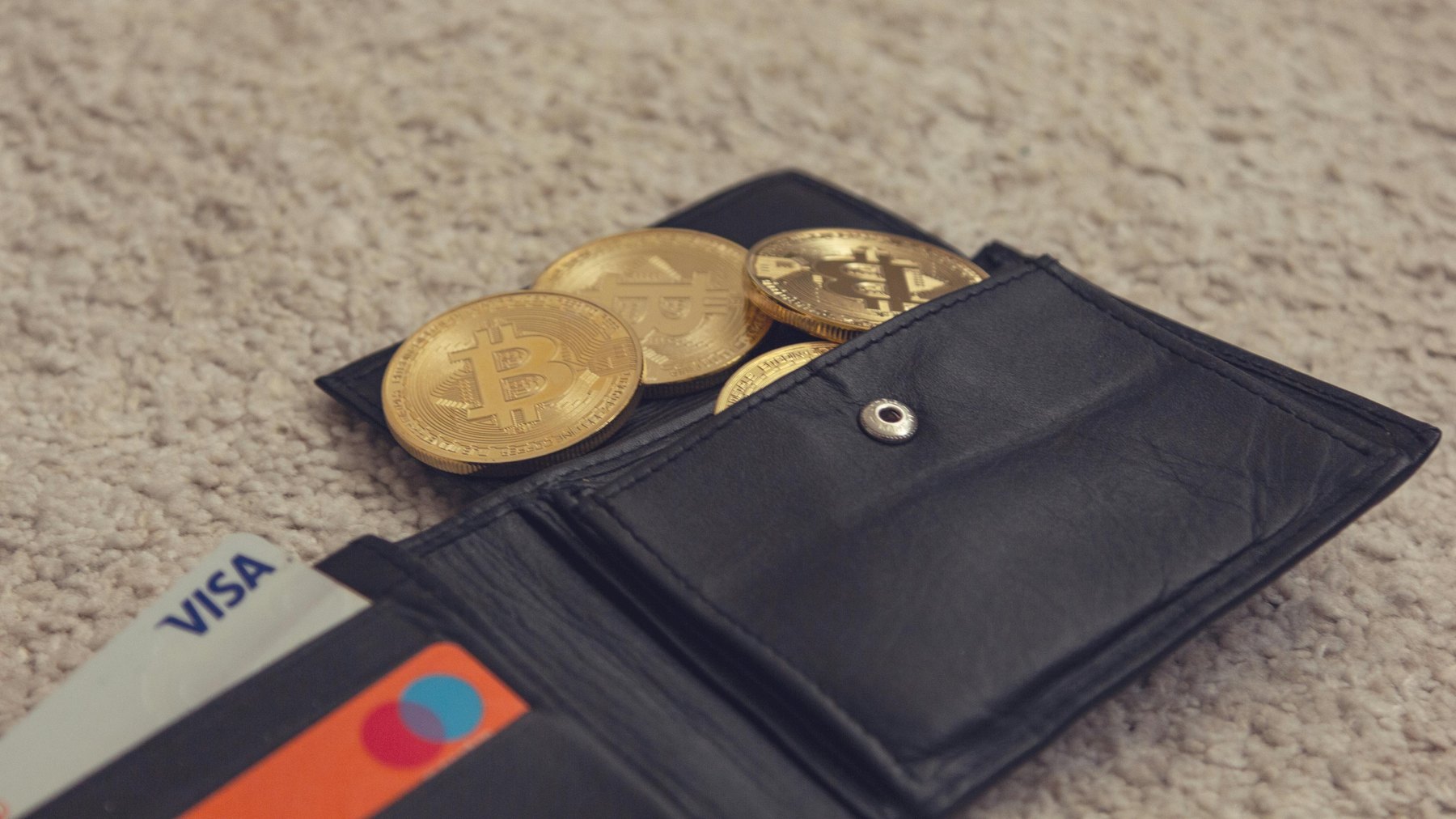
Use this checklist before you deposit money into an exchange or click “buy.”
1) Can you afford the volatility without borrowing?
Crypto prices can move sharply in days or even hours. Ask yourself what you would do if your holdings dropped 30% to 60% and stayed down for a year. If the honest answer is “I would need to sell to pay bills” or “I would put expenses on a credit card,” your position size is likely too large.
Quick stress test: Multiply your planned crypto purchase by 0.5. If losing that amount would change your ability to pay rent, utilities, minimum debt payments, or groceries, reduce the amount.
2) Do you have an emergency fund and high-interest debt plan?
Before taking on a highly volatile asset, many people prioritize:
- Emergency cash: often 3 to 12 months of essential expenses, depending on job stability and household needs.
- High-interest debt: credit cards and some personal loans can have interest costs that are hard to out-invest consistently.
If you are carrying high-interest balances, compare the certainty of paying down debt versus the uncertainty of crypto returns. You do not need perfection here, but you do need a plan.
3) What is your timeline: under 1 year, 1 to 3 years, 3 to 7 years, or 7+ years?
Timeline drives how much volatility you can tolerate and how you might fund the purchase.
- Under 1 year: Consider whether you are effectively speculating. Money needed soon is usually better kept in cash-like options where value is more stable.
- 1 to 3 years: If you buy, consider a smaller allocation and a plan to average in over time rather than buying all at once.
- 3 to 7 years: You may be better positioned to ride out multi-year drawdowns, but you still need diversification and a rebalancing rule.
- 7+ years: You can focus more on long-term security, taxes, and a consistent contribution plan, while still assuming large swings are possible.
4) Are you buying the asset or the story?
Hype cycles can push people into coins they do not understand. Ask:
- What does this coin or token do?
- Why does it need a token at all?
- What are the main risks: regulation, competition, security, or adoption?
- Is the supply fixed, inflationary, or controlled by a small group?
If you cannot explain the basics, consider sticking to more established assets or waiting until you can.
5) How will you buy: lump sum or dollar-cost averaging?
Lump sum means buying your full amount now. Dollar-cost averaging (DCA) means buying smaller amounts on a schedule, such as weekly or monthly.
Decision rule: If you would feel regret or panic if the price drops right after you buy, DCA can reduce the emotional impact because you are not picking a single entry point.
6) Where will you buy and hold it: exchange, broker, or wallet?
“Buying crypto” often involves two separate choices: the platform you use to buy and the place you store it.
- Centralized exchanges: You create an account, deposit money, and trade. You may leave crypto on the platform or withdraw to a wallet.
- Broker-style apps: Often simpler interfaces, sometimes with different fee structures or spreads.
- Self-custody wallets: You control the private keys. This can reduce reliance on a platform, but it increases your responsibility for security and backups.
7) What fees will you pay, including spreads?
Crypto costs are not always obvious. You may see:
- Trading fees: a percentage per trade, sometimes lower with higher volume.
- Spreads: the difference between the buy and sell price, which can act like a hidden fee.
- Deposit and withdrawal fees: for bank transfers, cards, or moving crypto off-platform.
- Network fees: paid to process transactions on a blockchain, which can vary widely.
Decision rule: Before buying, estimate your “round trip” cost: buy fee + spread + sell fee + any withdrawal costs. If you cannot estimate it, you cannot compare platforms.
8) What is your custody plan if something goes wrong?
Ask what happens if you lose access, your phone breaks, or an account gets locked. If you self-custody, consider how you will store recovery phrases and how a trusted person could access funds in an emergency.
9) How will taxes work for you?
In the US, crypto is generally treated as property for tax purposes. Selling, swapping one coin for another, and using crypto to buy goods can create taxable events. Keeping good records matters.
Helpful starting points include the IRS guidance on virtual currency and general tax topics: https://www.irs.gov/.
10) Are you being pressured by urgency, influencers, or “guaranteed” claims?
Be cautious with anyone promising guaranteed returns, “risk-free” yields, or secret strategies. Scams often use urgency and social proof.
For practical scam-spotting tips, review the FTC’s consumer guidance: https://consumer.ftc.gov/.
Where to buy: comparing common crypto platforms
You can buy crypto through many well-known platforms. The goal is not to find a single “best” choice, but to compare how each handles fees, custody, transfers, and support.
| Option | Best fit | What to compare | Main drawback |
|---|---|---|---|
| Coinbase | Beginners who want a mainstream interface | Trading fees vs spread, withdrawal options, supported assets | Costs can be higher depending on trade type and size |
| Kraken | Users who want more trading features | Fee schedule, order types, funding methods, security tools | Interface can feel complex for first-time buyers |
| Gemini | Buy-and-hold users who value account controls | Fees, custody options, transfer limits, supported coins | Asset selection and features may differ by region |
| Crypto.com | Mobile-first users who want an all-in-one app | Spreads, card and bank funding costs, withdrawal fees | Pricing can be harder to compare due to spread-based costs |
| Robinhood | People who prefer a brokerage-style experience | Spreads, transferability to external wallets, account protections | Crypto features and coin availability can be more limited |
| Fidelity Crypto | Investors who want crypto exposure inside a familiar brand | Which coins are available, how pricing works, transfer rules | May not support withdrawing crypto to your own wallet |
Tip: Before you fund an account, check whether you can withdraw crypto to a personal wallet, what the limits are, and how long bank transfers take to clear.
Security questions that matter more than price
Security is not just “use a strong password.” It is a set of decisions about how you store value and how you reduce the chance of irreversible mistakes.
Account security checklist
- Use a unique, long password and a password manager.
- Turn on two-factor authentication. App-based authenticators are commonly preferred over SMS when available.
- Enable withdrawal allowlists or address whitelisting if the platform offers it.
- Review login alerts and device management settings.
- Be skeptical of “support” messages on social media and lookalike websites.
Custody decision: exchange vs self-custody
| Question | If you answer “Yes” | If you answer “No” |
|---|---|---|
| Can you securely store a recovery phrase offline? | Self-custody may be realistic | Consider keeping funds on a reputable platform while you learn |
| Would losing access be financially devastating? | Use extra safeguards and smaller test transfers | You may tolerate more experimentation |
| Do you need to move crypto frequently? | Compare network fees and wallet usability | Buy-and-hold may reduce transfer complexity |
| Do you understand how to verify addresses and avoid phishing? | Self-custody risk is lower | Stay simple and avoid rushing transfers |
What would this look like with real numbers?
Below are three sample allocations to show how someone might fit crypto into a broader plan. These are examples, not targets. The point is to keep essentials stable and size crypto as a volatile bucket.
Scenario 1: $1,000 to start learning
- $700 emergency cushion (kept in cash-like savings)
- $200 pay down high-interest debt or build a buffer for next month’s bills
- $100 crypto “learning position” (small enough to make mistakes without major damage)
Decision rule: If $100 feels too small to matter, that is often a sign you are trying to solve boredom, not a financial goal.
Scenario 2: $10,000 available after building a basic emergency fund
- $6,000 emergency fund top-up (moving toward 3 to 6 months of essentials)
- $3,000 retirement or diversified investing (depending on your plan)
- $1,000 crypto allocation (10% of this $10,000 bucket)
How to execute: If you choose DCA, you could split $1,000 into 10 weekly buys of $100 or 5 monthly buys of $200, then stop and reassess.
Scenario 3: $50,000 windfall with multiple priorities
- $20,000 emergency fund (aiming for 6 to 12 months if income is variable)
- $15,000 pay down high-interest debt or build a debt payoff runway
- $12,500 diversified long-term investing
- $2,500 crypto (5% of the $50,000)
Decision rule: If you are tempted to put 20% or more into crypto, write down what would need to be true for that to be worth the risk, and what you would do if it fell by half. If the plan is “hope,” reduce the percentage.
How to avoid common borrowing mistakes tied to crypto
Crypto decisions can spill into debt decisions. A few patterns are especially risky:
- Using credit cards to buy crypto: You may pay cash-advance fees and immediate interest, and you add debt risk on top of price risk.
- Taking a personal loan to invest: You lock in a repayment obligation even if the asset drops.
- Margin or leverage: Borrowing to trade can magnify losses and trigger forced selling.
Decision rule: If you cannot buy it with money you can leave untouched for years, consider waiting or buying a smaller amount.
Tax and recordkeeping questions to answer before your first trade
Good records reduce stress later. Before you start, decide:
- How you will track cost basis, dates, and proceeds for each trade.
- Whether you will use a spreadsheet or a crypto tax software tool.
- How you will store transaction confirmations and wallet addresses.
For general tax information and updates, start at the IRS website: https://www.irs.gov/.
Red flags: when to pause before buying
- Someone promises guaranteed returns or “no risk.”
- You are rushing because of a countdown timer, a private message, or a limited-time claim.
- You cannot explain how you will cash out, what fees you will pay, or what taxes might apply.
- You are planning to use borrowed money to buy.
- You are sending money to a person instead of using a reputable platform with clear account access and controls.
If you suspect fraud or want to learn common tactics, the FTC’s scam resources are a solid place to start: https://consumer.ftc.gov/.
A simple decision matrix you can use today
| If you are… | Consider doing… | And avoid… |
|---|---|---|
| New to investing and building savings | Start with a small amount and focus on cash buffer first | Large lump-sum buys and borrowing to invest |
| Carrying high-interest debt | Compare debt payoff vs a small crypto allocation | Using credit cards or loans to buy crypto |
| Long-term investor with stable finances | Set a percentage allocation and rebalance periodically | Chasing hype coins without understanding them |
| Interested in self-custody | Practice with small test transfers and secure backups | Storing recovery phrases in screenshots or email |
Next steps: a practical first purchase plan
- Pick your goal and timeline. Write it down in one sentence.
- Choose an amount. Start with an amount you can leave untouched and that would not force debt if it drops.
- Compare platforms. Look at fees, spreads, transfer rules, and security settings.
- Secure your account. Turn on two-factor authentication and withdrawal protections.
- Decide lump sum vs DCA. If unsure, DCA can reduce entry-point stress.
- Track records from day one. Save confirmations and keep a simple log for taxes.
If you want to build stronger money basics alongside investing, the CFPB has practical budgeting and financial education tools: https://www.consumerfinance.gov/.
And if you are reviewing your overall financial health, checking your credit reports can help you spot errors and understand your borrowing profile. You can access free weekly reports at: https://www.annualcreditreport.com/.


