

Upcoming Crypto Listings on Binance: How to Evaluate New Tokens Before You Buy

Upcoming crypto listings on Binance can create big price swings, fast-moving headlines, and a lot of FOMO. If you are thinking about buying a newly listed token, the most important skill is not speed – it is having a repeatable process to decide whether the risk fits your budget and timeline.
Contents
35 sections
-
What "upcoming crypto listings on Binance" really means
-
Where to find listing information (and how to avoid fake announcements)
-
Quick verification checklist
-
How a Binance listing can move price: mechanics that matter
-
Practical rule: avoid market orders in the first minutes
-
Before you buy: a due diligence checklist that fits real life
-
1) Token basics
-
2) Unlocks and dilution
-
3) Liquidity and market structure
-
4) Security and operational risk
-
5) Your personal risk budget
-
Position sizing with real numbers (three sample budgets)
-
Sample allocation A: $1,000 total crypto budget
-
Sample allocation B: $5,000 total crypto budget
-
Sample allocation C: $20,000 total crypto budget
-
Decision rule: cap your "new listing" bucket
-
Timeline decision rules: under 1 year, 1 to 3 years, 3 to 7 years, 7+ years
-
Under 1 year
-
1 to 3 years
-
3 to 7 years
-
7+ years
-
Common ways people try to access new listings (with named examples)
-
Decision rule: match the venue to your risk tolerance
-
Costs to watch: fees, spreads, slippage, and taxes
-
Using credit or loans to buy newly listed crypto: what to consider
-
Practical decision rules if you are tempted to borrow
-
Borrowing cost reality check with numbers
-
Step-by-step: a simple plan for trading a new Binance listing
-
Step 1: Set your maximum loss and position size
-
Step 2: Decide your entry method
-
Step 3: Plan your exit before you enter
-
Step 4: Track your trades and taxes
-
Scams and account safety: protect your money during hype cycles
-
How to keep your broader finances stable while investing in new listings
-
Summary: a practical way to approach new Binance listings
This guide explains where listings are announced, how Binance listing mechanics work, what to check before you buy, and how to use real numbers for position sizing. You will also see practical decision rules, checklists, and comparison tables for common ways people try to access new listings.
What “upcoming crypto listings on Binance” really means
When people say “upcoming listings,” they usually mean one of these events:
- Official listing announcement – Binance publishes a notice that a token will be listed at a specific time and trading pairs will open.
- Launchpool or Launchpad event – users can earn or buy a token before or at listing through a structured program.
- Binance Alpha, Megadrop, or similar early access programs – availability can vary by region and eligibility.
- “Seed” or “Innovation” labels – higher-risk tokens may be marked and may have extra trading rules.
“Upcoming” does not guarantee that a token will be available in your country, on your account type, or with the same features (spot, margin, futures). It also does not guarantee liquidity, stable pricing, or long-term viability.
Where to find listing information (and how to avoid fake announcements)
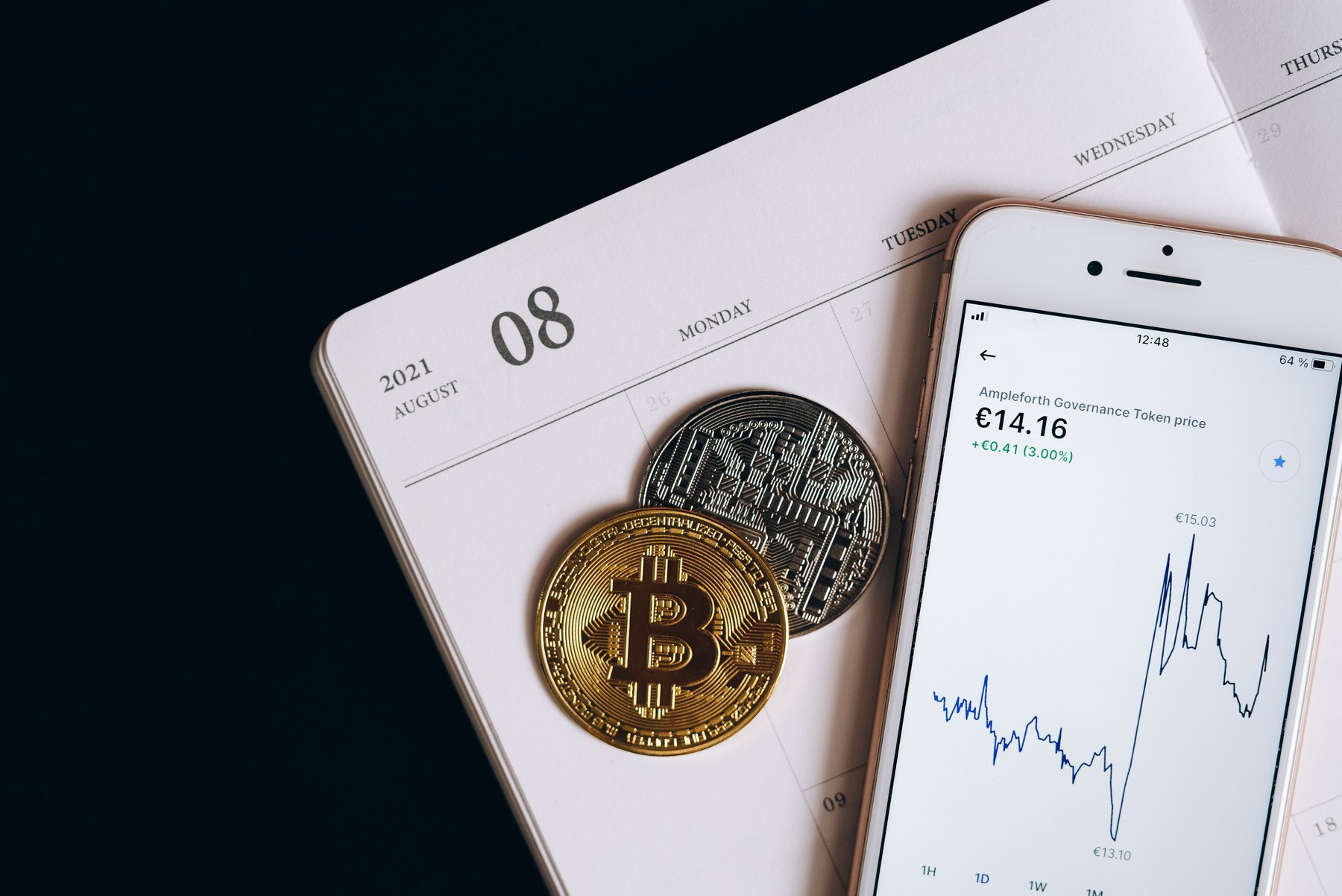
The safest approach is to rely on primary sources and cross-check details. Common places people look include:
- Binance announcements page in the app or website. Look for the exact trading pairs, start time, and any tags (Seed, etc.).
- Official project channels (website, verified X account, Discord, Telegram). Confirm that the Binance announcement is linked or referenced.
- On-chain explorers to verify the token contract address (especially for tokens with copycat names).
Fraud often shows up as look-alike token tickers, fake contract addresses, and “airdrop” links that ask you to connect a wallet. If you are unsure, pause and verify from the exchange announcement and the project’s official site.
Quick verification checklist
- Does the Binance announcement include the token’s full name and ticker?
- Are the trading pairs listed (for example, TOKEN/USDT, TOKEN/BTC)?
- Is the start time shown in your local time zone or clearly in UTC?
- Can you confirm the token contract address on the project website and a reputable explorer?
- Are there regional restrictions or eligibility requirements?
How a Binance listing can move price: mechanics that matter
New listings often have a short period where price discovery is chaotic. A few mechanics can amplify volatility:
- Thin early liquidity – even on a large exchange, the order book can be shallow at first.
- Market orders and slippage – a market buy can fill far above the last traded price.
- Deposits and withdrawals timing – sometimes deposits open before trading, or withdrawals open later. This can affect arbitrage and spreads.
- Staggered listings – if other exchanges list earlier or later, price can gap.
- Unlock schedules – if large token unlocks are near, supply can increase quickly.
Practical rule: avoid market orders in the first minutes
If you choose to trade at listing time, consider using limit orders and smaller size. Slippage is one of the most common hidden costs for new listings.
Before you buy: a due diligence checklist that fits real life
You do not need a 40-page research report to make better decisions. You do need a consistent checklist that catches common problems.
1) Token basics
- What does the token do? Utility, governance, gas, collateral, meme, or points-to-token conversion.
- Supply and emissions Total supply, circulating supply, and how new tokens enter circulation.
- Token distribution Team, investors, community, treasury. Look for concentration risk.
2) Unlocks and dilution
Many tokens have vesting schedules. If a large unlock is coming soon, price can face selling pressure even if the project is strong.
- Check whether early investors or the team have upcoming unlocks.
- Look for emissions from staking rewards or liquidity incentives.
3) Liquidity and market structure
- How many trading pairs are available at listing?
- Is there meaningful volume, or is it mostly bots and short-term traders?
- Are there large spreads between bid and ask?
4) Security and operational risk
- Has the code been audited by reputable firms? If yes, read the scope and date.
- Is the token contract upgradeable? Who controls upgrades?
- Is there a history of exploits in similar protocols?
5) Your personal risk budget
- Can you afford a large drawdown without needing to borrow money or miss bills?
- Is this money you might need within a year?
- Do you already have high-risk exposure elsewhere (options, leverage, concentrated stock)?
Position sizing with real numbers (three sample budgets)
New listings can be extremely volatile. A practical way to manage that is to decide your maximum loss before you buy, then size the position accordingly. Below are examples that show what this can look like with real numbers. These are not recommendations, just templates you can adapt.
Sample allocation A: $1,000 total crypto budget
- $700 in established large-cap coins (core holdings)
- $200 in mid-cap projects you have researched
- $100 maximum in newly listed tokens (high-volatility bucket)
Total: $1,000
Sample allocation B: $5,000 total crypto budget
- $3,500 core holdings
- $1,000 researched altcoins
- $500 across new listings, split into 5 entries of $100 each
Total: $5,000
Sample allocation C: $20,000 total crypto budget
- $14,000 core holdings
- $4,000 researched altcoins
- $2,000 high-volatility bucket for new listings, capped at $250 to $500 per token
Total: $20,000
Decision rule: cap your “new listing” bucket
Many investors use a range like 0% to 20% for high-volatility positions depending on risk tolerance. If you are also carrying credit card debt, a personal loan, or other high-interest obligations, you may decide your high-volatility bucket should be smaller until your cash flow is stronger.
Timeline decision rules: under 1 year, 1 to 3 years, 3 to 7 years, 7+ years
Your timeline changes what “good risk” looks like.
Under 1 year
- Focus on liquidity and exit planning. You may not have time to wait out a deep drawdown.
- Consider smaller sizing and clearer rules for taking profits or cutting losses.
- Avoid tying up money you might need for rent, debt payments, or emergency costs.
1 to 3 years
- Look harder at token unlock schedules and whether the product is gaining real users.
- Consider staged entries (for example, buy in 3 parts over weeks) instead of a single buy at listing.
3 to 7 years
- Prioritize fundamentals: revenue model (if any), developer activity, and governance quality.
- Be cautious with projects that rely mainly on incentives to attract users.
7+ years
- Expect multiple market cycles. Concentration risk matters more than catching a single listing pump.
- Consider whether your overall financial plan includes diversified assets outside crypto.
Common ways people try to access new listings (with named examples)
Binance is one venue, but “new listings” are often traded across multiple exchanges and tools. Below are recognizable options people use, with what to compare and a key drawback to consider.
| Option | Best fit | What to compare | Main drawback |
|---|---|---|---|
| Binance (Spot, Launchpool/Launchpad where available) | Users who want deep liquidity and a single ecosystem | Trading fees, spread at listing, eligibility, withdrawal availability | Availability and features vary by region and account status |
| Coinbase | Users who value a simpler interface and compliance focus | Fees, supported assets in your region, order types | Some tokens list later or not at all; fees can be higher depending on product |
| Kraken | Traders who want strong security reputation and tools | Fees, liquidity, staking availability, supported jurisdictions | Not always first to list the newest tokens |
| OKX | Users seeking a wide range of tokens and trading features | Fees, liquidity, risk controls, regional access | Complexity and availability vary; requires careful settings |
| Bybit | Active traders watching new markets and derivatives | Fees, liquidity, order types, risk limits | Higher complexity; leverage can magnify losses |
| DEXs (Uniswap, PancakeSwap) | Early access seekers comfortable with self-custody | Gas fees, slippage, contract address verification, liquidity pool depth | Higher scam risk and user error risk; no centralized support desk |
Decision rule: match the venue to your risk tolerance
If you are not comfortable verifying contract addresses and managing wallet security, a centralized exchange listing may reduce some operational risk. If you are chasing the earliest possible access, you may face higher scam risk and higher transaction costs.
Costs to watch: fees, spreads, slippage, and taxes
New listings can be expensive to trade even if the posted trading fee looks small.
| Cost or risk | What it looks like | How to reduce it |
|---|---|---|
| Bid-ask spread | You buy higher than you expect and sell lower than you expect | Trade when liquidity improves; use limit orders |
| Slippage | Your order fills at worse prices due to fast moves | Smaller orders; avoid market orders during the first minutes |
| Withdrawal and network fees | Costs to move assets off-exchange or between chains | Check current fees and supported networks before buying |
| Leverage liquidation risk | Position closes automatically after adverse move | Avoid leverage for new listings; use smaller size |
| Tax complexity | Each trade can be a taxable event depending on your country | Track cost basis; export exchange reports; keep records |
For US taxpayers, the IRS provides general guidance on digital assets and recordkeeping at https://www.irs.gov/businesses/small-businesses-self-employed/digital-assets.
Using credit or loans to buy newly listed crypto: what to consider
Some people consider using a credit card, personal loan, or other borrowing to buy a new listing. This can add a second layer of risk because you owe repayment even if the token price drops.
Practical decision rules if you are tempted to borrow
- If you cannot pay the balance in full by the next statement due date, credit card interest can quickly outweigh any short-term gains.
- If the loan term is longer than your holding plan, you may be forced to sell at a bad time to make payments.
- If your emergency fund is thin (often 3 to 12 months of essential expenses), borrowing for volatile assets can increase the chance of missed payments.
Borrowing cost reality check with numbers
Imagine you borrow $3,000 to buy a newly listed token.
- If the token drops 40%, your holdings fall to about $1,800.
- You still owe the loan principal and interest according to the agreement.
- If you sell to repay, you may lock in the loss and still have interest costs.
This is why many borrowers choose to keep speculative investing separate from debt repayment goals.
Step-by-step: a simple plan for trading a new Binance listing
Step 1: Set your maximum loss and position size
- Pick a dollar amount you can lose without affecting bills or debt payments.
- Keep the first entry small. You can add later if liquidity improves.
Step 2: Decide your entry method
- Consider limit orders at pre-set prices.
- Consider waiting 15 to 60 minutes after listing for spreads to tighten.
Step 3: Plan your exit before you enter
- Choose a profit-taking rule (for example, sell 25% if price doubles, or take back your initial stake after a large move).
- Choose a downside rule (for example, exit if it breaks a level you set, or if liquidity dries up).
Step 4: Track your trades and taxes
- Export trade history regularly.
- Keep notes on why you entered and exited. This improves decision-making over time.
Scams and account safety: protect your money during hype cycles
Listing hype is a prime time for phishing and impersonation. A few practical protections:
- Use strong, unique passwords and enable two-factor authentication.
- Do not click “airdrop” links from DMs. Navigate to official sites manually.
- Double-check token tickers and contract addresses. Copycats are common.
- Be cautious with “support” accounts that ask for your seed phrase or remote access.
For more on spotting and reporting scams, the FTC has consumer guidance at https://consumer.ftc.gov/.
How to keep your broader finances stable while investing in new listings
New listings are speculative. A stable base can help you avoid forced selling.
- Emergency fund: Many households aim for 3 to 12 months of essential expenses in a safe, liquid account.
- High-interest debt: If you are carrying revolving balances, compare the interest cost to the expected benefit of speculative trades.
- Credit monitoring: If you plan to apply for a loan or refinance soon, avoid actions that could increase utilization or missed payments.
If you want to check your credit reports, you can use https://www.annualcreditreport.com/. For broader consumer finance tools and complaint resources, the CFPB is at https://www.consumerfinance.gov/.
Summary: a practical way to approach new Binance listings
- Use official announcements and verify token details to avoid fakes.
- Expect high volatility early. Limit orders and smaller size can reduce slippage.
- Check supply, unlocks, liquidity, and security basics before buying.
- Set a clear “new listing” budget and keep it separate from bill money.
- Avoid borrowing to chase a listing unless you can comfortably handle repayment even after a major drawdown.
If you want, share your timeline (under 1 year vs longer) and how much you plan to allocate, and you can build a simple sizing and risk checklist that fits your situation.


