

Challenges of a Tiny Home

The challenges of a tiny home often show up after the excitement of downsizing – when you start pricing land, figuring out zoning, and trying to finance something that is not a standard house.
Contents
26 sections
-
What counts as a tiny home (and why it matters for money)
-
Challenges of a tiny home: zoning, codes, and where you can put it
-
Common zoning and placement hurdles
-
What to verify before you buy or build
-
Financing a tiny home is not always straightforward
-
Why tiny homes can be harder to finance
-
Common financing paths (with named examples to compare)
-
Documents you may need for a tiny-home loan
-
Insurance can be complicated and sometimes expensive
-
Common insurance issues
-
Utilities, land, and site work can cost more than the home
-
Potential site costs to plan for
-
Cost and risk checklist
-
Resale value and refinancing can be uncertain
-
What affects resale
-
Daily living challenges that can turn into money problems
-
Common lifestyle-to-budget pitfalls
-
Real-number budgets: what tiny-home affordability can look like
-
Scenario A: Tiny house on wheels in an RV park
-
Scenario B: Tiny home on family land with utility connections
-
Scenario C: ADU style tiny unit funded with home equity
-
How to decide: timeline-based rules and a simple matrix
-
Borrower decision matrix
-
A practical pre-purchase checklist
-
How to protect yourself from bad deals and scams
-
Bottom line
Tiny homes can lower some costs, but they can also introduce new ones: specialized loans, higher insurance complexity, ongoing parking or land expenses, utility setup fees, and resale uncertainty. This guide walks through the most common financial and practical hurdles, with checklists, decision rules, and real-number examples to help you plan.
What counts as a tiny home (and why it matters for money)
“Tiny home” can mean different things, and the definition affects your financing, insurance, taxes, and where you can legally place it.
- Tiny house on wheels (THOW): Often registered like an RV or trailer. Financing may resemble an RV loan or personal loan. Zoning and long-term parking can be tricky.
- Small house on a foundation: More likely to qualify for traditional mortgage pathways if it meets local building codes and minimum size rules, but many areas have minimum square footage.
- ADU or backyard cottage: A small unit on the same lot as a primary home. Financing may involve a home equity loan, HELOC, cash-out refinance, or construction loan, depending on the situation.
- Park model: A type of RV designed for semi-permanent placement. Rules vary by state and park.
Decision rule: Before you shop for a builder, confirm whether your tiny home will be titled as a vehicle (RV/trailer) or as real property (house on foundation). That single detail can change your loan options, insurance, and where you can live.
Challenges of a tiny home: zoning, codes, and where you can put it
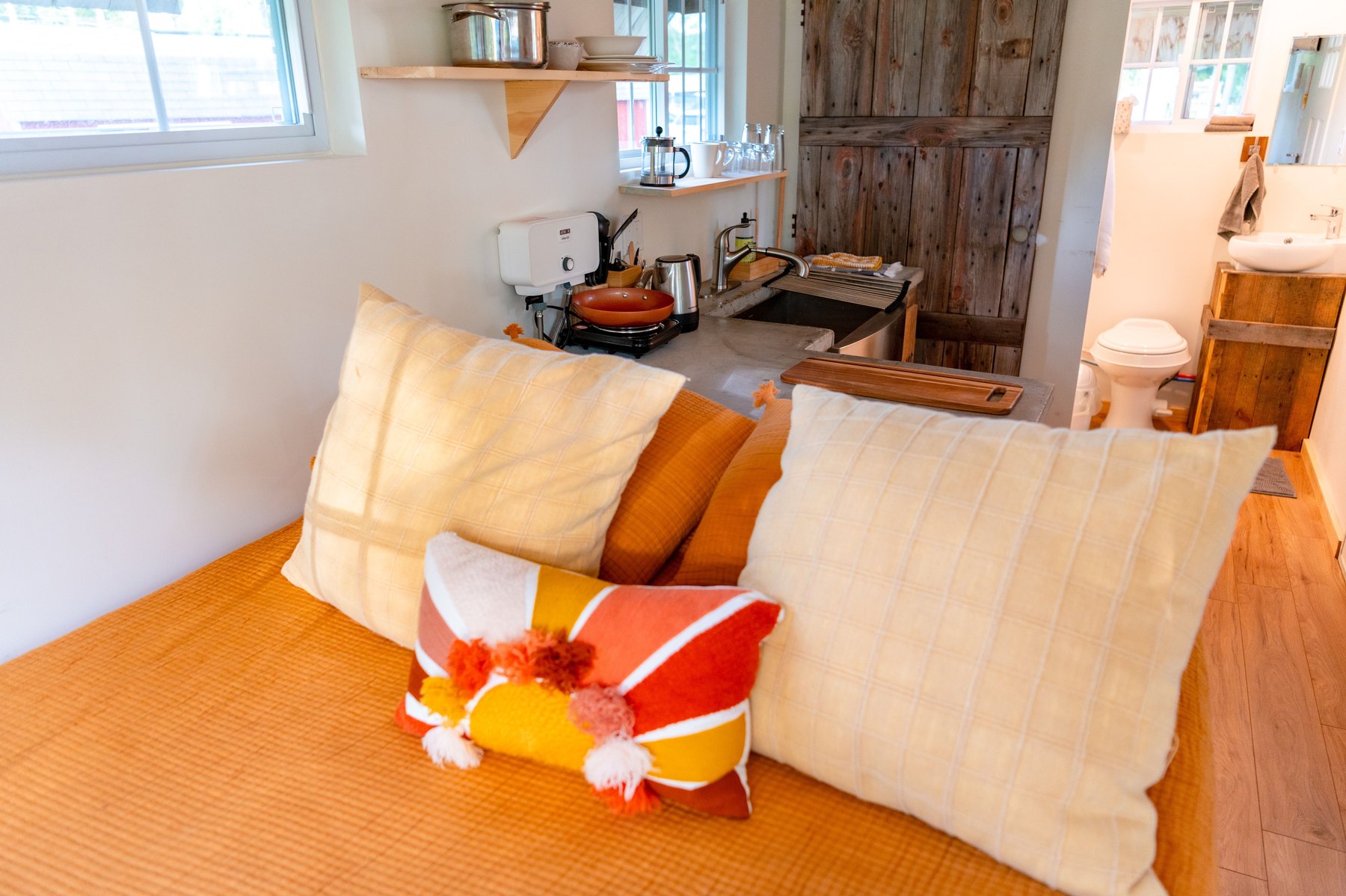
Many tiny-home budgets fail because the home itself is only part of the cost. The bigger question is where it can legally go.
Common zoning and placement hurdles
- Minimum size requirements: Some municipalities require homes to be above a certain square footage.
- Foundation requirements: A THOW may not be allowed as a primary residence in some areas.
- ADU rules: Even if ADUs are allowed, there may be limits on size, setbacks, owner-occupancy, or utility connections.
- RV park restrictions: Many parks limit the age of RVs, require RVIA certification, or restrict full-time living.
- HOA rules: Private covenants can prohibit tiny homes even if the city allows them.
What to verify before you buy or build
- Zoning designation for the parcel (and whether a tiny home is permitted)
- Whether full-time occupancy is allowed
- Required permits and inspections
- Utility connection requirements (water, sewer/septic, electric)
- Access requirements (driveway, fire access, address assignment)
Practical tip: Ask the planning department for a written list of requirements and fees. If you are buying land, make the purchase contingent on your ability to place the home, when possible.
Financing a tiny home is not always straightforward
Financing is one of the biggest pain points because many tiny homes do not fit standard mortgage rules. Lenders often want a permanent foundation, a minimum size, and a property that can be appraised using comparable sales.
Why tiny homes can be harder to finance
- Appraisal challenges: Fewer comparable sales can make valuation difficult.
- Collateral issues: A THOW may be treated like a vehicle, not real estate.
- Construction risk: If you are building, lenders may require licensed builders, inspections, and draw schedules.
- Land plus home complexity: Buying land and placing a home can involve separate loans or a more complex construction loan.
Common financing paths (with named examples to compare)
Below are recognizable options people often compare. Availability, underwriting, and product details vary, so check current terms, fees, and eligibility.
| Option (named examples) | Best fit | What to compare | Main drawback |
|---|---|---|---|
| RV loan (LightStream, Alliant Credit Union) | Tiny house on wheels that can be titled/registered | APR, loan term, down payment, title requirements, fees | May require RVIA certification or specific titling; not real estate |
| Personal loan (SoFi, Discover Personal Loans) | Smaller builds or buyers with strong credit who want speed | APR, origination fee, term length, prepayment policy | Often higher APR than secured loans; shorter terms can raise payments |
| Home equity loan or HELOC (Bank of America, U.S. Bank) | Homeowners funding an ADU or backyard tiny unit | Variable vs fixed rate, draw period, closing costs, combined LTV limits | Your home is collateral; payments can rise on variable-rate HELOCs |
| Construction loan (local banks and credit unions) | Site-built small home on a foundation with permits | Draw schedule, inspections, interest-only period, conversion to mortgage | More paperwork and strict contractor requirements |
| Chattel loan (21st Mortgage, Vanderbilt Mortgage) | Factory-built homes or certain non-real-estate setups | APR, term, down payment, titling, insurance requirements | Can be costlier than mortgages; resale and refinancing may be harder |
Documents you may need for a tiny-home loan
| Document | Why it matters | Where to get it |
|---|---|---|
| Proof of income (pay stubs, W-2s, tax returns) | Shows ability to repay | Employer, tax records |
| Credit report and score | Affects pricing and approval criteria | Review your reports at AnnualCreditReport.com |
| Build plans, specs, and contract | Confirms what is being financed | Builder or architect |
| Proof of land ownership or lease | Shows where the home will be located | Closing documents or park lease |
| Insurance quote (or binder) | Many lenders require coverage before funding | Insurance agent or insurer |
| Permits and inspection schedule (if applicable) | Required for legal occupancy and draw-based loans | Local building department |
Insurance can be complicated and sometimes expensive
Tiny homes can fall between categories: not quite a standard homeowners policy, not always a standard RV policy, and sometimes a specialty product. Cost and availability depend on construction type, location, occupancy, and whether it is movable.
Common insurance issues
- Full-time occupancy: Some RV policies are designed for recreational use, not full-time living.
- Certification standards: Some insurers look for RVIA certification for THOW builds.
- Weather and catastrophe risk: Wind, wildfire, and flood exposure can raise premiums or limit coverage.
- Liability and towing: If it is movable, you may need coverage for transport risks.
Decision rule: Get insurance quotes before you commit to a build. If you cannot insure it at a price you can afford, financing and long-term affordability can fall apart.
For broader guidance on shopping for financial products and avoiding scams, you can review resources from the Consumer Financial Protection Bureau and the Federal Trade Commission.
Utilities, land, and site work can cost more than the home
A tiny home can be relatively affordable compared to a traditional house, but the site can be the budget buster. Even if you park on family land or rent a spot, you may face setup costs.
Potential site costs to plan for
- Land purchase or lot rent: Monthly rent can rise over time; land purchases have closing costs and property taxes.
- Driveway and grading: Access and drainage work can be significant.
- Electric: Service upgrades, trenching, and meter installation.
- Water: Well drilling or municipal connection fees.
- Sewer: Septic system installation or tap fees.
- Internet: Rural areas may require satellite or fixed wireless.
- Ongoing maintenance: Roof, exterior sealing, and moisture control matter more in small spaces.
Cost and risk checklist
| Item | One-time cost? | Ongoing cost? | What to verify |
|---|---|---|---|
| Land closing costs | Yes | No | Title, survey needs, easements, access |
| Lot rent / park fees | No | Yes | Lease terms, annual increases, utility inclusions |
| Septic or sewer connection | Yes | Sometimes | Permits, soil test, maintenance requirements |
| Electric hookup | Yes | Yes | Amperage, trenching distance, inspection |
| Water hookup or well | Yes | Yes | Water quality, freeze protection, connection fees |
| Property taxes | No | Yes | How the home is assessed (vehicle vs real property) |
| Insurance | No | Yes | Full-time occupancy, replacement cost, liability limits |
Resale value and refinancing can be uncertain
Tiny homes can be harder to sell quickly, especially if they are custom-built, located in a niche market, or cannot be placed in many jurisdictions. That matters if you might move, need cash later, or want to refinance.
What affects resale
- Legal placement: Buyers need a place to put it. If zoning is limited, demand can shrink.
- Build quality and documentation: Permits, inspections, and certifications can increase buyer confidence.
- Mobility: A THOW can be moved, but transport costs and wear matter.
- Financing availability for buyers: If buyers cannot finance it easily, your buyer pool may be smaller.
Decision rule: If you expect to sell within 3 to 5 years, prioritize a setup that is easiest to insure, legally place, and finance for the next buyer, even if the upfront cost is higher.
Daily living challenges that can turn into money problems
Small spaces can be efficient, but they can also create friction that leads to spending: storage units, frequent eating out, replacing broken compact appliances, or paying for coworking space.
Common lifestyle-to-budget pitfalls
- Storage creep: Renting a storage unit can quietly add a long-term monthly bill.
- Moisture and ventilation: Poor ventilation can lead to mold remediation costs.
- Heating and cooling: Small homes can be cheaper to heat, but poor insulation or extreme climates can still drive bills.
- Accessibility and aging: Loft ladders and tight bathrooms may not work long-term, leading to renovation or relocation costs.
Real-number budgets: what tiny-home affordability can look like
Below are three simplified scenarios to show how costs can add up. These are examples, not quotes. Your numbers will depend on location, credit, land costs, and build specs.
Scenario A: Tiny house on wheels in an RV park
- Home purchase: $70,000 financed
- Upfront setup: $3,000 (delivery, steps, hookups, small repairs)
- Monthly lot rent and utilities: $900 to $1,600 (varies widely by region and what is included)
- Insurance: $80 to $200 per month (varies)
Decision rule: If lot rent is more than 35% to 45% of your total monthly housing cost, your “cheap tiny home” can start to look like a high-rent situation with fewer tenant protections.
Scenario B: Tiny home on family land with utility connections
- Home build: $90,000 (mix of savings and financing)
- Site work: $25,000 (electric trenching, water line, septic contribution, grading)
- Ongoing costs: property tax rules vary, plus insurance and maintenance
Decision rule: Put site work in writing with the landowner. If you do not own the land, consider what happens if you need to move the home later and how much that would cost.
Scenario C: ADU style tiny unit funded with home equity
- Build and permits: $140,000
- Funding: HELOC or home equity loan (terms vary)
- Ongoing costs: insurance adjustments, utilities, maintenance
Decision rule: If you are using home equity, stress-test the payment at a higher interest rate and confirm you can handle it without relying on rental income.
How to decide: timeline-based rules and a simple matrix
Your timeline affects which risks matter most.
- Under 1 year: Prioritize flexibility. Renting a spot or trying a short-term arrangement can be safer than buying land. Avoid long build timelines and complex permitting if you might move soon.
- 1 to 3 years: Focus on legal placement and resale. Choose a setup that is easy to insure and document. Keep cash reserves for repairs and moving costs.
- 3 to 7 years: Land and infrastructure decisions matter more. If you plan to stay, investing in proper utilities and weatherproofing can reduce long-run headaches.
- 7+ years: Think about aging in place, accessibility, and whether the property can adapt. A foundation build or ADU may hold value better in many markets, but local rules drive outcomes.
Borrower decision matrix
| Your situation | What to prioritize | Financing angle to explore | Watch-outs |
|---|---|---|---|
| You want mobility and may relocate | Legal parking options, towing readiness, insurance | RV loan or personal loan | Lot availability, full-time occupancy rules, depreciation |
| You own land (or plan to buy land) | Zoning, permits, utilities, septic feasibility | Land loan plus construction loan, or cash plus smaller loan | Site work overruns, appraisal gaps, timeline delays |
| You own a primary home and want an ADU | Permitting, contractor bids, realistic budget | HELOC or home equity loan | Variable rates, lien position, contractor risk |
| You need the lowest possible monthly payment | Total monthly housing cost including land or rent | Compare longer terms vs total interest cost | Long terms can increase total interest; rent increases |
A practical pre-purchase checklist
- Confirm how the tiny home will be titled (vehicle vs real property)
- Verify zoning and full-time occupancy rules for your intended location
- Get written estimates for site work and utility connections
- Collect at least 2 to 3 financing quotes and compare APR, fees, term, and collateral requirements
- Get insurance quotes that match your occupancy and location
- Build a cash buffer for surprises (repairs, moving, permit delays)
- Plan an exit: how you would sell, rent out, or move the home if needed
How to protect yourself from bad deals and scams
Tiny homes are a fast-growing niche, which can attract high-pressure sales tactics. A few steps can reduce risk:
- Verify builder identity, references, and a detailed contract with payment milestones.
- Avoid paying large amounts upfront without clear deliverables and timelines.
- Keep records of specs, materials, and any certifications.
- Review consumer guidance on spotting scams at the FTC.
Bottom line
A tiny home can be a smart move for the right situation, but the biggest challenges are usually not the square footage. Financing rules, zoning, insurance, and site costs can make or break the plan. If you treat the tiny home like a full housing project – land, utilities, legal placement, and an exit strategy – you will be in a much better position to decide whether it fits your budget and lifestyle.
If you are preparing to apply for financing, it can help to review your credit reports first through AnnualCreditReport.com and compare offers carefully, including APR, fees, repayment terms, and requirements.


