

5 Home Maintenance Projects That Will Save You Money

Home maintenance projects can save you money by preventing expensive repairs, reducing energy waste, and extending the life of your home’s major systems.
Contents
29 sections
-
1) Seal air leaks and add insulation where it matters
-
Where to focus first
-
DIY checklist
-
Decision rule
-
2) Prevent water damage with gutter, grading, and drainage fixes
-
High-impact tasks
-
Quick inspection routine (30 minutes)
-
Decision rule
-
3) Tune up HVAC and replace filters on a schedule
-
What to do (and how often)
-
Common money leaks to check
-
4) Maintain the water heater and hot water plumbing
-
Projects to consider
-
When to call a pro
-
5) Keep the exterior sealed: caulk, paint, and roof spot checks
-
Exterior maintenance checklist
-
Decision rule
-
Project planning: cost, time, and risk checklist
-
What would this look like with real numbers?
-
Scenario A: Starter home, tight budget (total $600)
-
Scenario B: Mid-range maintenance push (total $2,500)
-
Scenario C: Preventing a major repair (total $9,000)
-
How to decide whether to pay cash or finance maintenance
-
Decision rules by timeline
-
Financing options to compare (named examples)
-
Borrower checklist before you finance
-
Prioritization: which project should you do first?
-
Ways to reduce project costs without cutting corners
-
Bottom line
The key is picking projects with a clear payoff: stop water damage early, keep HVAC running efficiently, and seal the building envelope so you are not paying to heat or cool the outdoors. Below are five practical projects most homeowners can plan in a weekend or two, plus decision rules and real-number examples for budgeting and financing.
1) Seal air leaks and add insulation where it matters
Air sealing and insulation are often the fastest ways to reduce ongoing utility costs because they address the root problem: conditioned air escaping and unconditioned air getting in. You do not need a full remodel to make progress. Start with the most common leak points and the easiest insulation wins.
Where to focus first
- Attic access and penetrations (around plumbing stacks, recessed lights rated for insulation contact, wiring holes)
- Rim joists in basements and crawl spaces
- Weatherstripping on exterior doors and attic hatches
- Window and door gaps (caulk and foam where appropriate)
- Duct leaks in unconditioned spaces (mastic beats duct tape)
DIY checklist
- Use a smoke pencil or incense stick on a windy day to find drafts.
- Caulk small gaps and use expanding foam for larger penetrations (use fire-rated products where required).
- Add door sweeps and replace worn weatherstripping.
- Insulate rim joists with rigid foam and seal edges.
- In the attic, air seal first, then add insulation to the recommended level for your climate.
If you want a more precise plan, consider a home energy audit. Many utilities offer discounted audits or rebates for insulation and air sealing. You can also look up insulation recommendations by region through the U.S. Department of Energy at Energy Saver.
Decision rule
If your home feels drafty, has uneven room temperatures, or your attic insulation is thin or patchy, prioritize air sealing and attic insulation before buying new HVAC equipment. A smaller, well-sealed home can sometimes delay the need for a major system upgrade.
2) Prevent water damage with gutter, grading, and drainage fixes
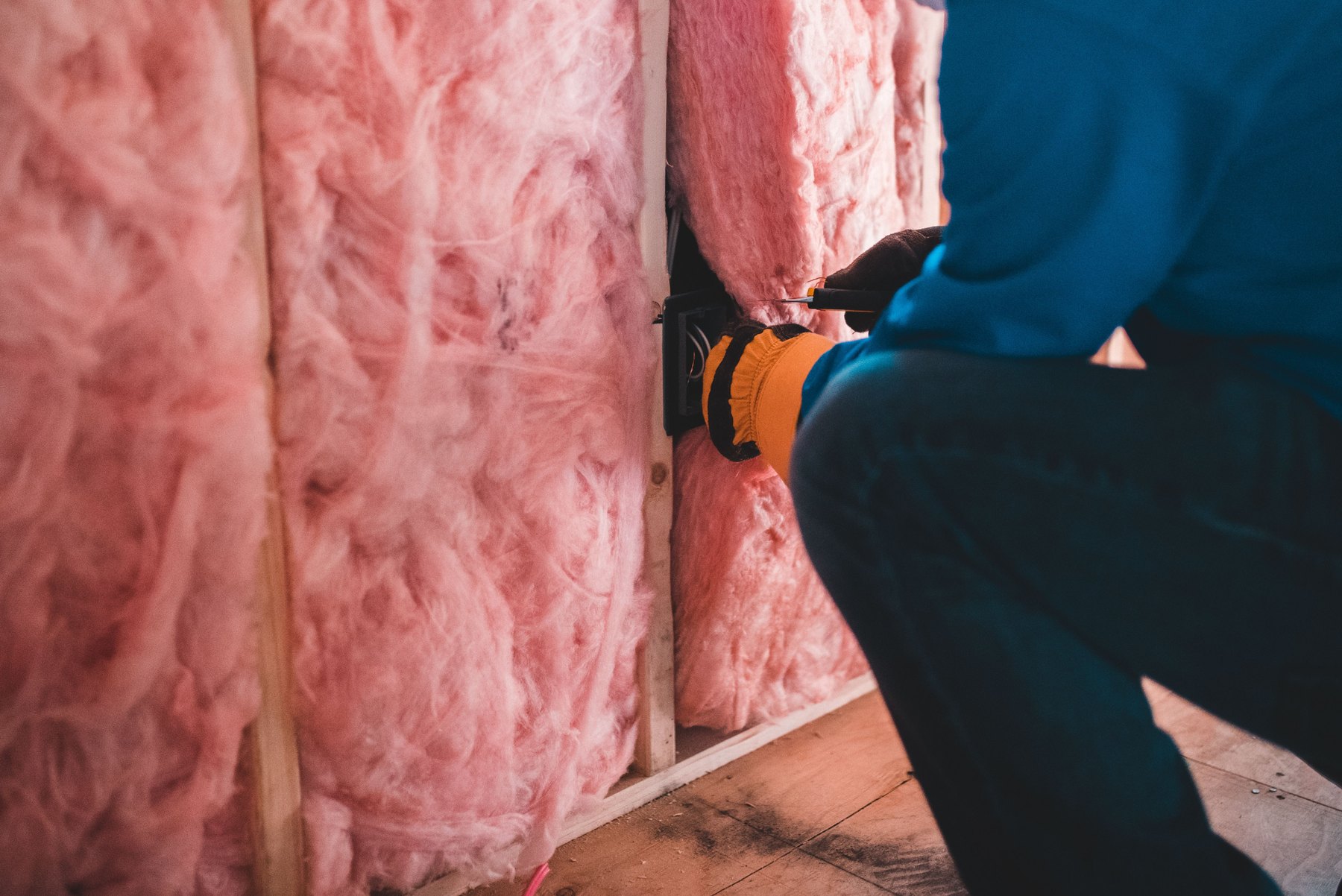
Water is one of the most expensive problems in homeownership. Small drainage issues can quietly lead to foundation cracks, basement moisture, mold, and rot. The goal is simple: move water away from the house quickly and consistently.
High-impact tasks
- Clean gutters and confirm they slope toward downspouts.
- Extend downspouts so water discharges several feet away from the foundation.
- Fix negative grading so soil slopes away from the house.
- Check splash blocks and downspout connections for leaks.
- Inspect roof flashing around chimneys, vents, and valleys for gaps.
Quick inspection routine (30 minutes)
- During or after a rain, walk the perimeter and look for pooling near the foundation.
- Check for overflowing gutters or water staining on siding.
- Look for damp basement corners, musty smells, or efflorescence on walls.
- Confirm downspouts are not dumping water onto walkways that slope back toward the home.
If you are hiring help, ask for a written scope that lists exactly what will be done (cleaning, re-pitching, adding guards, replacing sections, extending downspouts) and what materials will be used. For mold and moisture concerns, the U.S. Environmental Protection Agency’s guidance can help you understand what is normal and what needs attention: EPA mold resources.
Decision rule
If you see water pooling within a few feet of the foundation, fix drainage before spending money on interior basement finishes or flooring. Keeping water out is usually cheaper than cleaning it up.
3) Tune up HVAC and replace filters on a schedule
Heating and cooling are often the largest energy costs in a home. Basic maintenance helps your system run more efficiently and can reduce the risk of breakdowns during extreme weather.
What to do (and how often)
- Replace or clean HVAC filters every 1 to 3 months depending on pets, allergies, and dust.
- Keep outdoor condenser coils clear of leaves and debris and maintain clearance around the unit.
- Vacuum supply and return vents and keep returns unobstructed.
- Schedule professional maintenance about once per year (often split into heating and cooling seasons for heat pumps).
- Seal accessible duct leaks with mastic in attics, basements, and crawl spaces.
Common money leaks to check
- Dirty filters causing the system to run longer than necessary
- Leaky ducts dumping conditioned air into unconditioned spaces
- Thermostat schedules that heat or cool an empty home
- Blocked returns from furniture or rugs
If you are considering a new system, compare total installed cost, warranty terms, expected maintenance, and whether your home’s insulation and ductwork are adequate. A high-efficiency unit in a leaky home may not perform as expected.
4) Maintain the water heater and hot water plumbing
Water heaters are easy to ignore until they fail. A little maintenance can improve performance and reduce the chance of leaks. Hot water also affects your monthly utility bill, so small efficiency steps can add up over time.
Projects to consider
- Flush the tank periodically to reduce sediment buildup (follow the manufacturer’s instructions).
- Test the temperature and pressure relief valve if your manual recommends it.
- Set a reasonable temperature that balances comfort and safety (many households use around 120°F, but follow your needs and local guidance).
- Insulate hot water pipes in accessible areas.
- Install low-flow fixtures where it makes sense for your household.
When to call a pro
- Visible corrosion, leaking at the base, or repeated pilot light issues
- Gas smell or signs of improper venting
- Electrical issues or tripped breakers related to the unit
If you are replacing a water heater, compare fuel type, capacity, efficiency, warranty length, and installation requirements. For heat pump water heaters, verify space and ventilation needs.
5) Keep the exterior sealed: caulk, paint, and roof spot checks
Your home’s exterior is the first line of defense against water and pests. Small gaps and peeling paint can turn into rot, siding damage, and interior leaks. You do not need to replace a roof to benefit from maintenance. Spot checks and minor repairs can prevent bigger problems.
Exterior maintenance checklist
- Caulk around windows, doors, and penetrations where old caulk is cracked or missing.
- Paint and seal exposed wood to prevent moisture intrusion.
- Inspect roof shingles from the ground or with binoculars for missing, curling, or damaged shingles.
- Check flashing around chimneys and vents for gaps.
- Trim vegetation away from siding and rooflines to reduce moisture and pest access.
Decision rule
If you see staining on ceilings, peeling paint near windows, or soft wood on trim, prioritize sealing and targeted repairs before cosmetic upgrades. Water intrusion tends to spread.
Project planning: cost, time, and risk checklist
Use the table below to prioritize projects based on impact and complexity. Costs vary by home size, region, and whether you DIY or hire a pro, so treat these as planning ranges and get multiple quotes for larger jobs.
| Project | Typical DIY difficulty | Common materials | Risks to manage | When it is urgent |
|---|---|---|---|---|
| Air sealing and attic insulation | Medium | Caulk, foam, weatherstripping, insulation | Working in attic heat, electrical hazards, improper ventilation | Ice dams, major drafts, very uneven temperatures |
| Gutters, downspouts, grading | Low to Medium | Gutter tools, extensions, soil, splash blocks | Ladder safety, hidden rot, drainage causing neighbor issues | Basement moisture, pooling at foundation, overflow during rain |
| HVAC filters and tune-up | Low (filters) to Medium (duct sealing) | Filters, mastic, thermostat | Wrong filter size, sealing wrong duct areas, refrigerant issues | System short cycling, weak airflow, unusual noises or smells |
| Water heater maintenance | Medium | Hose, pipe insulation, basic tools | Hot water burns, leaks, gas or electrical hazards | Rusty water, leaking tank, no hot water |
| Exterior caulk and paint touch-ups | Low to Medium | Exterior caulk, paint, primer | Lead paint in older homes, ladder safety, moisture trapped behind paint | Soft wood, visible gaps, interior staining |
What would this look like with real numbers?
Below are three sample budgets. The point is not that you will get the same results, but to show how homeowners often sequence projects and decide whether to pay cash, use a 0% promo, or finance a larger job.
Scenario A: Starter home, tight budget (total $600)
- HVAC filters for 1 year: $120
- Weatherstripping and door sweep: $60
- Caulk and foam for air leaks: $70
- Gutter cleaning tools or one-time cleaning: $150
- Downspout extensions and splash blocks: $80
- Pipe insulation and low-flow showerhead: $120
Total: $600
Scenario B: Mid-range maintenance push (total $2,500)
- Professional HVAC tune-up: $200
- Attic air sealing supplies: $150
- Attic insulation top-up (materials plus help): $1,200
- Gutter repair and downspout rework: $500
- Exterior caulk and paint touch-ups: $450
Total: $2,500
Scenario C: Preventing a major repair (total $9,000)
- Drainage improvements and grading work: $3,500
- Sump pump with battery backup (if needed): $1,500
- Roof flashing repairs and minor shingle replacement: $1,500
- Air sealing and insulation (larger home): $2,500
Total: $9,000
How to decide whether to pay cash or finance maintenance
Some maintenance is small enough to cash-flow. Other projects are urgent and expensive, like drainage or roof repairs. Financing can help spread costs, but it also adds interest and fees. Use timeline-based rules to match the funding method to the project.
Decision rules by timeline
- Under 1 year: Prioritize cash, a sinking fund, or a 0% introductory APR credit card if you can pay it off before the promo ends. Avoid long-term loans for small purchases.
- 1 to 3 years: Consider a fixed-rate personal loan or a 0% promo if the payoff plan is realistic. Compare APR, origination fees, and total interest paid.
- 3 to 7 years: For larger projects that improve safety or prevent damage, a home equity loan or HELOC may offer lower rates than unsecured debt, but your home is collateral. Compare closing costs, variable vs fixed rates, and draw periods.
- 7+ years: Major renovations may fit longer-term financing, but be careful about borrowing more than the home improvement’s value to you. If you plan to move soon, shorter payoff horizons can reduce the risk of still paying for a project after you sell.
Financing options to compare (named examples)
These are common places homeowners look when comparing financing. Availability, underwriting, and terms vary, so compare offers side by side.
| Option (examples) | Best fit | What to compare | Main drawback |
|---|---|---|---|
| 0% intro APR credit card (examples: Chase Freedom Unlimited, Citi Simplicity, Wells Fargo Reflect) | Smaller projects you can pay off within the promo window | Promo length, post-promo APR, balance transfer fees, credit limit | High APR after promo if not paid off |
| Personal loan marketplaces (examples: LendingClub, Upstart) | Mid-size repairs with a clear payoff plan | APR range, origination fee, term length, prepayment policy | Rates can be higher than secured options |
| Personal loans from banks (examples: Discover Personal Loans, Wells Fargo personal loans where available) | Borrowers who prefer a direct lender relationship | APR, fees, funding speed, customer support, autopay discounts | Qualification can be stricter; not always available everywhere |
| Home equity loan or HELOC (examples: Bank of America HELOC, U.S. Bank home equity products) | Larger projects with longer timelines and stable income | Variable vs fixed rate, closing costs, draw period, minimum draws | Your home is collateral; payments can rise on variable rates |
| Retailer or contractor financing (examples: Home Depot Consumer Credit Card, Lowe’s Advantage Card) | Specific purchases tied to a store promotion | Promo terms, deferred interest rules, fees, eligible categories | Deferred interest can be costly if not paid in full on time |
Borrower checklist before you finance
- Get at least 2 to 3 quotes for larger jobs and compare scope, not just price.
- Calculate the monthly payment you can handle with room for surprises.
- Compare APR, fees, and total cost over the full term.
- Ask whether there is a prepayment penalty.
- Keep receipts and contracts in one place for warranty and resale records.
If you are using credit, it can help to review how interest, fees, and repayment work. The Consumer Financial Protection Bureau has practical resources on consumer credit and borrowing at consumerfinance.gov.
Prioritization: which project should you do first?
If you are unsure where to start, use this simple order of operations. It is designed to reduce the chance you spend money on cosmetics while hidden damage grows.
| Priority | Do this first when you see | Why it matters | Example tasks |
|---|---|---|---|
| 1. Stop active water | Leaks, pooling, damp basement, staining | Water damage can escalate quickly | Gutters, downspouts, flashing, grading |
| 2. Protect structure and exterior | Soft wood, peeling paint, gaps | Prevents rot and pest entry | Caulk, paint touch-ups, trim repair |
| 3. Improve efficiency | Drafts, uneven temps, high bills | Reduces ongoing operating costs | Air sealing, insulation, duct sealing |
| 4. Maintain mechanical systems | Old filters, noisy HVAC, inconsistent hot water | Reduces breakdown risk and waste | HVAC tune-up, water heater flush |
| 5. Comfort and upgrades | Everything above is stable | Better experience, fewer regrets | Thermostat upgrades, fixture swaps |
Ways to reduce project costs without cutting corners
- Bundle tasks: If a contractor is already on-site, adding small items (like downspout extensions or minor caulking) may reduce trip charges.
- Time it seasonally: HVAC tune-ups are often easier to schedule in shoulder seasons.
- Use rebates: Check utility and state programs for insulation, air sealing, and heat pump incentives.
- Buy the right materials once: Cheap caulk or the wrong filter can lead to repeat work.
- Document everything: Photos, receipts, and permits can help with warranties and future resale questions.
Bottom line
The most effective home maintenance projects focus on preventing water damage, reducing energy waste, and keeping major systems running smoothly. Start with drainage and sealing, then move to insulation and HVAC efficiency. When costs are larger than your cash buffer, compare financing options by APR, fees, and payoff timeline, and choose a plan that keeps your monthly budget stable.
For additional consumer protection tips when hiring contractors or evaluating home improvement offers, the Federal Trade Commission’s guidance can be helpful: consumer.ftc.gov.


