

Should You Get a Gold IRA?

A Gold IRA can add physical precious metals to a retirement account, but it comes with unique fees, rules, and tradeoffs compared with a typical IRA invested in stocks and bonds.
Contents
31 sections
-
What a Gold IRA is (and what it is not)
-
How a Gold IRA works step by step
-
1) Choose the account type
-
2) Pick a custodian and storage arrangement
-
3) Purchase IRS-approved metals through the account
-
4) Ongoing management and eventual distributions
-
Gold IRA costs you should expect (and how to compare them)
-
Gold IRA pros and cons
-
When a Gold IRA might make sense
-
When a Gold IRA may be a poor fit
-
Gold IRA vs other ways to get gold exposure
-
Named Gold IRA and bullion examples to compare
-
Decision rules by timeline (under 1 year to 7+ years)
-
Under 1 year
-
1 to 3 years
-
3 to 7 years
-
7+ years
-
What this looks like with real numbers (sample allocations)
-
Scenario A: $50,000 IRA rollover, cautious diversifier
-
Scenario B: $200,000 retirement portfolio, moderate metals slice
-
Scenario C: $500,000 retirement portfolio, higher inflation concern but still diversified
-
Gold IRA rollover checklist
-
Common pitfalls to avoid
-
Paying attention only to "spot price"
-
Confusing marketing claims with portfolio design
-
Home storage misunderstandings
-
Overconcentration
-
How to vet providers and protect yourself from scams
-
Tax and retirement rules to know before you open a Gold IRA
-
Quick decision matrix: should you get a Gold IRA?
-
Bottom line
Before you open one, it helps to understand what you are actually buying (allocated metal held by a custodian), what you are paying for (custody, storage, and dealer spreads), and what problem you want it to solve (diversification, inflation concerns, or a hedge against certain market risks).
What a Gold IRA is (and what it is not)
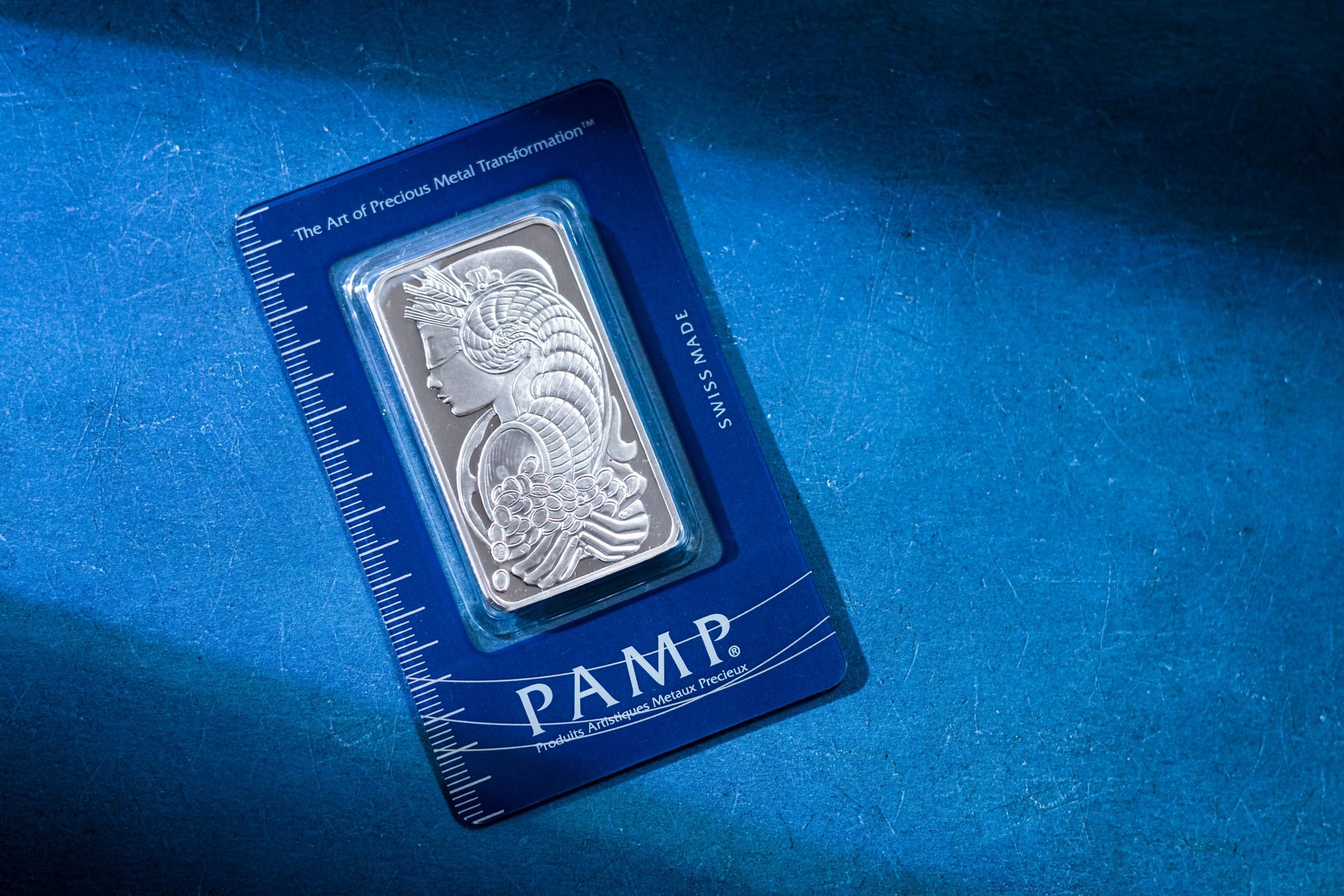
A Gold IRA is usually a self-directed IRA that holds IRS-approved precious metals, most commonly gold bullion coins or bars. The metals are held by an IRA custodian and stored at an approved depository. You do not keep the IRA metals at home if you want the account to remain compliant.
What it is not:
- Not a regular brokerage IRA where you click “buy” and hold a gold ETF in your account. A Gold IRA involves a custodian, a metals dealer, and a storage facility.
- Not a guaranteed inflation hedge or a guaranteed safe haven. Gold prices can fall, sometimes for long periods.
- Not the same as owning collectible coins. Many “collectibles” are not allowed in IRAs.
For the IRS rules and IRA basics, start with the IRS retirement plan resources at IRS.gov.
How a Gold IRA works step by step
1) Choose the account type
You can generally open a Traditional or Roth self-directed IRA, depending on eligibility and tax goals. A rollover from a 401(k) or an IRA transfer is also common. If you are moving money from an employer plan, you may need to check whether you are allowed to roll over while still employed.
2) Pick a custodian and storage arrangement
A Gold IRA requires an IRA custodian that supports alternative assets and a storage solution at an approved depository. You will typically see choices like segregated storage (your metals stored separately) versus non-segregated or commingled storage (your metals tracked but stored with others). Costs and availability vary.
3) Purchase IRS-approved metals through the account
The IRA buys metals that meet IRS requirements (for example, certain bullion coins and bars with specific purity standards). The dealer’s price usually includes a premium above spot price, plus potential shipping and handling. The difference between what you pay and what you could sell for immediately is part of your “spread” cost.
4) Ongoing management and eventual distributions
You will pay ongoing fees for custody and storage. When you take distributions in retirement, you may sell metals for cash or, in some cases, take an in-kind distribution (receive the metals). Taxes depend on whether it is a Traditional or Roth IRA and on your age and distribution rules.
Gold IRA costs you should expect (and how to compare them)
Gold IRAs often have more moving parts than a standard IRA. The main cost categories to compare include:
- Account setup fee (one-time): charged by the custodian or provider for establishing the IRA.
- Annual custodian or administration fee: ongoing account maintenance.
- Storage fee: charged by the depository, sometimes based on value or a flat rate.
- Dealer premium and spread: the markup over spot price and the buyback price you may receive later.
- Shipping and insurance: sometimes embedded in pricing, sometimes itemized.
- Transaction fees: some custodians charge per purchase or sale.
Decision rule: if you cannot clearly list every fee you will pay in year 1 and in a typical later year, pause and ask for a written fee schedule.
| Cost item | What to ask | Why it matters | Common “gotcha” |
|---|---|---|---|
| Setup fee | Is it waived? Under what conditions? | Upfront friction reduces early returns | Waivers tied to higher-priced products |
| Annual custodian fee | Flat or based on account value? | Ongoing drag every year | Tiered pricing that rises as value grows |
| Storage | Segregated vs commingled pricing? | Storage is required for compliance | Cheaper option may limit flexibility |
| Dealer spread | What is the buyback policy and typical spread? | Spread affects break-even timeline | “Low fees” but higher spreads |
| Transaction fees | Any per-trade or wire fees? | Matters if you rebalance | Small fees add up with multiple purchases |
Gold IRA pros and cons
| Potential benefits | Tradeoffs and risks |
|---|---|
| Diversification away from stocks and bonds | Gold can be volatile and may underperform for long stretches |
| Physical asset held in a regulated retirement structure | More fees and complexity than a standard IRA |
| May appeal to investors worried about currency debasement | No dividends or interest; returns rely on price changes |
| Can be part of a broader inflation-risk plan | Dealer spreads and storage costs create a higher break-even hurdle |
| Option to take in-kind distributions in some cases | Rules are strict; mistakes can create taxes and penalties |
When a Gold IRA might make sense
A Gold IRA tends to fit best when you can answer “yes” to most of these:
- You already have a solid retirement base in diversified stock and bond funds.
- You want a small allocation to precious metals as a long-term diversifier, not a short-term trade.
- You are comfortable paying ongoing custody and storage fees for the structure.
- You understand that gold does not produce income and can lag other assets.
- You have enough account size that fixed fees will not dominate your returns.
When a Gold IRA may be a poor fit
- You need liquidity soon. If you may need the money in the next few years, spreads and fees can make it harder to exit efficiently.
- You are still building an emergency fund. Retirement metals are not a substitute for cash reserves.
- You are chasing recent performance. Buying after a run-up can increase the chance of disappointment.
- You dislike complexity. More parties are involved: custodian, dealer, and depository.
- You are offered “rare” or “collectible” coins for an IRA. Many collectibles are not allowed, and pricing can be opaque.
Gold IRA vs other ways to get gold exposure
You do not need a Gold IRA to add gold exposure to a portfolio. Here are common alternatives and what to compare.
| Option | Best fit | What to compare | Main drawback |
|---|---|---|---|
| Gold IRA (physical bullion in IRA) | Long-term metals allocation inside retirement account | Custodian fees, storage fees, dealer spread, buyback terms | Higher ongoing costs and complexity |
| Gold ETF in a brokerage IRA | Simpler exposure without physical storage logistics | Expense ratio, tracking, liquidity, bid-ask spread | No claim to specific physical bars; market structure risk |
| Physical bullion outside retirement accounts | People who want direct possession and flexible selling | Premiums, authentication, storage/security, insurance | Not tax-advantaged like an IRA; personal security burden |
| Gold mining stocks or mutual funds | Investors seeking equity-style upside tied to miners | Company risk, costs, diversification, fund fees | Can move very differently than gold itself |
| Broad commodity fund | Inflation-hedge approach beyond just gold | Holdings, roll costs, fees, tax considerations | More complex drivers than a single metal |
Named Gold IRA and bullion examples to compare
If you are shopping, it helps to separate two roles: (1) the metals dealer or “Gold IRA company” that helps you buy metals and coordinate setup, and (2) the IRA custodian and storage provider that holds the assets. Terms vary, so verify current fees, minimums, and availability.
Recognizable names you may see in the market include:
- Augusta Precious Metals (Gold IRA focused provider example)
- Goldco (Gold IRA focused provider example)
- APMEX (large precious metals marketplace example)
- JM Bullion (online bullion dealer example)
- SD Bullion (cost-focused bullion dealer example)
- Kitco (metals pricing and dealer comparison tools example)
| Named option | Best fit | What to compare | Main drawback |
|---|---|---|---|
| Augusta Precious Metals | People who want guided Gold IRA setup and education | All-in fees, storage partners, account minimums, buyback process | IRA fees require careful review |
| Goldco | Investors comparing rollover support and product menus | Minimums, fee schedule, storage choices, rollover timeline steps | Not suitable for every retirement plan |
| APMEX | Comparing a wide range of bullion products | Premiums, shipping, buyback terms, selection | Premiums vary by product |
| JM Bullion | Online bullion shopping with multiple payment methods | Premiums, payment options, shipping, storage options | Prices move with metals markets |
| SD Bullion | Cost-conscious bullion comparisons | Premiums, availability, payment fees, delivery | Inventory can change |
| Kitco | People who want spot price tools and market info | Spot price, spreads, product listings, market tools | Advanced tools may be more than you need |
Decision rules by timeline (under 1 year to 7+ years)
Under 1 year
- If you might need the money within a year, a Gold IRA is usually a mismatch because spreads and setup costs can be hard to overcome quickly.
- Priority: cash reserves and high-liquidity options.
1 to 3 years
- Consider whether you can tolerate a meaningful drawdown without changing plans.
- If your goal is stability for a near-term purchase, gold price swings can be unhelpful.
3 to 7 years
- This is where a small allocation can be more reasonable if you are diversifying a larger retirement portfolio.
- Rule of thumb: keep the allocation modest enough that you will not feel forced to sell after a downturn.
7+ years
- Long horizons give you more time to ride out volatility and potentially amortize one-time setup costs.
- Focus on total portfolio construction: metals as a slice, not the core.
What this looks like with real numbers (sample allocations)
These examples are not “best” allocations. They show how a Gold IRA might fit as a limited slice of a broader plan. Percentages are illustrative, and you can adjust based on your risk tolerance, time horizon, and retirement goals.
Scenario A: $50,000 IRA rollover, cautious diversifier
- $42,500 (85%) in diversified stock and bond index funds
- $5,000 (10%) in a Gold IRA allocation (physical metals)
- $2,500 (5%) in cash or short-term bond fund inside the IRA for flexibility
Total: $50,000
Scenario B: $200,000 retirement portfolio, moderate metals slice
- $150,000 (75%) diversified stock funds
- $40,000 (20%) diversified bond funds
- $10,000 (5%) Gold IRA allocation
Total: $200,000
Scenario C: $500,000 retirement portfolio, higher inflation concern but still diversified
- $325,000 (65%) diversified stock funds
- $125,000 (25%) diversified bond funds
- $50,000 (10%) Gold IRA allocation
Total: $500,000
Practical rule: if you are considering putting more than 10% to 20% of retirement assets into precious metals, write down what would make you reduce that position and what would make you hold it. If you cannot define those rules, the allocation may be driven more by emotion than by a plan.
Gold IRA rollover checklist
- Confirm your current plan allows rollovers (especially if you are still employed).
- Ask for a written fee schedule showing year 1 and ongoing annual costs.
- Ask which depository stores the metals and what storage type you are choosing.
- Confirm which metals are IRA-eligible and why.
- Get clarity on buyback policies and how pricing is determined (spread).
- Plan for rebalancing: how often, and what it costs to trade.
Common pitfalls to avoid
Paying attention only to “spot price”
Your real cost includes premiums, spreads, and ongoing fees. Two investors can buy “gold” at the same spot price and have very different outcomes based on total costs.
Confusing marketing claims with portfolio design
Gold can be a diversifier, but it is not a complete retirement strategy. A plan still needs growth assets, income assets, and liquidity.
Home storage misunderstandings
Keeping IRA metals at home can create compliance issues. If you are considering any arrangement that involves personal possession, ask the custodian to explain how it stays within IRS rules.
Overconcentration
Concentrating retirement savings in one asset class can increase risk. If your main concern is inflation, you can also compare TIPS, diversified commodities, real estate exposure, and balanced portfolios.
How to vet providers and protect yourself from scams
Because precious metals involve high-ticket transactions and complex pricing, it is worth slowing down and verifying details.
- Ask for all fees in writing and compare at least 2 to 3 setups.
- Be cautious with high-pressure sales tactics or “limited time” offers.
- Verify the custodian, depository, and complaint history where possible.
- Understand the difference between bullion and numismatic or collectible coins, including pricing transparency.
For general fraud and scam prevention guidance, review the FTC’s resources at consumer.ftc.gov.
Tax and retirement rules to know before you open a Gold IRA
- Contribution limits and eligibility follow IRA rules for the account type.
- Required minimum distributions (RMDs) may apply for Traditional IRAs at the applicable age. If your IRA holds physical metals, you may need a plan for how to raise cash for RMDs (selling a portion) or how in-kind distributions work.
- Early withdrawals can trigger taxes and penalties depending on age and circumstances.
When you are coordinating a rollover, keep records and confirm the transfer method to reduce the chance of avoidable taxes. For official information, see IRS IRA FAQs.
Quick decision matrix: should you get a Gold IRA?
| If you are… | A Gold IRA may be worth exploring when… | Consider alternatives when… |
|---|---|---|
| Early-career saver | You already have strong savings habits and want a small diversifier | You are still building emergency savings and basic retirement investing |
| Near retirement | You want modest diversification and understand RMD logistics | You need simplicity, liquidity, and predictable withdrawals |
| Cost-sensitive investor | You can keep fees low and spreads reasonable relative to account size | Fixed fees would be a large percentage of your balance |
| Hands-off investor | You are comfortable with the custodian and storage structure | You prefer a standard brokerage IRA with simpler holdings |
Bottom line
A Gold IRA can be a reasonable tool for investors who want long-term precious metals exposure inside a retirement account and who are willing to pay for custody and storage. It is usually most practical as a limited slice of a diversified portfolio, after you have covered basics like emergency savings and broad retirement investing. Compare total costs, understand the rules for storage and distributions, and make sure the allocation matches your timeline and risk tolerance.
If you are also reviewing your overall financial profile, it can help to check your credit reports regularly. You can get your reports at AnnualCreditReport.com.


