

How to Buy Gold in an IRA

How to buy gold in an IRA starts with understanding that you cannot usually buy and store gold yourself inside a retirement account – you need the right IRA type, a custodian, and an approved depository.
Contents
29 sections
-
What a gold IRA is (and what it is not)
-
How to buy gold in an IRA: step-by-step
-
IRS rules that matter most
-
Gold products you can (and cannot) buy in an IRA
-
Common IRA-eligible examples (verify with your custodian)
-
Common items that may be ineligible
-
Costs and fees: what to expect and what to compare
-
Named options to compare: custodians, dealers, and storage
-
Funding methods: contribution, transfer, or rollover
-
1) New IRA contribution
-
2) IRA-to-IRA transfer
-
3) 401(k) or workplace plan rollover
-
What this looks like with real numbers: three sample allocations
-
Scenario A: $50,000 rollover, modest metals slice
-
Scenario B: $150,000 retirement balance, higher diversification budget
-
Scenario C: $20,000 starter position, fee-aware approach
-
Timeline decision rules: when gold in an IRA may fit better or worse
-
Common mistakes to avoid
-
Paying collectible premiums for ineligible or unnecessary products
-
Not comparing the spread and the buyback process
-
Underestimating ongoing fees
-
Trying to store IRA gold at home
-
Falling for high-pressure sales tactics
-
Documents and information you will likely need
-
How to evaluate a gold IRA provider relationship
-
Provider comparison checklist
-
Taxes, reporting, and distributions: practical considerations
-
Quick decision guide
-
Where to learn more and verify details
A gold IRA is a type of self-directed IRA that can hold certain precious metals, including specific gold coins and bars that meet IRS standards. Done correctly, it can add diversification to a retirement portfolio. Done incorrectly, it can create taxes, penalties, higher fees than expected, or exposure to scams. This guide walks through the rules, the steps, the costs, and what it looks like with real numbers.
What a gold IRA is (and what it is not)
A “gold IRA” is not a special account at the IRS. It is typically a self-directed Traditional IRA or Roth IRA that is administered by a custodian willing to hold alternative assets, including IRS-approved precious metals. The metals are held in an approved depository, not in your home safe.
Key points to know:
- It is still an IRA – contribution limits, distribution rules, and tax treatment follow Traditional or Roth IRA rules.
- It is usually self-directed – you choose the dealer and the metal products, but the custodian handles the account administration.
- Storage is required – personal possession is generally not allowed for IRA metals.
- Costs are different – expect setup, annual account fees, storage, and sometimes transaction fees.
How to buy gold in an IRA: step-by-step
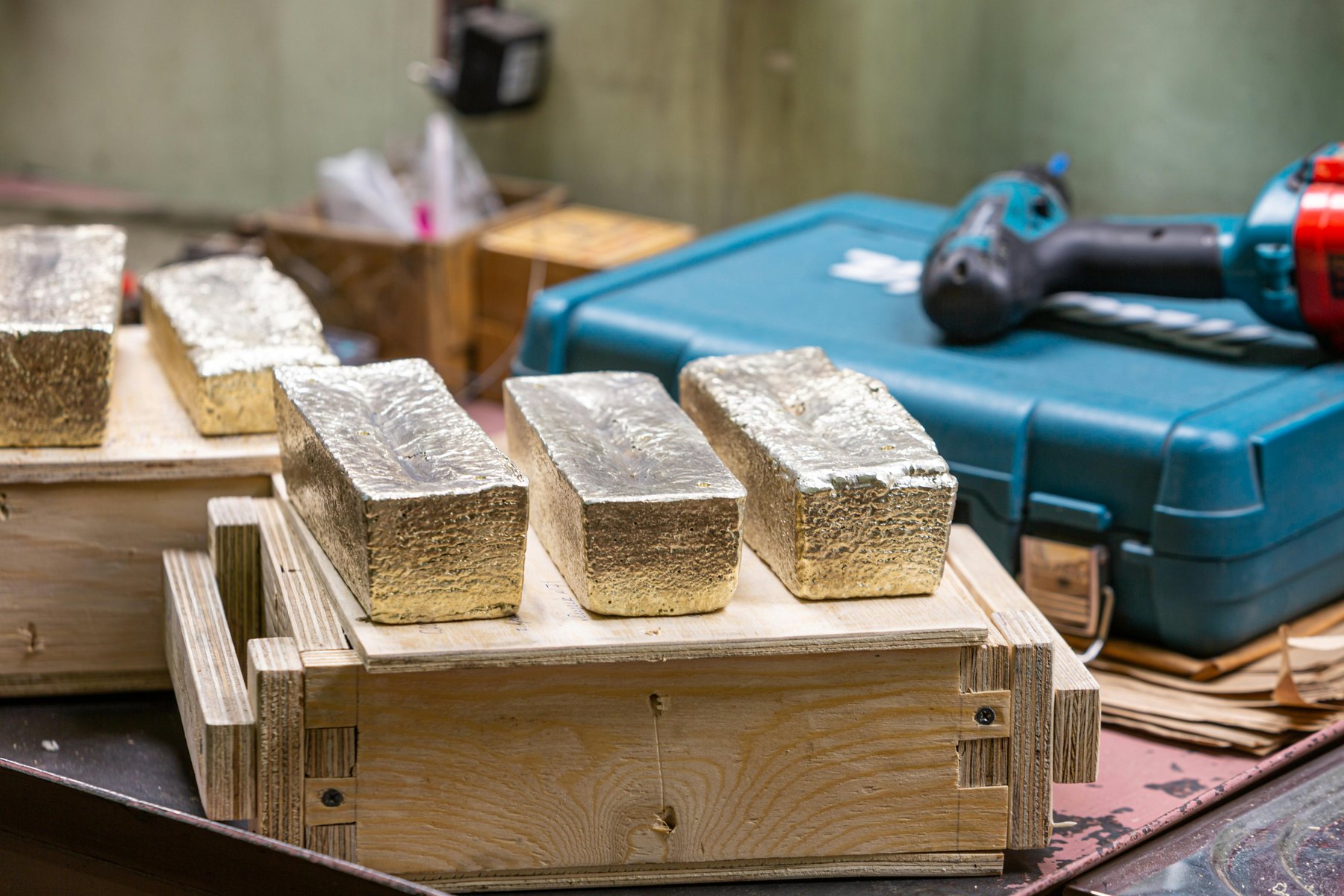
Use this process as a checklist. The exact paperwork varies by custodian, but the flow is similar.
- Decide whether a gold IRA fits your plan. Consider your timeline, risk tolerance, and whether you already have a diversified mix of stocks, bonds, and cash.
- Choose the IRA type. Traditional (tax-deferred) or Roth (after-tax contributions, potentially tax-free qualified withdrawals). If you are rolling over from a workplace plan, you may be opening a Traditional IRA rollover.
- Select a self-directed IRA custodian. Confirm they allow precious metals and ask for a complete fee schedule in writing.
- Fund the account. Options commonly include a new contribution, a transfer from another IRA, or a rollover from a 401(k) or similar plan.
- Pick an approved precious metals dealer. Compare spreads (the difference between buy and sell prices), shipping/handling, and buyback policies.
- Choose IRS-approved gold products. Your custodian or dealer should provide a list of eligible coins and bars.
- Place the order through the IRA. The IRA buys the metals. You typically cannot buy personally and “put it into” the IRA later.
- Store metals at an approved depository. Decide between segregated storage (your items stored separately) or non-segregated/commingled storage (stored with others’ metals of the same type), if offered.
- Review statements and rebalance when needed. Track fees, confirm holdings, and keep your overall allocation aligned with your goals.
IRS rules that matter most
The IRS has specific rules for what an IRA can hold and how it must be held. Two practical takeaways: (1) not all gold products qualify, and (2) storage and custody rules are strict.
- Eligible metals and purity standards. Many IRA-eligible gold products must meet minimum fineness requirements. Common eligible examples include certain bullion coins and bars that meet standards.
- No personal storage. If you take possession of IRA metals personally, it can be treated as a distribution, which may create taxes and penalties depending on your age and situation.
- Prohibited transactions. Self-dealing rules can apply. For example, you generally cannot buy metals from yourself, sell IRA metals to yourself, or use IRA assets for personal benefit.
- Distributions still follow IRA rules. When you take money out, taxes depend on whether it is Traditional or Roth and whether the distribution is qualified. Some custodians allow “in-kind” distributions (taking delivery of metals) instead of selling for cash, but the tax reporting still applies.
For primary source details on IRAs and retirement plan rules, use the IRS website: https://www.irs.gov/retirement-plans.
Gold products you can (and cannot) buy in an IRA
Dealers often advertise many coins and collectibles, but collectibles are commonly not allowed in IRAs. In practice, gold IRAs typically focus on widely recognized bullion coins and bars that meet IRS standards.
Common IRA-eligible examples (verify with your custodian)
- American Gold Eagle coins
- American Gold Buffalo coins
- Canadian Gold Maple Leaf coins
- Gold bars from approved refiners (various weights)
Common items that may be ineligible
- Many collectible or numismatic coins with high premiums
- Jewelry and “scrap” gold
- Unverified bars or products without clear chain of custody
Decision rule: if the pitch focuses on rarity, limited editions, or “collector value,” slow down and confirm IRA eligibility and total costs before you buy.
Costs and fees: what to expect and what to compare
Gold IRAs can be more expensive than a typical brokerage IRA holding index funds. The costs are not always obvious because some are embedded in the dealer’s spread.
Common cost categories:
- Account setup fee (one-time)
- Annual custodian or administration fee
- Storage fee (often annual, varies by segregated vs commingled)
- Insurance (sometimes included in storage, sometimes itemized)
- Transaction fees (buy/sell fees or wire fees)
- Dealer spread (difference between buy and sell prices)
| Cost item | Where it shows up | What to ask | Why it matters |
|---|---|---|---|
| Dealer spread | Quoted buy vs sell price | What is the buy price and the buyback price today for the exact product? | A wide spread can make it harder to break even. |
| Setup fee | Custodian invoice | Is there a one-time setup fee? Is it waived at certain balances? | Raises the first-year cost. |
| Annual admin fee | Custodian schedule | Flat fee or percentage of assets? Any extra fees for statements or reporting? | Ongoing drag on returns. |
| Storage and insurance | Depository or custodian | Segregated vs commingled pricing? What insurance coverage applies? | Physical metals require secure custody. |
| Sale and shipping fees | Dealer and depository | Fees to sell, ship, or take an in-kind distribution? | Impacts liquidity when you need cash. |
Named options to compare: custodians, dealers, and storage
You typically interact with three parties: a custodian (the IRA administrator), a dealer (the seller of metals), and a depository (the storage facility). Some companies market “all-in-one” solutions, but the roles still exist behind the scenes.
| Option | Best fit | What to compare | Main drawback |
|---|---|---|---|
| Equity Trust (custodian) | Investors who want a large, established self-directed IRA custodian | Fee schedule, metals process, service model, turnaround times | Fees and paperwork can be more involved than a standard brokerage IRA |
| STRATA Trust Company (custodian) | Those comparing multiple self-directed custodians for metals support | Annual fees, transaction fees, approved dealer process | Not a one-click experience like a brokerage account |
| GoldStar Trust Company (custodian) | People who specifically want a self-directed IRA custodian option | Account minimums (if any), fee tiers, metals handling | Costs may be higher than holding ETFs in a regular IRA |
| APMEX (dealer) | Buyers who want a widely known bullion marketplace to compare pricing | Product availability, spreads, shipping/handling, buyback policies | Dealer pricing can vary by product and market conditions |
| JM Bullion (dealer) | Buyers who want another major dealer to cross-check quotes | All-in cost for the exact coin/bar, payment method limits, buyback process | Spreads and inventory can change quickly |
| Delaware Depository (storage) | Those comparing well-known precious metals depositories | Segregated vs commingled options, insurance details, fees via custodian | You usually cannot contract directly; you go through the custodian |
| Brink’s (storage) | Those who want to understand alternative depository networks | Locations, storage type, insurance, access procedures | Costs and availability depend on custodian relationships |
Decision rule: get quotes from at least two dealers for the same product (for example, a 1 oz bullion coin) and compare the buy price, estimated buyback price, and all fees your custodian will charge.
Funding methods: contribution, transfer, or rollover
1) New IRA contribution
You contribute cash (up to annual limits) and then use the IRA to buy eligible gold. This is straightforward but may be slow if you are building a position over time.
2) IRA-to-IRA transfer
A transfer moves funds from one IRA custodian to another. Typically, the money moves custodian-to-custodian, which can reduce mistakes compared with taking possession of the funds yourself.
3) 401(k) or workplace plan rollover
If you have an old 401(k), you may be able to roll it into a self-directed IRA. If it is a current employer plan, the plan rules control whether in-service rollovers are allowed.
Before initiating a rollover, confirm:
- Whether your plan allows rollovers and what forms are required
- Whether the rollover should be made payable directly to the new custodian
- Whether any withholding applies if a check is made payable to you
What this looks like with real numbers: three sample allocations
There is no single “right” percentage for gold. Some investors use a small allocation as a diversifier; others prefer none due to costs and volatility. The examples below show how the mechanics and tradeoffs can look in practice. They are illustrations, not targets.
Scenario A: $50,000 rollover, modest metals slice
- $42,500 (85%) in diversified stock and bond funds held in a regular IRA or within the same self-directed IRA if available
- $5,000 (10%) in IRA-eligible gold coins or bars
- $2,500 (5%) left as cash in the IRA to cover fees and future rebalancing
Total: $50,000.
Scenario B: $150,000 retirement balance, higher diversification budget
- $120,000 (80%) in broad stock and bond exposure
- $22,500 (15%) in IRA-eligible gold
- $7,500 (5%) cash buffer for fees and opportunistic buys
Total: $150,000.
Scenario C: $20,000 starter position, fee-aware approach
- $16,000 (80%) in low-cost diversified investments elsewhere
- $2,000 (10%) in IRA-eligible gold
- $2,000 (10%) cash buffer to reduce the chance you must sell metals to pay annual fees
Total: $20,000.
Decision rule: if annual custodian and storage costs are flat (not percentage-based), very small gold IRA balances can have high fee drag. Ask for the full annual cost in dollars and compare it to your planned account size.
Timeline decision rules: when gold in an IRA may fit better or worse
Because gold prices can be volatile and gold IRAs have ongoing costs, timeline matters.
- Under 1 year: Generally focus on liquidity and stability. If you might need the money soon, metals inside an IRA can be cumbersome to sell quickly, and spreads can be meaningful.
- 1 to 3 years: Consider whether fees and spreads could outweigh any diversification benefit over a short window. If you proceed, keep the allocation smaller and maintain a cash buffer for fees.
- 3 to 7 years: A period where diversification goals may be more realistic, but you still want a clear plan for rebalancing and eventual distributions.
- 7+ years: If you want a long-term diversifier, this is typically the window where you can better absorb volatility and amortize setup costs, assuming the allocation remains appropriate for your overall retirement plan.
Common mistakes to avoid
Paying collectible premiums for ineligible or unnecessary products
High-premium “rare” coins can be expensive and may not qualify. Stick to products your custodian confirms as IRA-eligible and compare total cost, not marketing claims.
Not comparing the spread and the buyback process
Ask the dealer how buybacks work and what pricing reference they use. Compare at least two dealers for the same product.
Underestimating ongoing fees
Custodian and storage fees can add up. Keep a cash buffer inside the IRA so you are not forced to sell metals at an inconvenient time just to pay annual charges.
Trying to store IRA gold at home
Home storage arrangements are a frequent source of confusion and risk. Confirm that your metals will be held at an approved depository under the custodian’s rules.
Falling for high-pressure sales tactics
Be cautious with “today only” offers, claims of guaranteed performance, or pressure to move your entire retirement balance. Take time to read fee schedules and verify eligibility.
For tips on spotting and avoiding scams, review FTC resources: https://consumer.ftc.gov/.
Documents and information you will likely need
| Item | Why it is needed | Where you get it |
|---|---|---|
| Government-issued ID | Identity verification for account opening | Your driver’s license or passport |
| Beneficiary information | IRA beneficiary designation | Your personal records |
| Existing IRA statement | Helps with transfers and account details | Your current custodian |
| 401(k) plan details (if rolling over) | Confirms rollover eligibility and instructions | Your plan administrator or HR portal |
| Dealer invoice and trade confirmation | Records what the IRA purchased | The metals dealer and custodian |
How to evaluate a gold IRA provider relationship
Because you are coordinating multiple parties, use a simple scorecard approach.
Provider comparison checklist
- Fee clarity: Can they provide a complete fee schedule (setup, annual, storage, transaction) in writing?
- Product eligibility: Do they clearly confirm which coins and bars are IRA-eligible?
- Execution process: How long do purchases and sales typically take? How do you place orders?
- Buyback and liquidity: Is there a documented buyback program? What determines pricing?
- Storage details: Which depositories are used? Segregated vs commingled options?
- Communication: Do you have a dedicated contact, and do they answer questions without pressure?
Taxes, reporting, and distributions: practical considerations
Gold held in an IRA follows IRA tax rules, not the collectible capital gains rules that can apply to gold held in a taxable account. The key is how and when you take distributions.
- Traditional IRA: Distributions are generally taxable as ordinary income. Required minimum distributions may apply depending on your age and current law.
- Roth IRA: Qualified distributions can be tax-free, but eligibility depends on meeting Roth rules.
- Selling vs taking delivery: You may be able to sell metals inside the IRA for cash distributions, or take an in-kind distribution of the metals. Either way, the distribution is reported.
If you are planning around required minimum distributions, it can help to keep enough liquid assets in retirement accounts so you are not forced to sell metals at a poor time to meet a distribution requirement.
Quick decision guide
- If you want simplicity and low costs: A standard IRA with diversified funds is often simpler than physical metals.
- If you want physical gold exposure inside retirement savings: A self-directed gold IRA can do that, but compare total annual costs and spreads carefully.
- If you are unsure about the rules: Start by interviewing custodians and asking for written eligibility and fee details before moving any retirement money.
Where to learn more and verify details
- IRS retirement plan guidance: https://www.irs.gov/retirement-plans
- FTC consumer protection and scam prevention: https://consumer.ftc.gov/
- FDIC consumer resources (for understanding bank account protections and basics): https://www.fdic.gov/
Buying gold in an IRA is mostly about process and costs: choose a custodian that supports precious metals, verify IRS-eligible products, compare dealer spreads, and keep enough cash in the account to handle ongoing fees. If you treat it as one piece of a broader retirement plan rather than an all-or-nothing move, it is easier to manage and evaluate over time.


