

Trump Tax Cuts Change Withholding: What It Means for Your Paycheck and Taxes

Trump tax cuts change withholding, and that can affect how much money shows up in each paycheck and whether you get a refund or owe at tax time.
Contents
33 sections
-
How withholding works (and why it can change)
-
What determines your withholding
-
Why tax cuts can change your paycheck
-
Trump tax cuts change withholding: what changed in practice
-
Refund vs amount owed: why a bigger paycheck can mean a smaller refund
-
Decision rule: aim for "close to zero" if you want predictable cash flow
-
How to check if your withholding is on track
-
Step-by-step paycheck check
-
Common situations that cause underwithholding
-
How to update Form W-4 to fix withholding
-
W-4 fields that matter most
-
Quick decision rules for W-4 adjustments
-
Real-number examples: what withholding changes can look like
-
Example 1: Single filer sees $60 more per paycheck
-
Example 2: Married couple with two jobs underwithholds
-
Example 3: Side gig income needs a plan
-
If your withholding is too low: options to avoid a cash crunch
-
Cash-flow triage checklist
-
Borrowing options to compare (if you must cover a tax bill)
-
What this looks like with real numbers: building a "withholding buffer"
-
Scenario A: Extra $60 per paycheck (biweekly) = $1,560 per year
-
Scenario B: Extra $100 per paycheck (biweekly) = $2,600 per year
-
Scenario C: Extra $250 per month = $3,000 per year
-
Timeline decision rules: where to keep money you might need for taxes
-
Under 1 year
-
1 to 3 years
-
3 to 7 years
-
7+ years
-
How withholding changes can affect borrowing and credit decisions
-
Practical ways to use a higher paycheck without creating risk
-
Credit checkup if you are planning a loan
-
Quick checklist: signs you should re-do your withholding now
-
Where to verify current rules and get help
The big idea is simple: tax law changes can lower or shift tax rates, adjust deductions and credits, and prompt the IRS to update withholding tables. Employers then use those tables and your Form W-4 to estimate how much federal income tax to hold back from each paycheck. If the estimate is off for your situation, you might see a smaller refund or an unexpected balance due.
How withholding works (and why it can change)
Withholding is a pay-as-you-go system. Instead of paying all your income tax in April, you prepay throughout the year through payroll withholding (and sometimes estimated tax payments for self-employment or investment income).
What determines your withholding
- Your pay (hourly vs salary, bonuses, overtime, multiple jobs).
- Your filing status and W-4 entries (single, married filing jointly, head of household, dependents, other income, deductions, extra withholding).
- IRS withholding tables that employers use to calculate the amount per paycheck.
- Pre-tax benefits (401(k), HSA, FSA, commuter benefits) that reduce taxable wages.
Why tax cuts can change your paycheck
When tax rates or brackets change, the IRS updates the tables employers use. That can reduce withholding per paycheck for many workers, which can increase take-home pay. But a higher paycheck does not automatically mean you will owe less overall. Your final tax bill depends on your total income, deductions, credits, and other taxes.
Trump tax cuts change withholding: what changed in practice
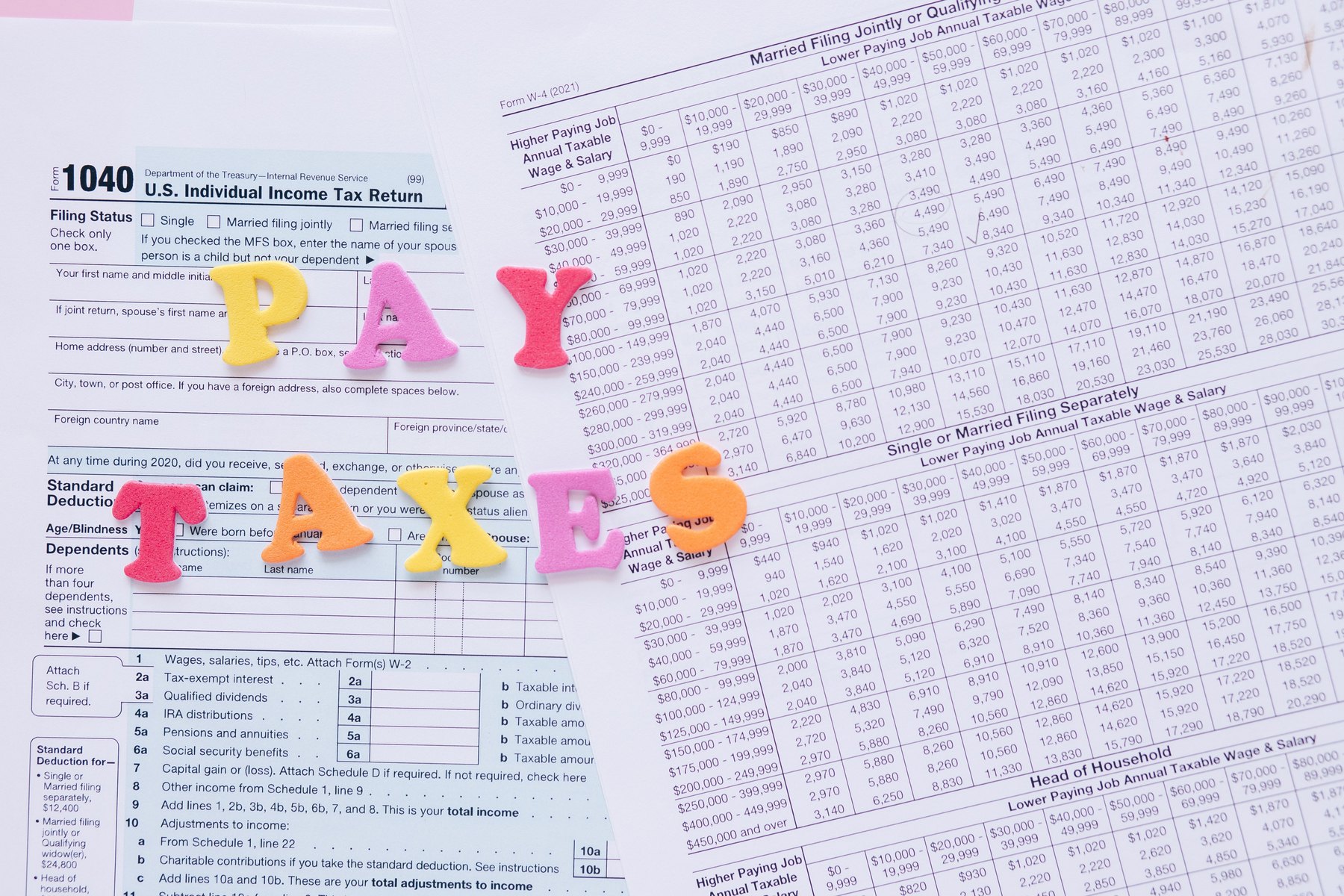
When the Tax Cuts and Jobs Act (TCJA) took effect, many households saw changes that influenced withholding and refunds. The most common reasons people noticed differences included:
- New withholding tables that reduced federal income tax withheld for many employees.
- Different standard deduction and personal exemption rules, which changed how many people itemized and how their taxable income was calculated.
- Changes to certain deductions and credits that affected final tax liability, sometimes differently than withholding assumed.
- W-4 redesign (later updates) that moved away from “allowances” and toward more direct inputs for dependents, other income, and deductions.
The key takeaway: withholding is an estimate. If your household has multiple jobs, variable income, self-employment income, large credits, or itemized deductions, the default estimate can miss the mark unless you update your W-4.
Refund vs amount owed: why a bigger paycheck can mean a smaller refund
A tax refund is usually a sign you overpaid during the year. If withholding goes down, you may keep more money in each paycheck, but your refund may shrink. In some cases, you could owe at filing time if withholding was too low.
Decision rule: aim for “close to zero” if you want predictable cash flow
- If you prefer a larger refund, you can increase withholding.
- If you prefer higher take-home pay, you can reduce withholding, but you should check that you are not underpaying.
- If you want predictability, target a small refund or small balance due (for example, within a few hundred dollars), then adjust as income changes.
| Withholding approach | What it feels like during the year | Likely tax-time result | Main risk |
|---|---|---|---|
| Higher withholding | Smaller paychecks | Larger refund more likely | Less monthly cash flow |
| Lower withholding | Bigger paychecks | Smaller refund or balance due | Underpayment if set too low |
| Calibrated withholding | Steady paychecks | Small refund or small amount due | Needs updates when life changes |
How to check if your withholding is on track
You do not have to wait until tax season to find out. A quick midyear check can help you avoid surprises.
Step-by-step paycheck check
- Find your year-to-date (YTD) federal income tax withheld on your latest pay stub.
- Estimate your full-year income using YTD wages and how many pay periods are left.
- Compare your projected withholding to your likely tax. The easiest way is to use the IRS Tax Withholding Estimator.
- Adjust your W-4 if needed, then re-check after 1 to 2 pay cycles.
Helpful tools and sources:
Common situations that cause underwithholding
- Two earners who both select “married” without using the multiple jobs adjustment.
- Side income (1099 work) with no estimated tax payments.
- Investment income (interest, dividends, capital gains) not reflected on the W-4.
- Large changes in deductions (for example, you stop itemizing).
- Bonuses and commissions that are taxed differently than regular wages.
How to update Form W-4 to fix withholding
Form W-4 tells your employer how to withhold federal income tax. You can submit a new W-4 anytime. Many payroll systems let you update it online.
W-4 fields that matter most
- Step 1: Filing status (single, married filing jointly, head of household).
- Step 2: Multiple jobs or spouse works (this is a frequent source of surprises).
- Step 3: Claim dependents (reduces withholding based on eligible credits).
- Step 4(a): Other income (interest, dividends, retirement income not subject to withholding).
- Step 4(b): Deductions (if you itemize or have deductions beyond the standard deduction).
- Step 4(c): Extra withholding (a simple way to cover side income or reduce the chance of owing).
Quick decision rules for W-4 adjustments
- If you owed last year and your income is similar, consider adding extra withholding per paycheck in Step 4(c).
- If your refund was huge and you want more monthly cash flow, reduce extra withholding or revisit dependents and deductions entries.
- If you have two jobs, use the IRS estimator or the multiple jobs worksheet rather than guessing.
| Life change | What to review on W-4 | Why it matters | When to update |
|---|---|---|---|
| New job or raise | Filing status, Step 2, Step 4(c) | Higher income can shift brackets and withholding | Within 30 days |
| Marriage or divorce | Filing status, Step 2 | Household income and credits change | As soon as practical |
| New child | Step 3 dependents | Credits can reduce tax and withholding | After birth/adoption |
| Side gig starts | Step 4(a) other income or Step 4(c) extra | 1099 income usually has no withholding | When income becomes steady |
| Buy a home | Step 4(b) deductions | Itemizing may change your tax picture | After you know your deduction plan |
Real-number examples: what withholding changes can look like
These simplified examples show how “more in your paycheck” can translate into different tax-time outcomes. Numbers are illustrative only. Your results depend on income, filing status, credits, and deductions.
Example 1: Single filer sees $60 more per paycheck
- Pay frequency: biweekly (26 paychecks)
- Withholding drops by: $60 per paycheck
- Extra take-home during the year: $60 x 26 = $1,560
If the person’s actual tax liability did not drop by $1,560, the smaller withholding could mean a smaller refund or a balance due. If their tax liability did drop by about that amount, the change may mostly shift money from refund time into each paycheck.
Example 2: Married couple with two jobs underwithholds
- Spouse A and B both mark “married filing jointly” on W-4
- Neither completes the multiple jobs adjustment
Each job withholds as if it is the only household income, which can underwithhold when incomes stack. A common fix is to use Step 2 correctly or add extra withholding in Step 4(c) based on the IRS estimator output.
Example 3: Side gig income needs a plan
- W-2 wages: $55,000
- Side gig profit: $10,000
If no tax is withheld on the side gig, the household can cover it by (a) making estimated tax payments, or (b) increasing W-2 withholding using Step 4(c). Many people choose Step 4(c) because it is automated through payroll.
If your withholding is too low: options to avoid a cash crunch
If you discover you are underwithholding, you typically have two levers: increase withholding going forward and set aside cash for the expected gap. If the gap is large, you may need a short-term plan to cover it without derailing other bills.
Cash-flow triage checklist
- Update W-4 now so the problem does not grow.
- Estimate the remaining shortfall using the IRS estimator.
- Create a “tax buffer” savings bucket and automate transfers each payday.
- Pause optional spending until you are back on track.
- If needed, compare short-term borrowing carefully based on APR, fees, and repayment speed.
Borrowing options to compare (if you must cover a tax bill)
Borrowing to pay taxes can be expensive, so compare total cost and how quickly you can repay. In many cases, a payment plan with the IRS may be worth comparing to credit options.
| Option (named examples) | Best fit | What to compare | Main drawback |
|---|---|---|---|
| IRS Online Payment Agreement | You owe federal taxes and need time | Setup costs, monthly payment, interest and penalties | Interest and penalties may still apply |
| Credit card (Visa, Mastercard, American Express, Discover) | Short gap you can repay quickly | APR after any promo, fees, credit limit | High APR if carried |
| 0% intro APR card (examples: Chase, Citi, Capital One offers vary) | Strong credit and a payoff plan within promo period | Promo length, balance transfer fees, post-promo APR | Fees and high APR after promo |
| Personal loan (examples: SoFi, LightStream, Discover Personal Loans) | Need fixed payments and a set payoff date | APR range, origination fee, term length | Interest cost and qualification requirements |
| Credit union personal loan (examples: Navy Federal, PenFed) | Eligible members seeking competitive terms | Membership rules, APR, fees, term | Membership eligibility and processing time |
What this looks like with real numbers: building a “withholding buffer”
If withholding changes increased your take-home pay, you can decide where that extra cash should go. Below are three sample allocations that add up correctly. Adjust the categories to match your priorities.
Scenario A: Extra $60 per paycheck (biweekly) = $1,560 per year
- $30 per paycheck to a tax buffer savings account = $780/year
- $20 per paycheck to high-interest debt payments = $520/year
- $10 per paycheck to emergency fund = $260/year
Scenario B: Extra $100 per paycheck (biweekly) = $2,600 per year
- $40 per paycheck to tax buffer = $1,040/year
- $40 per paycheck to emergency fund = $1,040/year
- $20 per paycheck to retirement contributions = $520/year
Scenario C: Extra $250 per month = $3,000 per year
- $125/month to tax buffer = $1,500/year
- $75/month to sinking funds (car repairs, medical, insurance) = $900/year
- $50/month to extra principal on a loan or credit card = $600/year
Timeline decision rules: where to keep money you might need for taxes
If you are setting aside money to cover a possible tax bill, the timeline matters more than the return. The goal is to have the cash available when needed.
Under 1 year
- Priorities: liquidity and safety.
- Common choices: high-yield savings account, money market deposit account, or short-term Treasury bills through a brokerage.
- Decision rule: if you might need the money for April taxes, avoid tying it up in volatile investments.
1 to 3 years
- Priorities: stability with modest yield.
- Common choices: laddered CDs, short-term bond funds (with price risk), Treasury notes.
- Decision rule: only take market risk if you can handle needing the money when the value is down.
3 to 7 years
- Priorities: balance growth and risk.
- Common choices: diversified portfolio mix, depending on goals and risk tolerance.
- Decision rule: keep near-term tax money separate from longer-term investing.
7+ years
- Priorities: long-term growth.
- Common choices: diversified stock and bond portfolio aligned to your plan.
- Decision rule: do not invest tax-payment money on a long horizon if you need it annually.
How withholding changes can affect borrowing and credit decisions
When take-home pay changes, it can ripple into your monthly budget and debt plan.
Practical ways to use a higher paycheck without creating risk
- Stabilize cash flow first: build a small buffer so you do not rely on credit cards for surprises.
- Pay down high-interest debt: extra payments can reduce interest costs over time.
- Avoid “phantom income”: if the higher paycheck is mostly from lower withholding, treat part of it as money that may be owed later.
Credit checkup if you are planning a loan
If you are applying for a mortgage, auto loan, or personal loan, lenders often look at income stability and debt-to-income ratio. A tax bill can disrupt savings goals or increase credit utilization if you put it on a card. If you are unsure about your credit profile, review your reports for accuracy.
- AnnualCreditReport.com (official site for free credit reports)
- CFPB credit reports and scores resources
Quick checklist: signs you should re-do your withholding now
- You owed money last year and did not change your W-4.
- Your household has two jobs and you did not account for multiple jobs.
- You started or grew a side gig.
- Your refund dropped sharply even though income did not change much.
- You had a major life change (marriage, divorce, child, home purchase).
- You receive bonuses, commissions, or irregular pay.
Where to verify current rules and get help
Tax rules and forms can change, so use primary sources for the latest details and calculators:
- IRS.gov for forms, publications, and updates
- IRS Tax Withholding Estimator to model your situation
If you update your W-4 and set a simple buffer plan, you can usually turn withholding changes into something manageable: steadier monthly cash flow and fewer surprises at filing time.


